3D-printed loom
By Andrew Gregory. Posted

If you’ve ever tried to specialise in any field of making, you’ll find that at some point you’ll have stopped – or at least delayed – creating things, in order to make things that help you make things. If you’re at the start of your journey into woodworking, for example, you’ll very sensibly want to start with a bench hook, to hold workpieces steady while you’re sawing them. Then, of course, you’ll need a bench, otherwise the bench hook is useless. A few weeks pass, and at every turn, you’re spending more time making jigs than you are making the thing you wanted to make – what even was that again?

Take back control of your online data, with Raspberry Pi.
Into this grand tradition of making in order to make, we have Fraens, who has also made something that makes other things. Unlike us and our never-ending woodworking rabbit hole, Fraens has used 3D printing to make a useful machine in one attempt: this hand loom can be used to create patterned cloth, exactly like humans have been doing for thousands of years.

Also unlike us, Fraens is something of an engineering genius. It’s easy to give the credit to the 3D printer, but in reality we all have the same access to the tools; it takes a special ability to imagine new ways of doing old things.

Features Editor Andrew trawls the internet for Cool Stuff while keeping the magazine running smoothly.
Subscribe to Raspberry Pi Official Magazine
Save up to 37% off the cover price and get a FREE Raspberry Pi Pico 2 W with a subscription to Raspberry Pi Official Magazine.
More articles

Take Back Your Clound in Raspberry Pi Official Magazine 165
We’re all-too accustomed to the feling of being watched on the internet. A search for any product leads to adverts, emails, and goodness knows how many bots tracking you. It feels weird and intrusive, and we aren’t being paranoid – they really are watching us. Luckily you don’t have to reply on online services that […]
Read more →
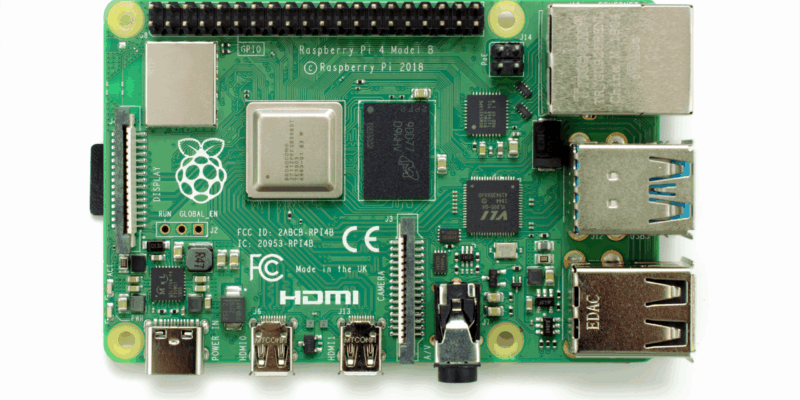
Win one of three Raspberry Pi 4 with 3GB RAM!
Raspberry Pi 4 is still a powerful piece of kit, and this new 3GB version is great for projects and builds that need slightly more than 2GB of RAM but don’t quite need 4GB. We have three to give away and you can enter below. Win 1 of 3 Raspberry Pi 4 3GB
Read more →
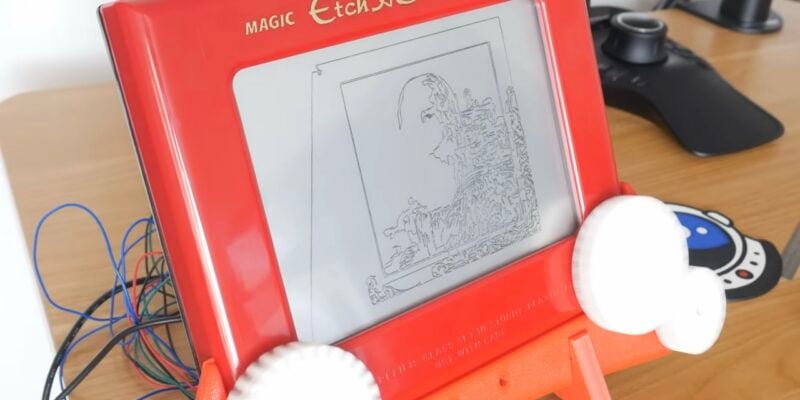
Etch A Sketch CNC machine
The software controlling the Etch A Sketch logs the image, turns it into vectors, turns the vectors into G-code, then sends the G-code to the Etch A Sketch – and it was all written by AI
Read more →