Barbed wire emus
By Rosie Hattersley. Posted
This article was originally published as part of HackSpace magazine, which has since been incorporated into Raspberry Pi Official Magazine.
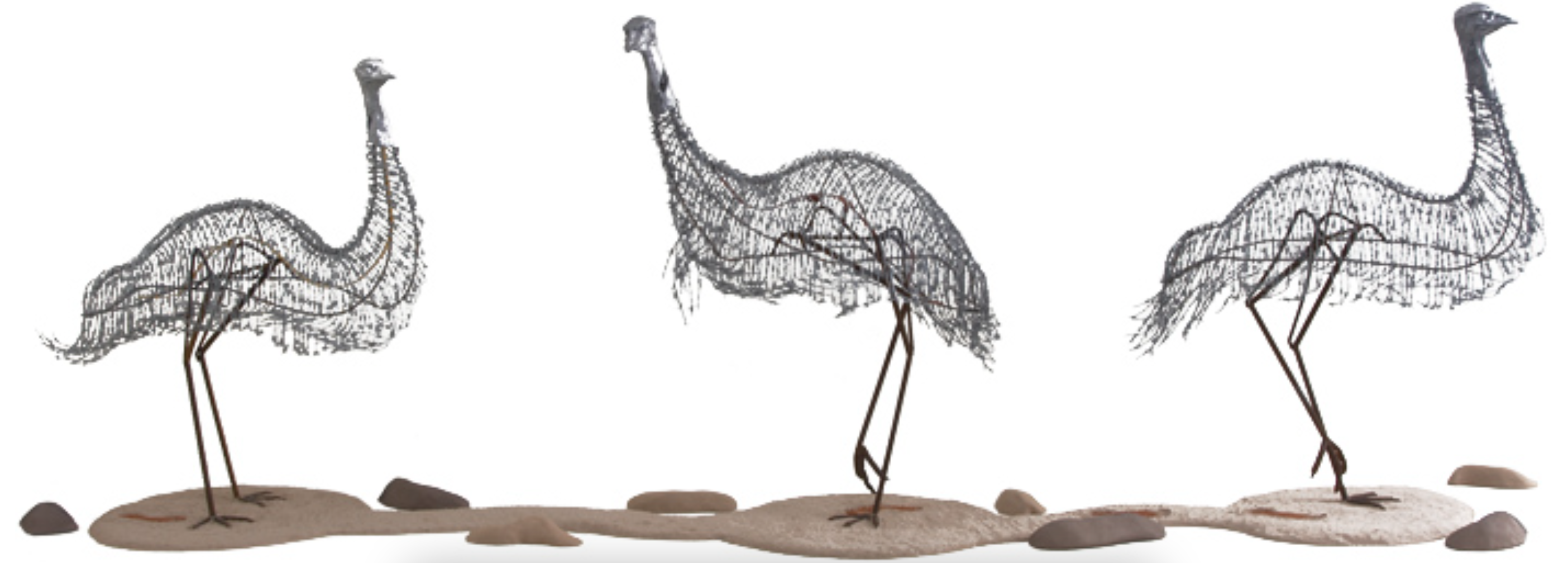
Aboriginal artist Laurie Nilsen’s life-size barbed wire emu sculptures were inspired by him encountering a fence line that had ensnared more than 40 emus fleeing drought-ravaged plains, highlighting the material’s dual role of both fencing off and fencing in. Laurie described having to put the dying emus out of their misery as one of the most gut-wrenching tasks he ever faced, but also acknowledged that he’d used barbed wire himself for fencing in former times. He often drew close-ups of barbed wire, calling attention to its dainty knots. Using satire to draw attention to social issues, several of Nilsen’s emu sculptures are sited adjacent to places where barbed wire is commonly used, such as prisons and law courts. Other artists who use barbed wire for sculpture and art also frequently have a personal connection with it, such as Ernie Poe, a former rancher who, at the age of 73, began the first of 200 sculptures each made from rusty barbed wire.
Cyberdeck projects – survive in style with Raspberry Pi!

Subscribe to Raspberry Pi Official Magazine
Save up to 37% off the cover price and get a FREE Raspberry Pi Pico 2 W with a subscription to Raspberry Pi Official Magazine.