Brazilian art made with Raspberry Pi
By Rob Zwetsloot. Posted
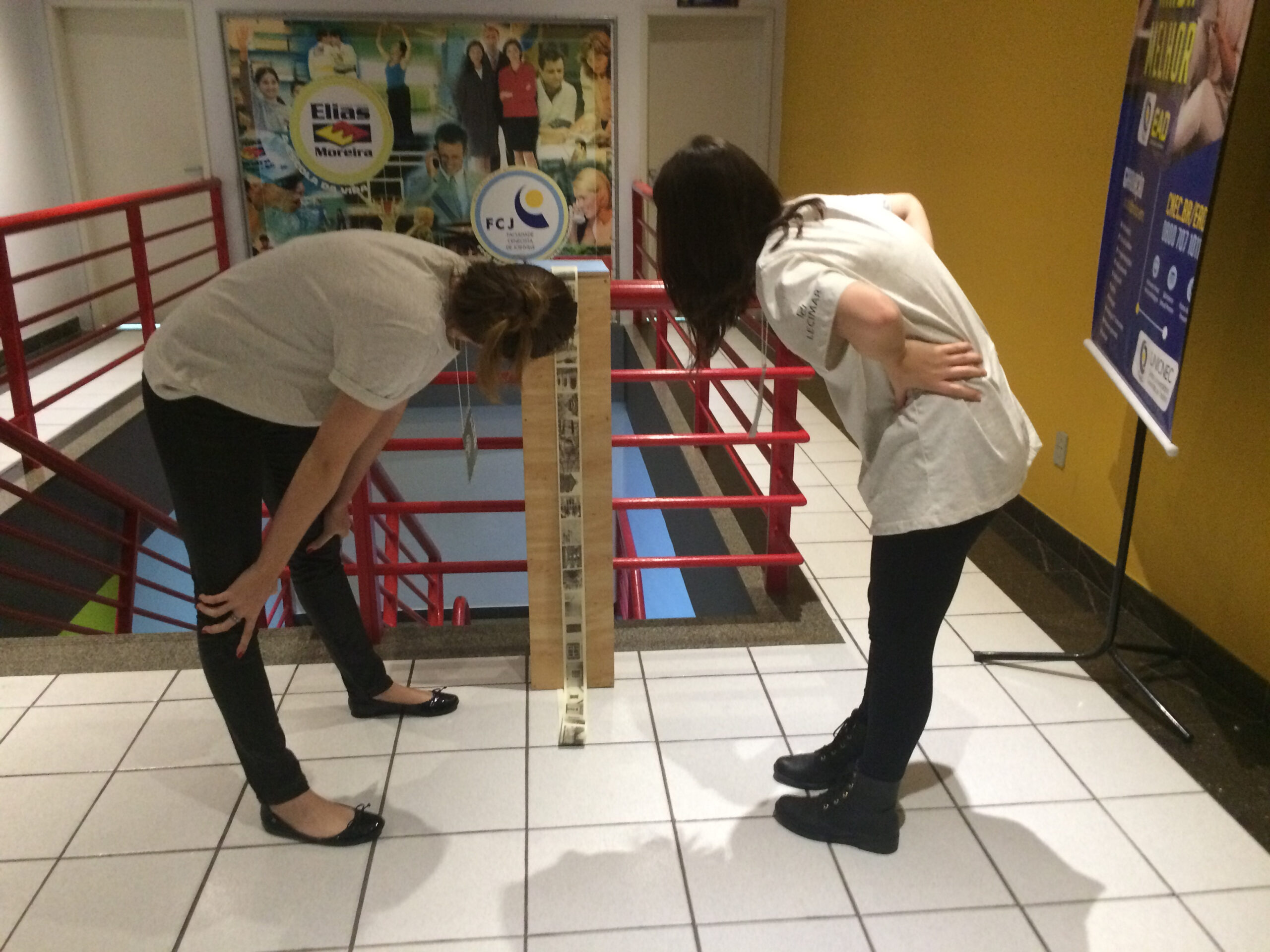
Architect Felipe Gomes is helping to bring technology to art installations using the Raspberry Pi
We’re great supporters of STEAM here at The MagPi. Art is as important as the rest of the technical aspects of computing, so we’re always excited to see great art projects that incorporate the Raspberry Pi and the rest of the STEAM spectrum. Felipe has been doing some amazing work incorporating technology into art, so we jumped at the chance to have a chat with him about it.
What is it you do with the Raspberry Pi?
I have used the Raspberry Pi models for various purposes, from personal projects for fun to audiovisual and artistic installations. As personal projects and proofs of concept, I have used the Raspberry Pi for light painting, DMX scenographic light control, and as an instant IR camera. As artwork, I did some projection-mapping installations using the ofxPiMapper in Raspberry Pi 3 and some other installations with a thermal printer and the Raspberry Pi Zero W.
Can you tell us about some of your art projects?
The first project I did with Raspberry Pi was at a party where we were invited to do an installation. After setting up an almost invisible projection screen in front of the DJ, I used two Raspberry Pi 3s and two projectors with ofxPiMapper: one projector showing patterns randomly generated and the other showing the DJ through an infrared camera, mixing the signals on the screen itself.
Soon after, I built a totem that printed the results of an architectural photography workshop on thermal paper through a Raspberry Pi Zero W, where the participants sent their photos to the printer after the post-production.
Another technical production project I did was with the artist Fabiana Caldart, where she needed a constant fire in the middle of an exhibition. We used the same almost invisible screen and the Raspberry Pi to simulate the fire burning in the centre of the room.
Most of the projects I worked on had the concept developed within the architecture and experimentation office I had with some friends in the last couple of years, the Estudiograma. Even developing the concepts together, the technical production was all done by me.

Why the Raspberry Pi?
It’s affordable and easy to use. Besides, the online community is large (and still growing!) so I have good resources to learn and information to make my projects. When using it on art installations, it replaces expensive computers which could break or be stolen, a major problem in Brazilian alternative and independent art spaces. The small size is also handy.
What have people’s reactions been to some of the projects?
People are often curious about the intersection of art and technology because they don’t know how easy it is to program a pocket computer for a specific task. When I show that everything is being done by a Raspberry Pi, the astonishment is bigger because it’s not so popular in art projects in Brazil. One of the installations of the artist Fabiana Caldart, in which I did the technical part, had a great repercussion, as we saw by the amount of photos found in the Instagram streams of visitors to the exhibition.
Did you use it for anything before the art projects?
I started using Raspberry Pi to set up an arcade. After this, I set up the server of the architecture office where I used to work; it not only managed the files but also showed the emails, the financial control, and a calendar with all the office tasks in a display. While in college, I used a Raspberry Pi 3 with a touch display as a Google Forms portable poll device for some urban-related researches.

What future plans do you have?
At the moment, I am in the middle of two installations – projects of my own. One of them, which is already more developed, features a Raspberry Pi Zero W with the infrared camera to take pictures in the dark and send them over WiFi to a second Raspberry that will [print] these photos in real-time, like an instant camera but with the printer in a fixed place.
My intention now is to focus on this intersection between art, technology, and built space.
Join in with Brazilian makers
Interested in collaborating or chatting with other makers and live near Curitiba in Brazil? Felipe has started what he calls a ‘study group’ which has artists, designers, programmers, architects, and other folk turn up to talk about making once a week.
You can find out more information, along with other examples of Felipe’s work, on his website, on the company website, and on the group's Facebook page.

Rob is amazing. He’s also the Features Editor of Raspberry Pi Official Magazine, a hobbyist maker, cosplayer, comic book writer, and extremely modest.
Subscribe to Raspberry Pi Official Magazine
Save up to 37% off the cover price and get a FREE Raspberry Pi Pico 2 W with a subscription to Raspberry Pi Official Magazine.
More articles
Incredible Weather Projects in Raspberry Pi Official Magazine issue 171
If the planet gets too hot/too cold/too drizzly for human habitation, we’ll probably want to leave Earth in search of a better one. That means we’ll need a flight computer, and maker Michael Newton is one step ahead: he’s built a replica of the DSKY (display keyboard) interface from the Apollo Guidance Computer. Now you […]
Read more →
Win one of five Sense HAT bundles
Get a Sense HAT add-on and book in our latest competition
Read more →
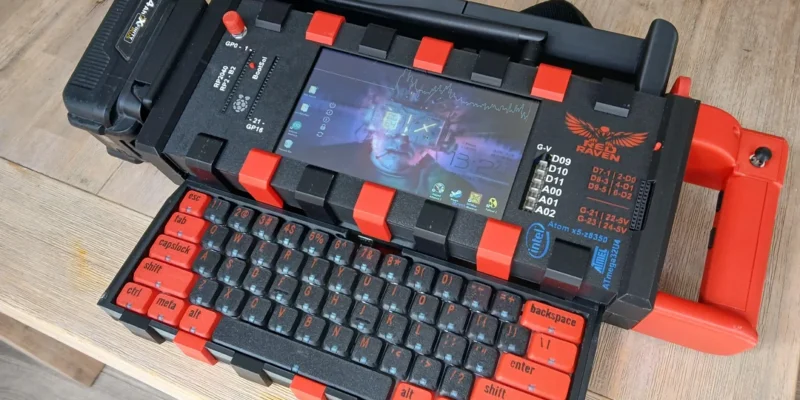
Red Raven cyberdeck
Powered by drills
Read more →