Cheeseborg project showcase
By Rosemary Hattersley. Posted
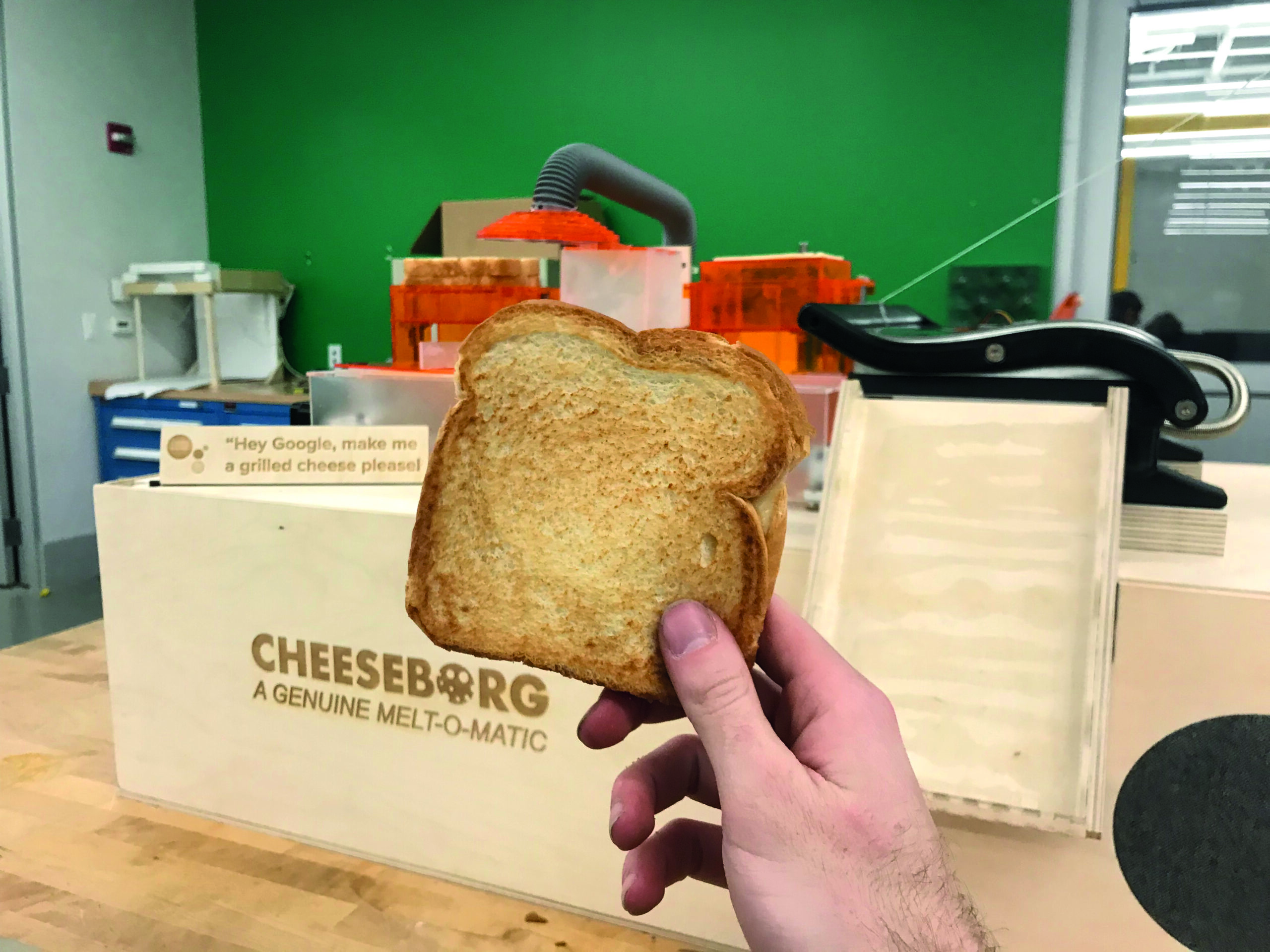
In wintertime, what could be more comforting than a grilled cheese sandwich? Cheeseborg uses Raspberry Pi to serve them up, as Rosie Hattersley smacks her lips
Making a splash with your final-year university project can be the ideal way to gain the attention of potential employers and land yourself your dream job. Appealing to your lecturers’ and classmates’ stomachs is also a pretty effective way of getting them onside.
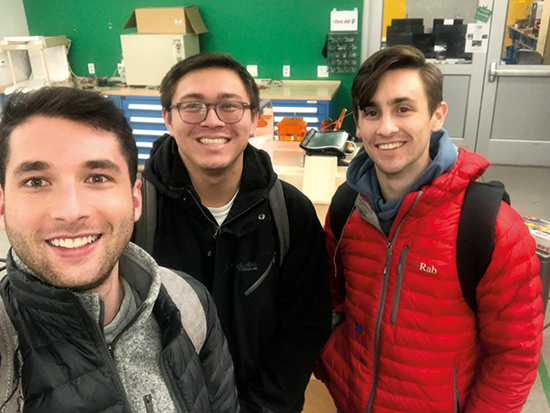
Hearing from Taylor Tabb about the robot project he and friends Mitchell Riek and Evan Hill cooked up for their mechanical engineering degree, it’s little surprise to learn that having graduated in the summer of 2019, he’s already embarked on a fantastic-sounding Raspberry Pi-focused career.

Taylor studied mechanical engineering at Carnegie Mellon University, exploring how people interact with hardware, and thinks Raspberry Pi is the ideal platform for this. He now works for creative agency DeepLocal, making ‘wild and whimsical’ robots.
Say cheese!
“Cheeseborg was born out of our need to concept, design, and build a final prototype of a project in our senior engineering design class,” says Taylor. “As hungry college students awake at hours that it’s often hard to find food, we knew this was our calling – not just for us, but for grilled cheese eaters everywhere.”
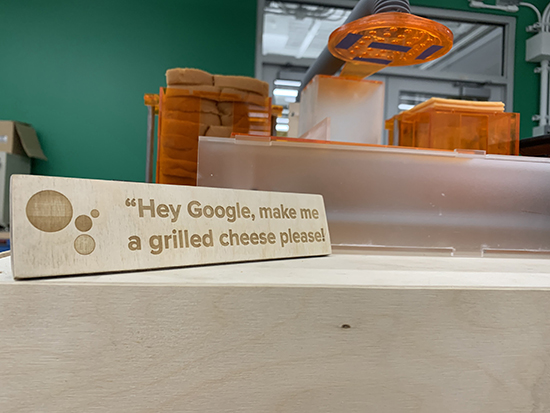
Cheeseborg is a dedicated, hands-free grilled cheese making robot that will satisfy cheese cravings at all hours. The Google Assistant SDK and AIY Voice Kit provide voice activation. Both “work fantastically with Raspberry Pi 3 Model B+,” says Taylor. Their customised build of Google Assistant, sourced from the AIY Kit and Google Cloud SDK, allowed them to add some personality: you can ask about the weather while awaiting your sandwich.
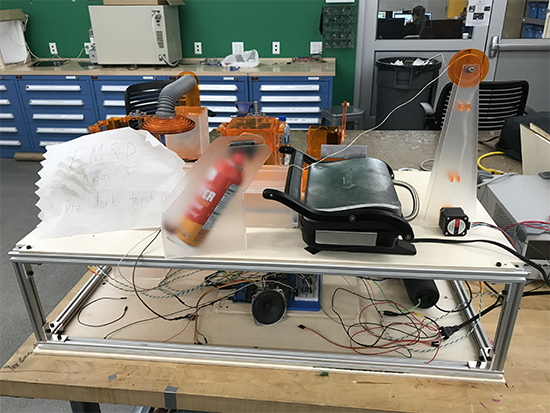
Raspberry Pi also triggers its assembly, while motor control circuits and motion are operated by Arduino Mega. Taylor reveals, “We wrote our own code, but also used open-source Arduino libraries,” dictating timings and the motions for each step. Carnegie Mellon’s Department of Mechanical Engineering’s makerspace provided hardware commonly used in 3D printer kits, such as stepper motors and linear motion carriages. However, the acrylic parts were designed and laser-cut by Mitchell, Evan, and Taylor. Impressively, the project cost just $200 to build, and took approximately eight weeks to complete.
Taste test
The team undertook three weeks of customer research to identify grilled cheese preferences. “There was a lot of going back and forth between our build, CAD software, and laser cutter, adjusting parts as we learned more about the mechanics of bread and cheese,” recalls Taylor. They spent days just tuning the grilling time to get the gooeyness and crispiness just right, while experiments in applying the butter resulted in a thoroughly dairy-spattered makerspace.
Eventually, they went with a spray ‘butter’. “We aimed at the cooking plates and activated just before the bread was moved to be cooked, thus buttering both sides [not to say the rest of Cheeseborg]. In the end, we found if we just spray the grill plates every five [sandwiches] or so, it still is enough to make a crispy, gooey grilled cheese! “
As with all good projects, we had no idea if it was going to work until 4am the morning before it was due, when Cheeseborg popped out its first fully hands-free grilled cheese sandwich.”
Making your own grilled cheese robot
1. This is the ideal project with which to use Google Assistant in Google’s Raspberry Pi AIY Voice Kit, and the Google Cloud SDK for voice activation. Experiment with phrases to initiate the snack-assembly process.
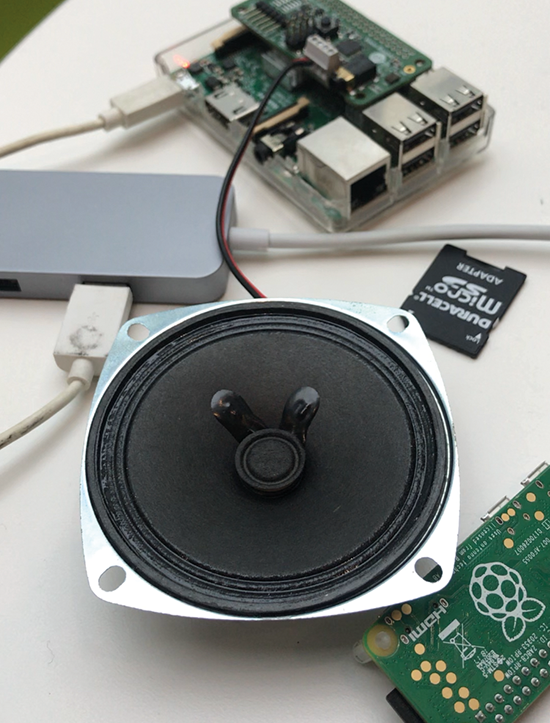
2. Raspberry Pi now hands over to Arduino. Use Arduino Mega to control the robot that assembles the grilled cheese sandwich once Raspberry Pi instructs it. Open-source Arduino libraries are invaluable here.
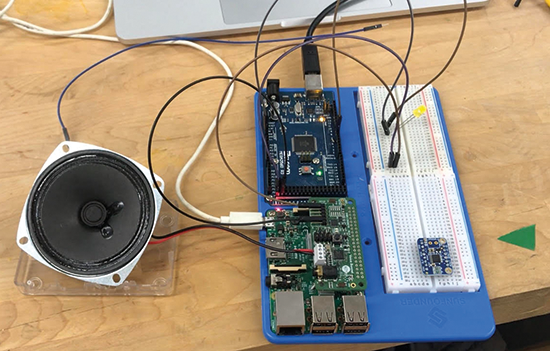
3. Use tongs or suction to pick up slices of bread and add a chute for the snack’s delivery. However, positioning bread to be buttered and adding cheese takes patience.
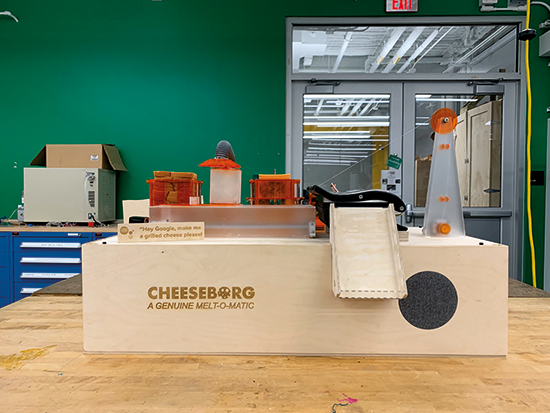
Interest levels online have been such that Taylor and his colleagues may consider offering a kit version. While he cautions that there’s a huge amount of fine-tuning involved, he says, “If anyone out there is building a grilled cheese robot, we’re more than happy to offer any insights.” Contact him at tabb.me/grilledcheese.
Warning! Hot mess!
Gooey butter is messy stuff. Be prepared for your kitchen, as well as your grilled cheese sandwich, to be buttered all over!
Quick facts
-
Taylor's first Raspberry Pi project was a ‘not great’ radio telescope
-
Taylor now works with Raspberry Pi almost daily
-
His business card says he’s ’sweeter than Raspberry Pi!’
-
Taylor thinks there’s a whole world of culinary robots to come
-
He recently made a not-so-edible bubble maker
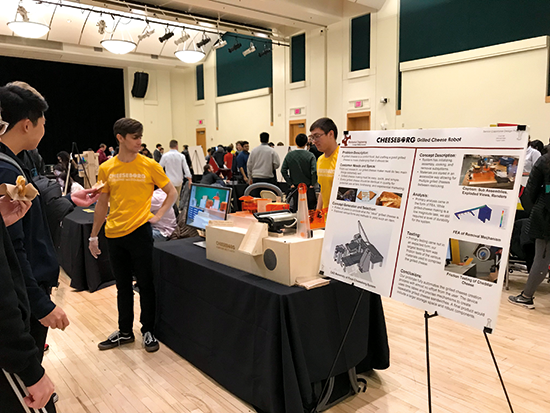
Hungry students were delighted to encounter Cheeseborg at their final year expo

Rosie has worked for consumer tech titles such as PC Advisor, Computeractive, CNET and Macworld and written For Dummies books on using iPads, Androids and tablets
Subscribe to Raspberry Pi Official Magazine
Save up to 37% off the cover price and get a FREE Raspberry Pi Pico 2 W with a subscription to Raspberry Pi Official Magazine.