CircuitPython 4.1.0 Review
By Ben Everard. Posted
This article was originally published as part of HackSpace magazine, which has since been incorporated into Raspberry Pi Official Magazine.

The big feature of the free software, CircuitPython 4.1. is the speed. You can see the box below for more information on the benchmarks we ran but, in short, the new version is quite a bit quicker.
Basic operations, such as floating point and integer arithmetic, were about twice as fast, and it was particularly interesting to see that this performance improvement filtered all the way through to the devices controlled by the board.
We were able to flash NeoPixels at twice the rate using this firmware – we’re particularly pleased to see this, as we’ve run into performance issues running NeoPixel matrixes with CircuitPython in the past.
There are also big performance gains when controlling screens.
While the software has been moving along, so too has hardware support, and there’s now a greater range of supported hardware than ever before.
At the time of writing, there were 62 separate devices on the circuitpython.org downloads page, so there’s a great selection to choose from, if you want to get developing with this language.

Take back control of your online data, with Raspberry Pi.
Ultimately, CircuitPython is never going to match the speed of a compiled language. The overheads of running an interpreter on a microcontroller are just too great.
However, most of the time, we’re using microcontrollers that are more powerful than we need, and these machines spend a significant proportion of their time waiting for things to happen.
Our code, then, just needs to be ‘fast enough’.
Earlier versions of CircuitPython were fast enough for some tasks, but it was quite common to hit issues – particularly when working with outputs such as LEDs and screens.
This new version means that there are even more areas that you can work with using CircuitPython.

Verdict: 10 out of 10
Instantly double the speed of your microcontrollers? Yes please!

Ben is the Editor of HackSpace magazine. When not wrangling words, he enjoys cycling, gardening, and attempting to identify wild mushrooms.
Subscribe to Raspberry Pi Official Magazine
Save up to 37% off the cover price and get a FREE Raspberry Pi Pico 2 W with a subscription to Raspberry Pi Official Magazine.
More articles

Take Back Your Clound in Raspberry Pi Official Magazine 165
We’re all-too accustomed to the feling of being watched on the internet. A search for any product leads to adverts, emails, and goodness knows how many bots tracking you. It feels weird and intrusive, and we aren’t being paranoid – they really are watching us. Luckily you don’t have to reply on online services that […]
Read more →
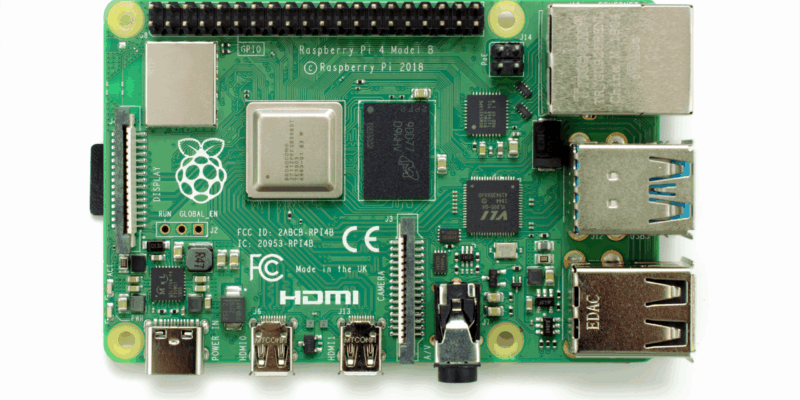
Win one of three Raspberry Pi 4 with 3GB RAM!
Raspberry Pi 4 is still a powerful piece of kit, and this new 3GB version is great for projects and builds that need slightly more than 2GB of RAM but don’t quite need 4GB. We have three to give away and you can enter below. Win 1 of 3 Raspberry Pi 4 3GB
Read more →

Etch A Sketch CNC machine
The software controlling the Etch A Sketch logs the image, turns it into vectors, turns the vectors into G-code, then sends the G-code to the Etch A Sketch – and it was all written by AI
Read more →