Free-form circuit structure
By Ben Everard. Posted
This article was originally published as part of HackSpace magazine, which has since been incorporated into Raspberry Pi Official Magazine.

Individually cut brass rods must be a pain to work with. Unlike copper sandwiched between layers of PCB substrate, copper wires aren’t obliged to stay where you put them; just a single wobble, a single component out of place makes the whole thing look wrong.
Knowing that, and how hard it is to produce a free-form circuit sculpture, makes us appreciate Mohit Bhoite’s work all the more. This tiny model lunar lander does nothing but display the temperature, but it does it with such panache that we’ve got to include it here. Components, as well as function, are minimal: he’s used an ATtiny861A microcontroller and a BME280 sensor, powered by a CR2032 coin cell.


Take back control of your online data, with Raspberry Pi.

Ben is the Editor of HackSpace magazine. When not wrangling words, he enjoys cycling, gardening, and attempting to identify wild mushrooms.
Subscribe to Raspberry Pi Official Magazine
Save up to 37% off the cover price and get a FREE Raspberry Pi Pico 2 W with a subscription to Raspberry Pi Official Magazine.
More articles

Take Back Your Clound in Raspberry Pi Official Magazine 165
We’re all-too accustomed to the feling of being watched on the internet. A search for any product leads to adverts, emails, and goodness knows how many bots tracking you. It feels weird and intrusive, and we aren’t being paranoid – they really are watching us. Luckily you don’t have to reply on online services that […]
Read more →
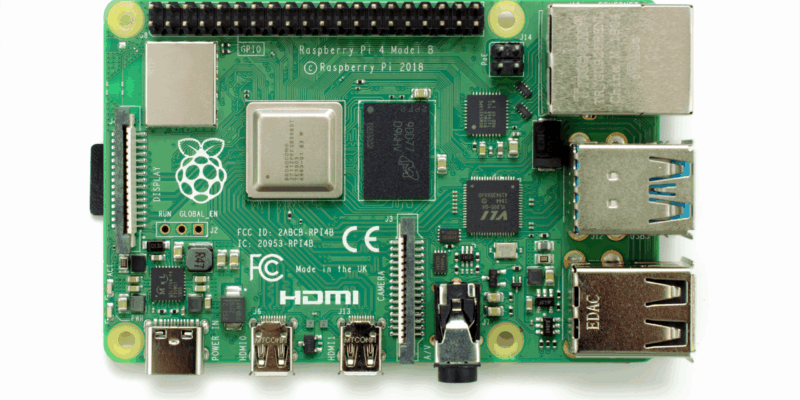
Win one of three Raspberry Pi 4 with 3GB RAM!
Raspberry Pi 4 is still a powerful piece of kit, and this new 3GB version is great for projects and builds that need slightly more than 2GB of RAM but don’t quite need 4GB. We have three to give away and you can enter below. Win 1 of 3 Raspberry Pi 4 3GB
Read more →
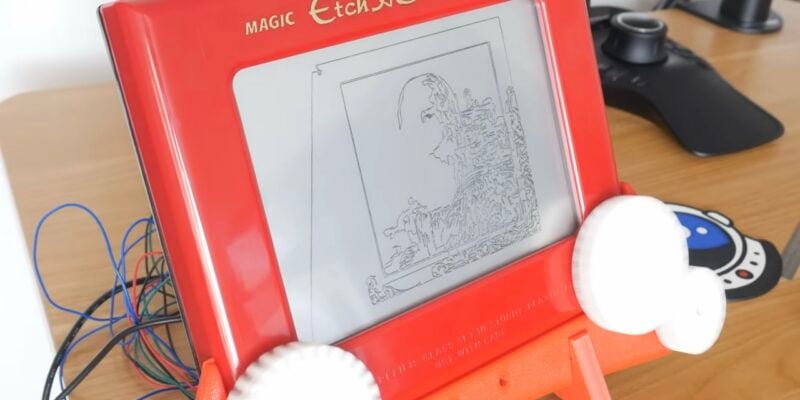
Etch A Sketch CNC machine
The software controlling the Etch A Sketch logs the image, turns it into vectors, turns the vectors into G-code, then sends the G-code to the Etch A Sketch – and it was all written by AI
Read more →