Getting You Started Kit with Raspberry Pi Zero W review
By Rob Zwetsloot. Posted
Everything needed to get started with physical computing.
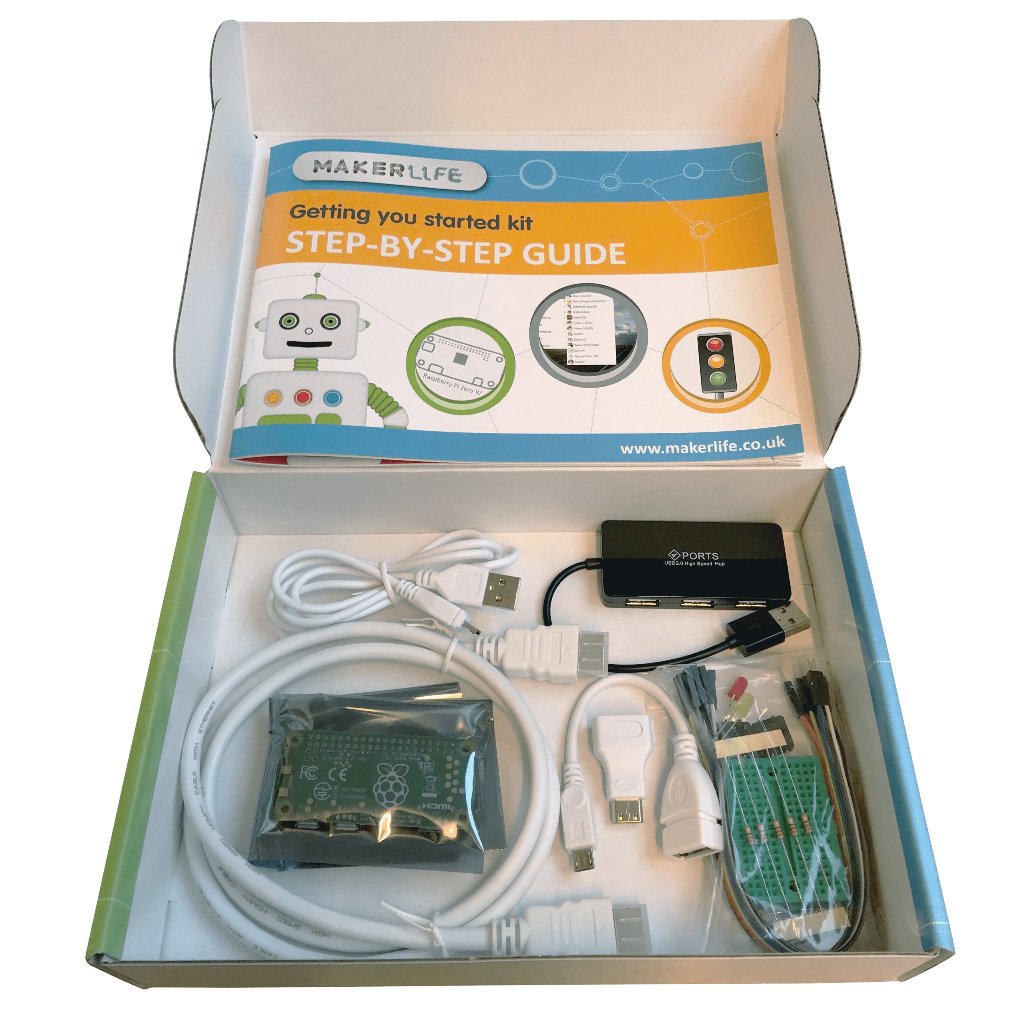
Maker Life’s range of electronics kits aim to provide a plug-and-play learning experience with no need for soldering. Such is the case with this starter kit, which includes a Raspberry Pi W with pre-soldered GPIO pins. Also supplied in the box are a 16 GB SanDisk microSD card with NOOBS pre-installed, USB and HDMI adapters, and a USB hub to connect your own keyboard and mouse. At just 1 m long, the included HDMI cable may prove too short for some. There’s no power supply either – instead, the user is advised to connect the supplied USB adapter cable to a PC.
See:
This article first appeared in The MagPi 69 and was written by Phil King
As this is a physical computing kit, the box contains a selection of electronic components: five LEDs, five 220 Ω resistors, two push-buttons, ten male-to-female jumper leads, and a mini 170-point breadboard. We’d have preferred at least a half-size, 400-point breadboard since the mini one lacks ground/power rails, so requires a separate ground pin to be used for each component in a circuit.
See: Raspberry Pi Starter Kits
Instructions included
A glossy 44-page instruction booklet explains all the components, how to connect the Raspberry Pi, and how to install Raspbian from the NOOBS menu. Following a very brief one-page guide to the Raspbian desktop, it then moves straight on to coding three physical computing projects in Python: ‘traffic lights’ (lighting three LEDs in sequence), controlling an LED with a push-button, then putting those two concepts together to make a pedestrian crossing – a shame there’s no buzzer for a beeping sound, though.
While clear wiring diagrams and tables are provided, you keep having to refer to the GPIO diagram on an earlier page to find the correct pins. Also, there’s no explanation of how the solderless breadboard is wired, or why the resistors are required.
The Python programs – which use the GPIO Zero library for simplicity – are much better explained, broken down into steps and with a full code listing at the end.
Last word
3/5
With around £43 worth of components (by our reckoning) plus a 44-page booklet, this kit represents reasonable value for money in a convenient package. It has a few shortcomings, however, and does throw complete Raspberry Pi newcomers in at the deep end, straight into physical computing
UPDATE: Since writing this review, Maker Life has ceased trading. This means remaining stock is limited, although we have been told it will return in some other form later in the year.

Rob is amazing. He’s also the Features Editor of Raspberry Pi Official Magazine, a hobbyist maker, cosplayer, comic book writer, and extremely modest.
Subscribe to Raspberry Pi Official Magazine
Save up to 37% off the cover price and get a FREE Raspberry Pi Pico 2 W with a subscription to Raspberry Pi Official Magazine.