Hacking around the world
By Drew Fustini. Posted
This article was originally published as part of HackSpace magazine, which has since been incorporated into Raspberry Pi Official Magazine.

Hackerspaces (known as hackspaces in the UK) are community-run places where people can meet up to share knowledge, learn new things, and work on projects. The mission of any hackerspace is to bring people together to collaborate on projects and educate each other. Members of a hackerspace community cover a broad terrain of disciplines, from artists to engineers; and a wide range of experience levels, from beginners to seasoned professionals. Every hackerspace has its own unique history, often intertwined with the stories of other spaces and hacker events.
Although my own relationship to hackerspaces began in the USA, the movement itself started primarily in Germany and Austria. Berlin hackerspace c-base has been in operation since 1995, and is widely regarded as the mother of all hackerspaces. Or perhaps I should say ‘mothership’, as members solemnly swear that their shared space is, in fact, part of the remains of a partially buried 4.5 billion-year-old space station. Entering through the spaceship portal, ordering a cold German beer or Club-Mate at the bar, and controlling the Flaschen Taschen pixel art LED installation from your phone are iconic c-base experiences, especially combined with their raucous New Year’s Eve hacker parties and that killer riverside view of the Berliner Fernsehturm!
In the summer of 2007, a group from the USA called ‘Hackers on a Plane’ attended the Chaos Communication Camp in Germany (an incredible festival that comes around once every four years). The trip included a tour of European hackerspaces like c-base, Metalab in Vienna, and others.
Inspired by their journey, members of the group set out to found hackerspaces in their own cities. Bre Pettis helped found NYC Resistor, while Eric Michaud and Nick Farr got HacDC off the ground in Washington, D.C., and Mitch Altman followed by co-founding Noisebridge in San Francisco.
From these first few hackerspace seeds, many more grew across the country, with similar stories unfolding on a global level. By now, the hackerspace movement has spread to every continent other than Antarctica, with hackerspaces.org mapping more than 930 active hackerspaces, and another 362 being planned or built out. Hackerspaces and hacker culture enabled countless inventions, collaborations, and projects – including MakerBot, founded out of NYC Resistor; and makerspaces, which started coming into existence after 2005.
These community spaces are a precious shared resource. Over the coming months, as we slowly start to return to life with other people, I hope you consider seeking out a hackerspace or two to try something new, teach something, share a story, or work on a project.

Drew Fustini is a hardware designer and embedded Linux developer. He is the Vice President of the Open Source Hardware Association, and a board member of the BeagleBoard.org Foundation.
Subscribe to Raspberry Pi Official Magazine
Save up to 37% off the cover price and get a FREE Raspberry Pi Pico 2 W with a subscription to Raspberry Pi Official Magazine.
More articles
Raspberry Pi Official Annual 2027 is out now!
New name, same fantastic content
Read more →
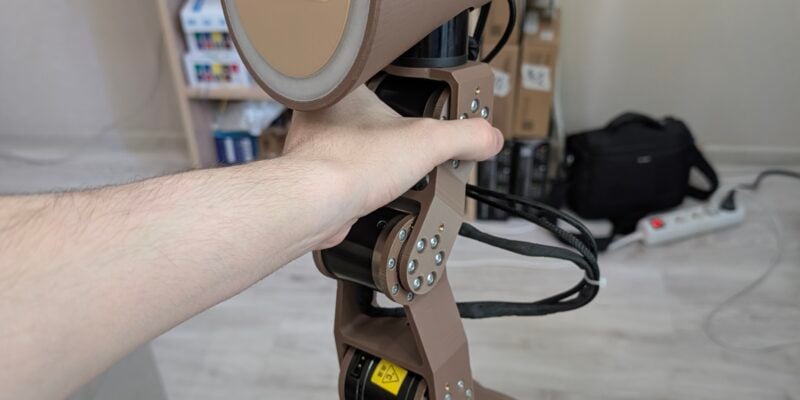
Robot arm lamp
This won’t be jumping on any animation studio logos
Read more →

Sage Cadence interview
An electrical engineering student trying to provide the educational content she would have wanted
Read more →