iotSDR dev board review
By Marc de Vinck. Posted
This article was originally published as part of HackSpace magazine, which has since been incorporated into Raspberry Pi Official Magazine.

With the rise of the Internet of Things (IoT) over the past few years, there is a need for new ways to develop, test, and deploy high-complexity wireless frameworks. The iotSDR platform allows SDR developers and enthusiasts to design innovative algorithms in multiband and multimode environments of all the current IoT standards. LoRa, Sigfox, Weightless-P, NB-IoT, Zigbee, and of course, Bluetooth are all compatible. And if none of those ecosystems work for you, the iotSDR can be used to develop your own custom modulation.

It works as a development environment, or as a deployable gateway, and looks to be extremely expandable and versatile. You can use a variety of popular open-source software packages in conjunction with the iotSDR, like Xilinx PYNQ Python, Jupyter Notebook, GNU Radio, and more.
Verdict
8/10
FPGA and a GNSS chip for combined power.
Price
Know the law!
We are not lawyers! In general, simply receiving radio frequencies is OK, as long as you don’t decode any encrypted information, or use it for committing a crime. But, transmitting without a proper licence is not typically OK. Before you delve into any SDR hardware, make sure you do it legally.

Marc de Vinck is the founder of Unexpected Labs and creator dLUX-dLites
Subscribe to Raspberry Pi Official Magazine
Save up to 37% off the cover price and get a FREE Raspberry Pi Pico 2 W with a subscription to Raspberry Pi Official Magazine.
More articles

Red Raven cyberdeck
Powered by drills
Read more →
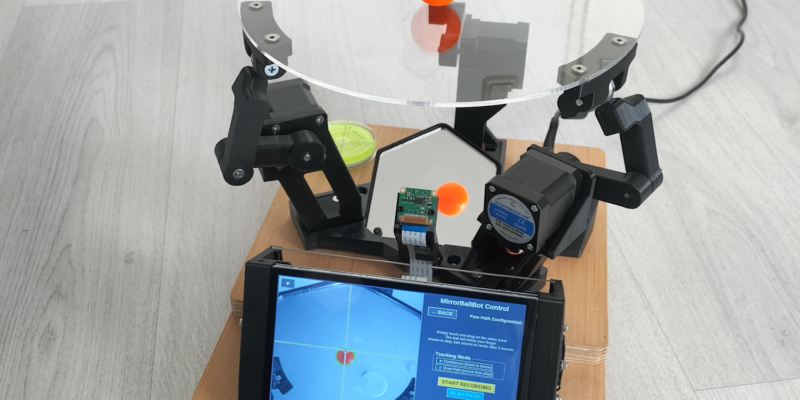
MirrorBallBot
This trick uses no smoke but it does use mirrors
Read more →

Digital Displays in Raspberry Pi Official Magazine 170
Some projects seem more like magic to us than anything else; here’s one of them. This robot by Italian engineer/magician Andrea Favero uses a mirror to widen the field of vision of a Raspberry Pi Camera Module 3, the input from which is processed by Raspberry Pi 4 and used to control three legs to […]
Read more →