Open all the way down
By Drew Fustini. Posted
This article was originally published as part of HackSpace magazine, which has since been incorporated into Raspberry Pi Official Magazine.

I’ve talked a lot about open-source hardware in this column, from PCB badge designs to the instruction sets used in the chips that go on them. It’s no secret that I’m on a mission to find a computer system that is open-source all the way down to the lowest level possible – the transistor. This month, I want to share a very exciting collaboration between Google, SkyWater, and efabless that opens up a path to that future.
Two big roadblocks to open-source chips have been: access to a process design kit (PDK) from a silicon fab, and high cost to actually get chips manufactured.
The PDK files contain details about the process that is used to fabricate semiconductors. Chip designers need this information for electronic design automation (EDA) software to transform their digital logic into the physical layout of millions of transistors. Fabs treat the PDK as proprietary and force customers to sign an NDA in order to get their chip manufactured. This prevents the customer from publishing the complete chip design as open-source.
Earlier this year, Tim Ansell of Google announced a collaboration between Google and SkyWater to provide a fully open-source PDK, which can be used to create manufacturable designs in the 130 nm at SkyWater’s facility. This enables the complete design of a chip to be open-source, from the HDL (hardware description language) source code describing the digital logic, to the lithographic masks used to etch millions of transistors onto a silicon wafer.
One reason that there are so few open-source chip projects, as compared to open-source circuit boards, is that the cost starts in the thousands even for decade-old technology like SkyWater 130 nm. However, there will soon be manufacturing runs you can be part of for absolutely zero cost, thanks to Google and efabless. The first run will take place in November 2020, with several more to come starting in early 2021. As long as your design is totally open-source, you can get your own chip manufactured – what an achievement for Open Source Hardware!
To learn more, I would highly recommend watching Tim Ansell’s talk at FOSSi Dial-Up 2020, and you can also read about the SkyWater PDK on GitHub.

Drew Fustini is a hardware designer and embedded Linux developer. He is the Vice President of the Open Source Hardware Association, and a board member of the BeagleBoard.org Foundation.
Subscribe to Raspberry Pi Official Magazine
Save up to 37% off the cover price and get a FREE Raspberry Pi Pico 2 W with a subscription to Raspberry Pi Official Magazine.
More articles
Raspberry Pi Official Annual 2027 is out now!
New name, same fantastic content
Read more →
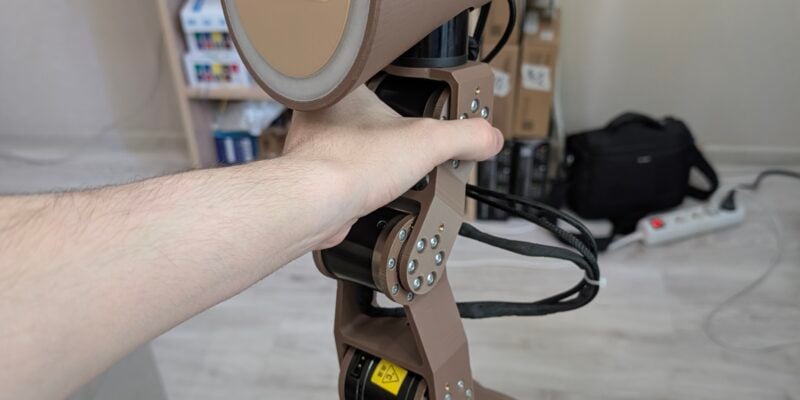
Robot arm lamp
This won’t be jumping on any animation studio logos
Read more →
Sage Cadence interview
An electrical engineering student trying to provide the educational content she would have wanted
Read more →