Orb of radiance
By Andrew Gregory. Posted
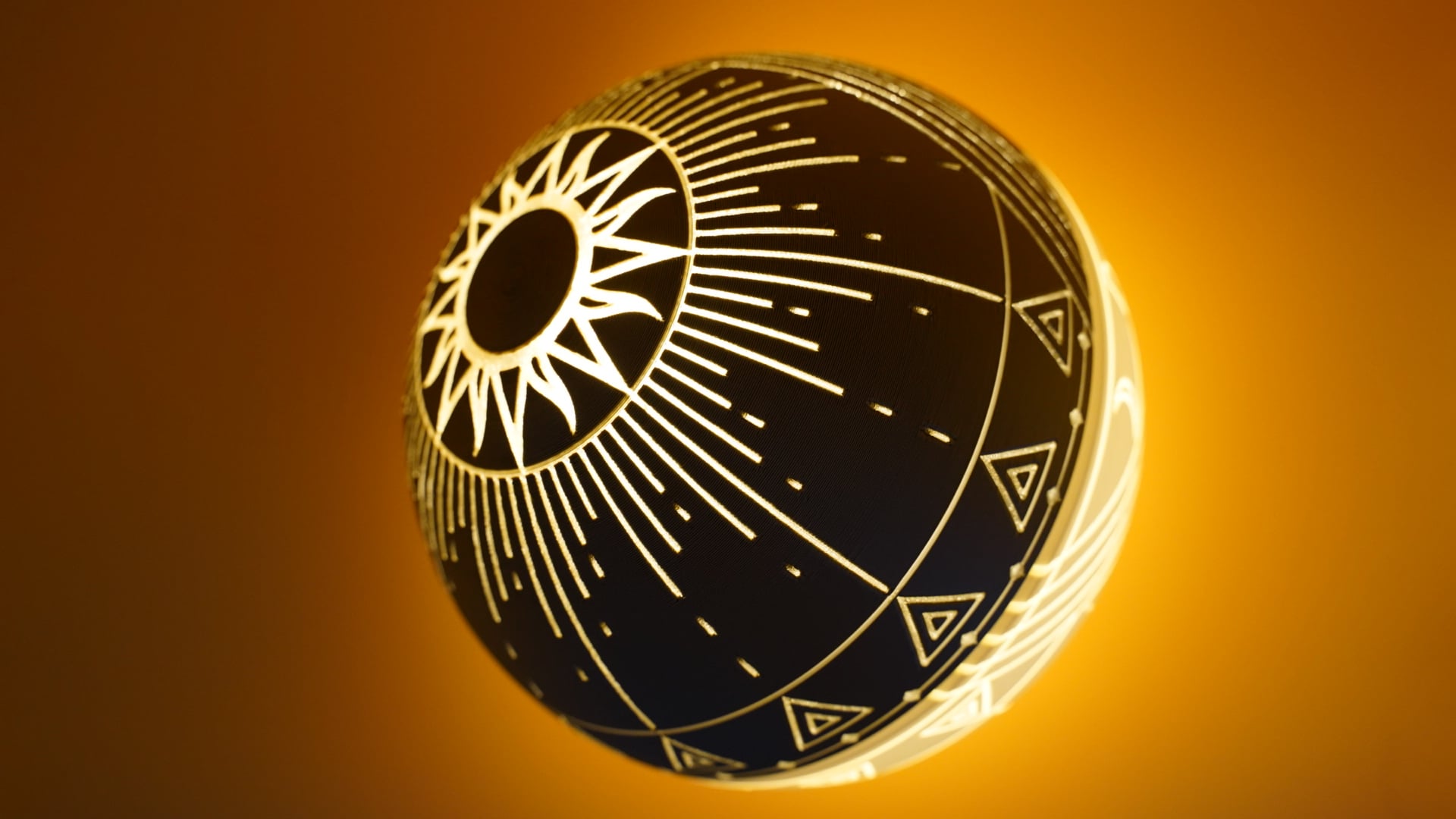
How about this to bring a bit of magic into our lives?: a spherical lamp that lights, and dims, using only the rotation of its two hemispheres. It’s a brilliantly simple idea, and the execution is done so well that it makes us wonder why no-one thought of it before its maker, KICW.
Cyberdeck projects – survive in style with Raspberry Pi!
The 3D printed body is covered in astronomical and alchemical symbols, which glow with the light of a pair of LED strips when the lamp is turned on. Just twist the two halves as if you were casting a spell, and the orb switches on and glows. Magic!
Other than the battery and the circuits to enable charging over USB-C, the LED strips, and the potentiometer board (which is ultimately what you’re turning when you rotate the two halves of the lamp), most of the rest of the bill of materials is taken up with connectors and adapters. The really magical aspect of this build is that it was designed to need no soldering at all – you just clip the parts together, and it works. That makes for a slightly more complicated assembly than you’d get if you could join components to a PCB with the addition of hot solder, but it does also mean that you can give this to an older child to build and know that they’re not going to set fire to anything.

As if that weren’t magical enough, the print requires no supports, though you do have to make sure that you use a smooth print bed, as the two halves will have to rotate against each other.

Features Editor Andrew trawls the internet for Cool Stuff while keeping the magazine running smoothly.
Subscribe to Raspberry Pi Official Magazine
Save up to 37% off the cover price and get a FREE Raspberry Pi Pico 2 W with a subscription to Raspberry Pi Official Magazine.