Pinecil soldering iron review
By Jo Hinchliffe. Posted
This article was originally published as part of HackSpace magazine, which has since been incorporated into Raspberry Pi Official Magazine.

The Pinecil is an open-source, portable soldering iron built around a 32-bit RISC-V chip with a raft of features and a low price. It’s similar in appearance and operation to the popular TS100 soldering iron. Whilst this isn’t solely a comparison or ‘versus’ review, it’s always going to get compared to the TS100 as it has some shared attributes being sold as ‘TS100-compatible’.
Out of the box, the Pinecil feels nice in the hand, and loosening the upper screw at the front end allows the tip/element to slide in easily. There’s a blue rubber collar at the business end of the body that makes it feel very comfortable and secure in-hand. The supplied tip is a pointed tip, type B2, which is a fairly wide, general-purpose tip. Any tip designed for the TS100 will fit into the Pinecil, and these are available widely online and on the Pinecil webpage. Also on the Pinecil page, you can buy spare shells and rubber grips in the standard black/blue combo or, currently, a red version.
It’s slightly larger than the TS100 and, whilst this doesn’t make a huge difference in-hand, it does have a couple of benefits. Being slightly wider and having some small feet at the tip end of the body, the Pinecil is much more stable laid on a desk. We would recommend using a stand of course, but with these feet, you could get away without one. It’s not immediately apparent until viewing side by side, but the Pinecil also has a fractionally larger OLED display than the TS100.

All screws on the Pinecil are small Phillips screws and, like the TS100, it has a small screw to the rear of the body enabling a ground strap to be connected. As we move to the back of the Pinecil body, we can see it has a USB-C socket and a barrel jack connector. This introduces one of the things the Pinecil has done well – it has a wide range of options to power it. Obviously, you can use a USB-C supply and it is compatible with PD 3.0 and QC 3.0, meaning many users may have a phone/tablet/laptop USB-C supply that will work. Of course, this also means that USB-C PD/QC power banks can also be used. The barrel jack opens up further options, similar to the TS100. A common method is to use a laptop power supply rated between 12 and 24 V, capable of delivering up to 3 amps. You can also run the Pinecil off LiPo batteries within the voltage range, so between three-cell and six-cell LiPos, making this exceptionally useful for portable ‘in the field’ work.
Powering on the device, we are met with the Ralim operating system, which began life as a popular alternate open-source firmware for the TS100. It’s pretty intuitive that on power-up you can click the ‘+’ button to heat the iron and begin soldering, or you can click the ‘–’ button to enter the menu system. You can adjust lots of parameters in the menu system and, in case you get a bit lost in the changes, you can revert to factory settings. There are settings to adjust the length of time before the iron goes to sleep, adjustments for the motion detection for sleep/wake and idle temperature, and much more. As the reviewer is left-handed, it’s excellent that you can swap the orientation of the display, or even set it to automatically detect and select orientation.

We were lucky to receive a Pinecil from the first production run, which came with a free Pinecil breakout board – which is a little PCB with male and female USB-C sockets. When connected, this breaks out the JTAG header, UART, USB, and other pins, allowing people to tinker with firmware and other projects. The board is supplied pre-populated, but header pins aren’t soldered into place so, as the first test job, we set about soldering these in.
In use, the iron heats up extremely quickly, and a one-handed operation to adjust the temperature is easy. The new tip tinned well with some solder, and it worked perfectly to solder the through-hole header pins. We felt that the B2 tip was too broad for SMD work, but upon swapping it for a finer-pointed TS-I tip, the Pinecil worked excellently to solder some 0805 resistors and an LED to a PCB.
To sum up, this is a brilliant soldering iron that works extremely well at an astonishingly good price. It excites us that the $35 (currently reduced to $25) price tag puts the Pinecil in an affordable position for beginners. This sets up those new to soldering with a high-quality tool that’s far better than what many seasoned solderers started with.
VERDICT
Excellent-quality iron, with a fabulous ground-breaking feature set at this price point.
9/10

Maker, talker, and passionate about all things DIY space
Subscribe to Raspberry Pi Official Magazine
Save up to 37% off the cover price and get a FREE Raspberry Pi Pico 2 W with a subscription to Raspberry Pi Official Magazine.
More articles
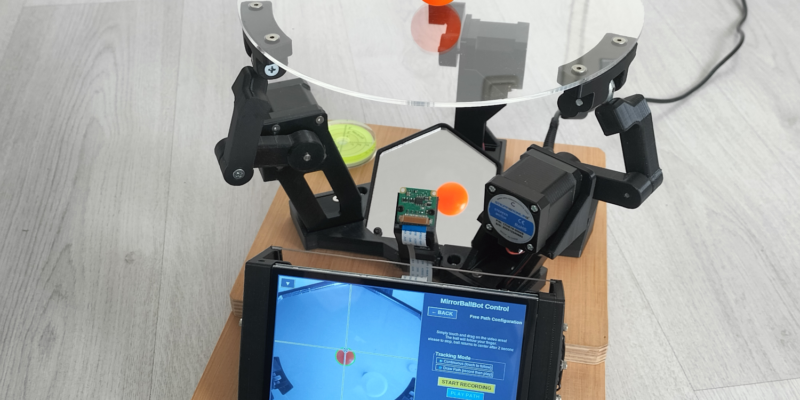
MirrorBallBot
This trick uses no smoke but it does use mirrors
Read more →
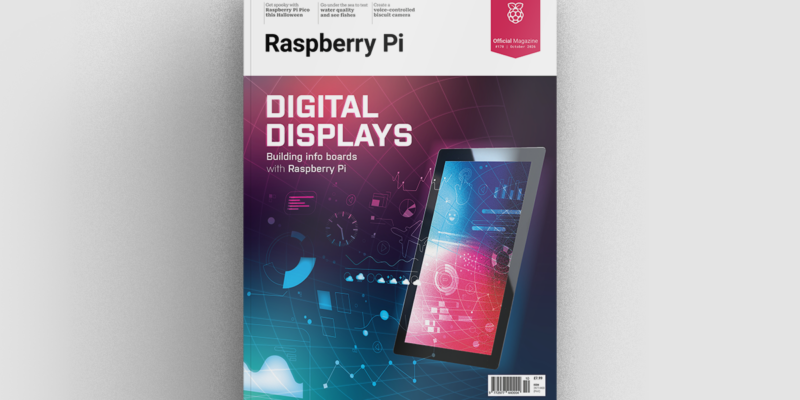
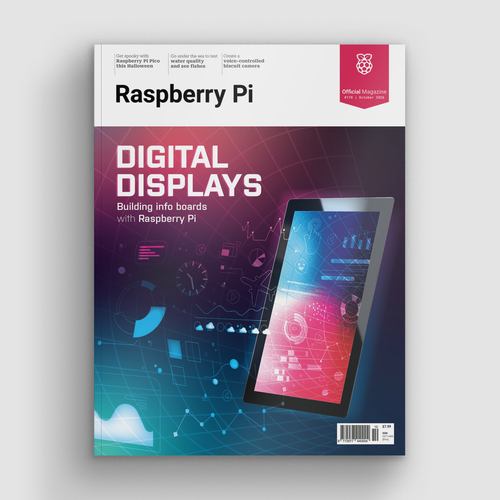
Digital Displays in Raspberry Pi Official Magazine 170
Some projects seem more like magic to us than anything else; here’s one of them. This robot by Italian engineer/magician Andrea Favero uses a mirror to widen the field of vision of a Raspberry Pi Camera Module 3, the input from which is processed by Raspberry Pi 4 and used to control three legs to […]
Read more →
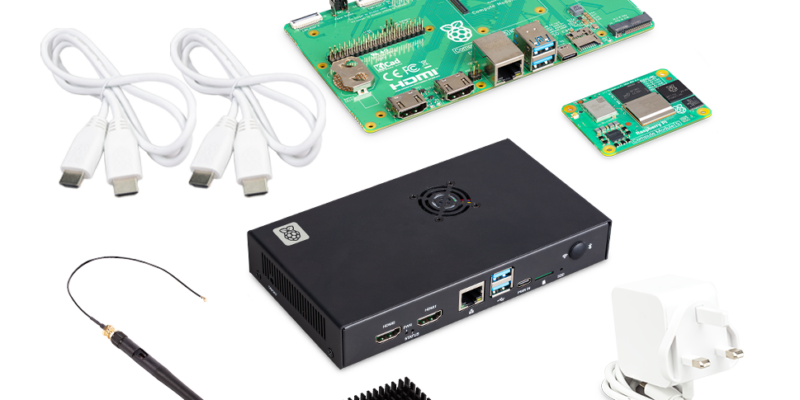
Win a Development Kit for Compute Module 5
Make CM5 development easier with our competition
Read more →