Raspberry Pi compute Module 4
By Ben Everard. Posted
This article was originally published as part of HackSpace magazine, which has since been incorporated into Raspberry Pi Official Magazine.
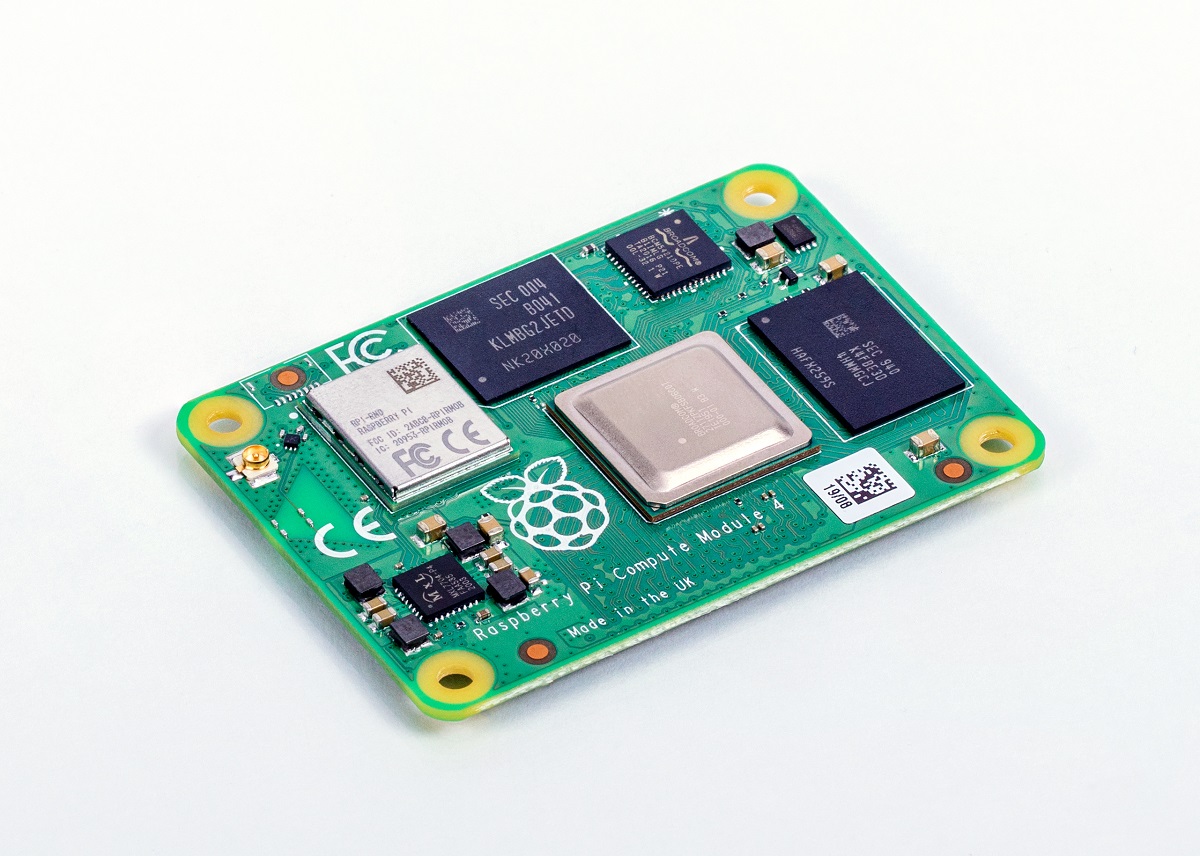
Raspberry Pi boards are great for teaching, and making your own projects, but, thanks to the Compute Module line, they can also be used as the basis for commercial and industrial products. These compute modules allow product designers to take the standard base of the Raspberry Pi hardware and build upon it.

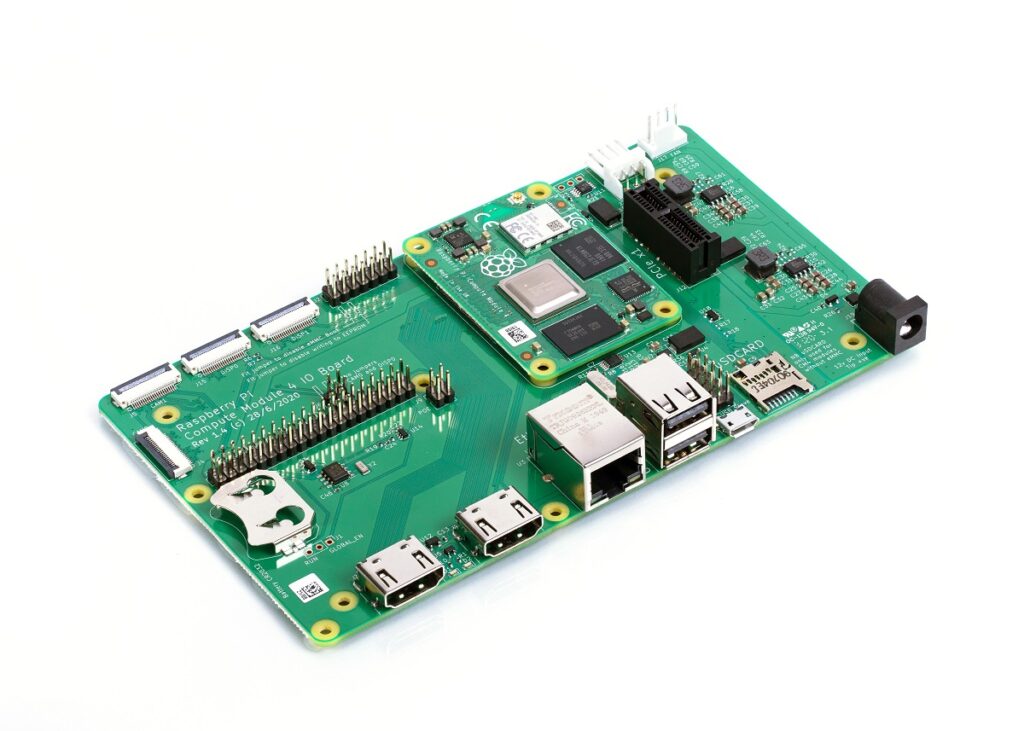
The Compute module 4 is simultaneously stripped down and beefed up. For example, there are no HDMI ports, USB ports, camera ports, or any of the usual bits to plug into. Instead there’s a pair of high-density connectors that can plug into a carrier board. While Raspberry Pi have released a carrier board (the Raspberry Pi Compute Module 4 Input/Output board) that breaks-out all the features of the Compute Module 4, we expect many companies and makers to design their own. To make this easy, Raspberry Pi have released the KiCAD files for the IO board so you can tweak the designs however you like.
Raspberry Pi CEO Eben Upton and Compute Module 4 designer Domonic Plunkett discuss the new products
For an in depth look at the new board, and how it compares to older Compute Modules, take a look at the MagPi’s excellent analysis.

Ben is the Editor of HackSpace magazine. When not wrangling words, he enjoys cycling, gardening, and attempting to identify wild mushrooms.
Subscribe to Raspberry Pi Official Magazine
Save up to 37% off the cover price and get a FREE Raspberry Pi Pico 2 W with a subscription to Raspberry Pi Official Magazine.
More articles

Liverpool MakeFest 2026 report
The UK’s largest free maker event celebrates creativity, arts, science, and technology
Read more →

D&D Book
A near magical book with ever-changing pages.
Read more →

Incredible Weather Projects in Raspberry Pi Official Magazine issue 171
If the planet gets too hot/too cold/too drizzly for human habitation, we’ll probably want to leave Earth in search of a better one. That means we’ll need a flight computer, and maker Michael Newton is one step ahead: he’s built a replica of the DSKY (display keyboard) interface from the Apollo Guidance Computer. Now you […]
Read more →