ScottoWing
By Ben Everard. Posted
This article was originally published as part of HackSpace magazine, which has since been incorporated into Raspberry Pi Official Magazine.

Having just made the plunge and bought our first mechanical keyboard, we’re amazed by the scope and variety of what are essentially identical objects. To our previously unenlightened minds, a keyboard was a keyboard was a keyboard. The idea that people would obsess over layout, or switches, or back-lighting, or programmability was a little bit weird. Why bother?
But that was then: this is now. Using a mechanical keyboard makes writing more fun. In the same way Jude Pullen talks about loving a drill in our interview on page 36, we’ve come to love our keyboard. It brought us some joy to discover the work of Joe Scotto who, under the nom-de-making ScottoKeebs, is making some gorgeous mechanical keyboards.

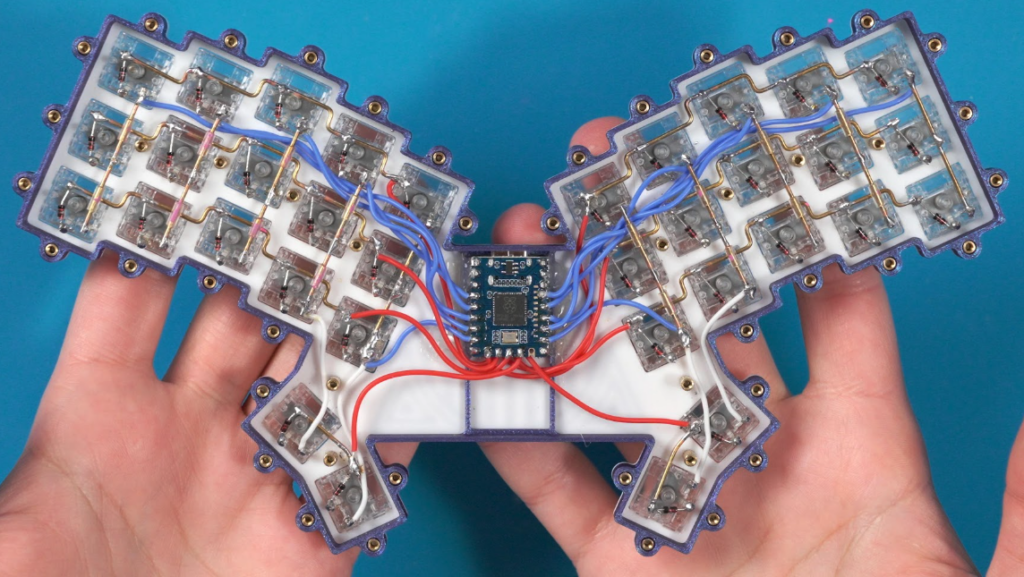
This latest, the ScottoWing, is a fully customisable ortholinear keyboard (that means that keys aren’t staggered, but arranged directly above one another). Scott’s made the design files available, so anyone with access to a decently equipped maker space should be able to make their own – and check out that beautiful hand wiring on the back.

Ben is the Editor of HackSpace magazine. When not wrangling words, he enjoys cycling, gardening, and attempting to identify wild mushrooms.
Subscribe to Raspberry Pi Official Magazine
Save up to 37% off the cover price and get a FREE Raspberry Pi Pico 2 W with a subscription to Raspberry Pi Official Magazine.
More articles
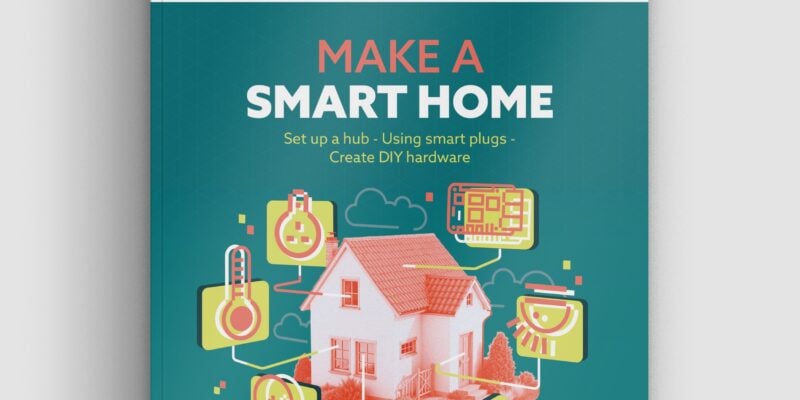
Make a Smart Home in Raspberry Pi Official Magazine issue 167
The dream of smart, connected devices controlling your home automatically, is especialy appealing on a lazy day when we’re trying to get work done in a heatwave. Maybe this will be the year we finally integrate temperature sensors with fans and a drinks dispenser to keep us cool, or maybe not, but we do know […]
Read more →

Win 1 of 3 Pironman 5 Pro Max cases!
Transform your Raspberry Pi with this amazing case
Read more →
Learning to code in an AI age
A new Raspberry Pi Foundation course helps young people learn to code.
Read more →