Sequino clock
By Andrew Gregory. Posted

This absurd, beautiful clock has been in development for at least six years, while its maker, Ekkagrat Singh Kalsi, irons out the kinks and refines the design. It uses a piece of material with sequins sewn on to it as the medium; a robotic finger traces the outline of the numerals on to the sequins, displaying the time in super-sparkly fashion.
It was inspired by a T-shirt worn by his daughter – sequins are tactile as well as shiny, and by stroking them one way or the other the wearer can flip them over to reveal the different-coloured underside.
As you might expect, this wasn’t a simple build: the maker had difficulties with the relatively low-resolution display (the sequins are around 5mm in diameter, stitched 3mm apart, which restricts the minimum size of display you can achieve using them as pixels). There’s also the extremely low refresh rate to contend with…
It takes 90 seconds to draw a digit, and refreshes every 5 minutes. That makes it useless for anything other than very vague time-keeping, but it’s so pretty that we don’t mind that.
Finally, from the name you may have guessed that this is an Arduino project, using as it does an Arduino Nano, Nano CNC shield, three Stepstick A4982 stepper motor drivers, one Hall effect sensor, and two IR reflective sensors. We challenge the reader to re-implement this using a Raspberry Pi Pico!

Features Editor Andrew trawls the internet for Cool Stuff while keeping the magazine running smoothly.
Subscribe to Raspberry Pi Official Magazine
Save up to 37% off the cover price and get a FREE Raspberry Pi Pico 2 W with a subscription to Raspberry Pi Official Magazine.
More articles
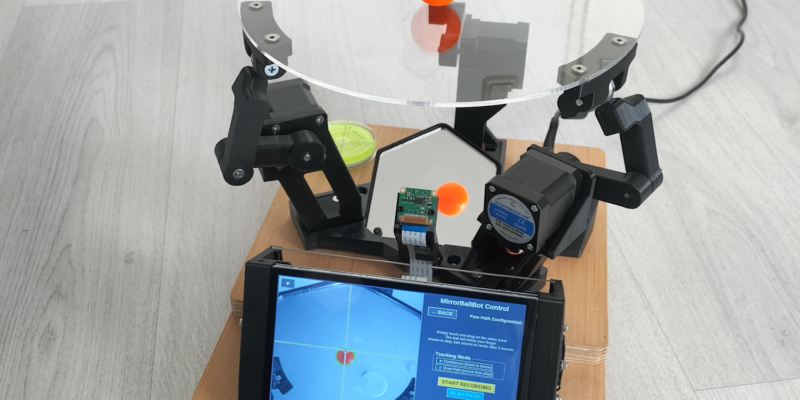
MirrorBallBot
This trick uses no smoke but it does use mirrors
Read more →
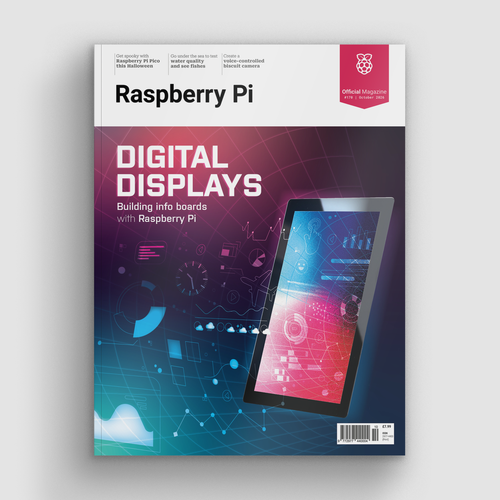
Digital Displays in Raspberry Pi Official Magazine 170
Some projects seem more like magic to us than anything else; here’s one of them. This robot by Italian engineer/magician Andrea Favero uses a mirror to widen the field of vision of a Raspberry Pi Camera Module 3, the input from which is processed by Raspberry Pi 4 and used to control three legs to […]
Read more →
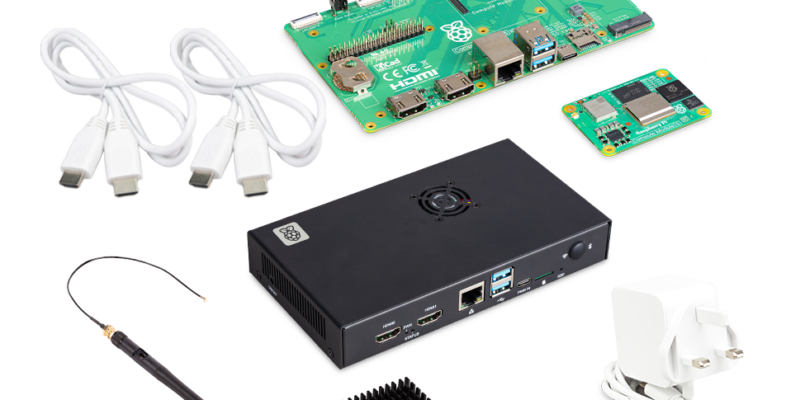
Win a Development Kit for Compute Module 5
Make CM5 development easier with our competition
Read more →