Solder fume extractor
By Andrew Gregory. Posted
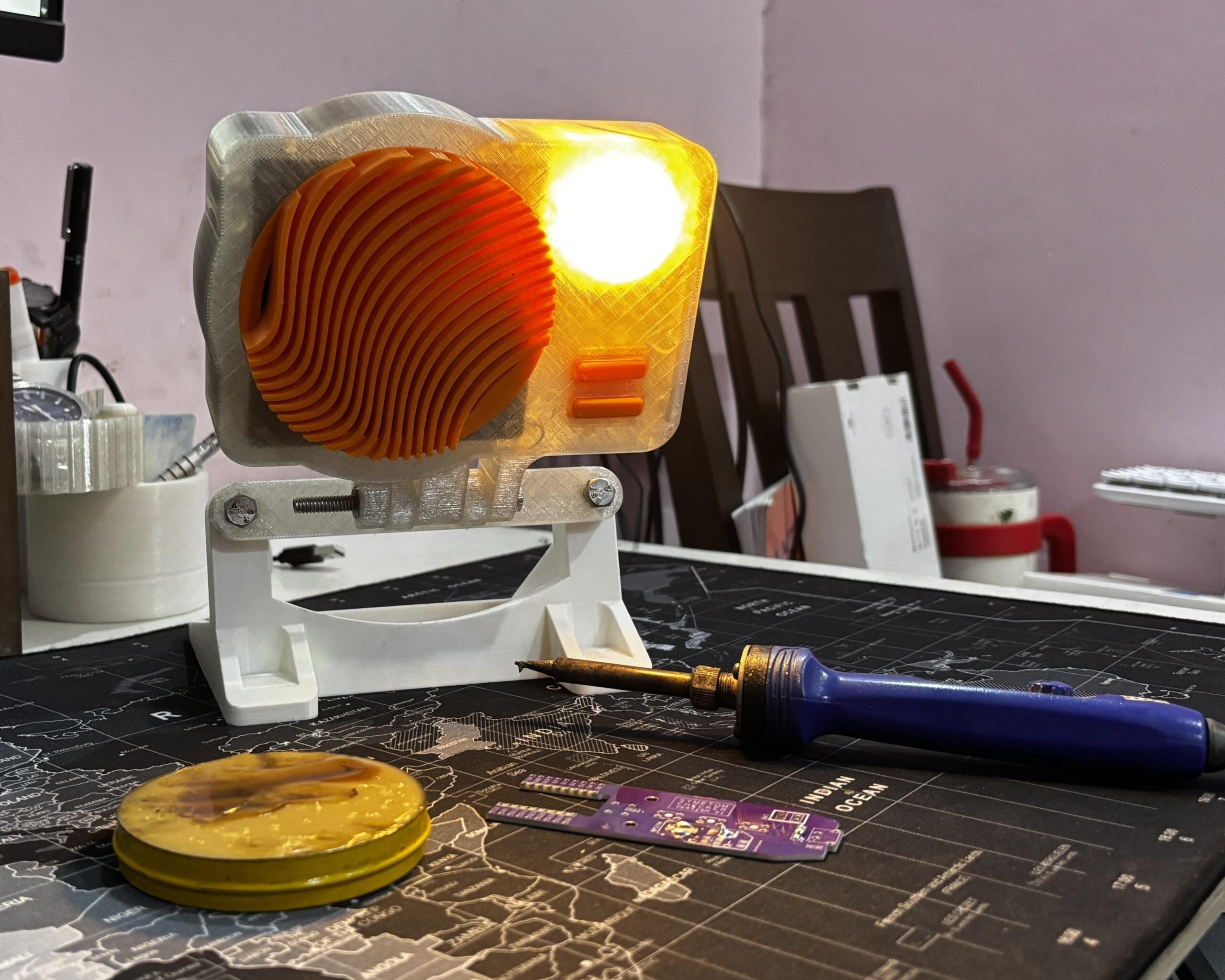
We made the switch to lead-free solder years ago, and while we don’t have any first-hand evidence that it’s better for our health than leaded solder, we trust the experts who say that breathing in lead fumes is bad for us and we should try to do less of it. If you’re still using solder with lead in it, do give unleaded a try and do yourself a favour. It’s not quite as easy to work with, but that’s a small price to pay for the potential health and environmental benefits.

Unleaded solder obviously isn’t made of rosewater and unicorn kisses though, so whatever you’re using when you’re sticking electronic components on to PCBs, you’ll need some sort of fume extraction method. Prolific maker Arnov Sharma has come up with this fume extractor, built on a Raspberry Pi Pico and assembled out of 3D printed parts that he’s designed himself.
At the core of this device is a repurposed CPU fan, a Raspberry Pi Pico, and a custom PCB driver board. Arnov also designed his own PCB to host the switches, and another one to hold the LEDs in the light – because you need good lighting when you’re soldering components together. The body is all made from 3D printed PLA, including the diffuser that sits over the LEDs, and there’s room for a replaceable filter for the fumes, so you’re actually removing toxins from the air and not just cycling air around.

Features Editor Andrew trawls the internet for Cool Stuff while keeping the magazine running smoothly.
Subscribe to Raspberry Pi Official Magazine
Save up to 37% off the cover price and get a FREE Raspberry Pi Pico 2 W with a subscription to Raspberry Pi Official Magazine.
More articles
Raspberry Pi Official Annual 2027 is out now!
New name, same fantastic content
Read more →
Robot arm lamp
This won’t be jumping on any animation studio logos
Read more →

Sage Cadence interview
An electrical engineering student trying to provide the educational content she would have wanted
Read more →