Arduino Maker Nano RP2040 review
By Phil King. Posted

The Maker Nano RP2040 (£8/$8) aims to combine the form factor of an Arduino Nano with the impressive power of the RP2040 system-on-chip, as used by Raspberry Pi Pico.
Slightly shorter than a Pico, this board has 30 pre-soldered pins, all helpfully labelled on the silkscreen. While the pinout is very similar to the Arduino Nano’s, there are four (12-bit) analogue inputs rather than eight (10-bit). Some digital GPIO pins are numbered differently too.
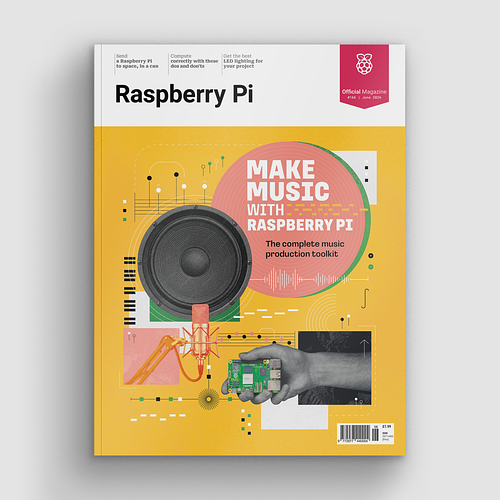
Make beautiful beats with the complete Raspberry Pi music production toolkit.
A pair of reset pins are linked to a handy reset button on the top, where there’s also a boot button – held to attach the board as a USB drive to a computer – and a programmable button linked to GPIO pin 20.
Other connections include a micro-USB port (for power and connecting a computer) and two Qwiic / STEMMA QT ‘maker ports’ which also work with Grove modules using the two supplied adapter cables.

Lights and sound
On either side of the micro-USB port are two RGB NeoPixel LEDs. Since both are linked to GPIO 11, they can’t be controlled separately, but some cool colour-changing effects can be achieved. In addition, 14 of the digital pins have tiny blue status LEDs that may well prove useful when troubleshooting I/O connections for circuits.
Primitive audio is also provided in the form of a piezo buzzer that can be muted with a slide switch. It can be programmed to play beepy tunes by sending numerical note values.
Talking of coding, the Maker Nano RP2040 comes with CircuitPython firmware pre-installed, including a mini demo that shows off the lights and sound. More code examples are found in the GitHub repo: magpi.cc/makernanogh. Alternatively, you can flash MicroPython firmware or program in C/C++ (natively or via the Arduino IDE). Like Pico, it’s very flexible.
Verdict
8/10
A well-designed microcontroller board with a familiar Arduino form factor, the power of RP2040, and cool bonus features.
Specs
Processor: RP2040 with 264kB SRAM and 2MB flash storage
Features: 14 × status LEDs, 2 × RGB LEDs, 3 × push-buttons, piezo buzzer, with switch
Connections: 22 × digital GPIO pins, 4 × analogue inputs, 2 × Qwiic / STEMMA QT ports, 2 × Grove adapters
Dimensions: 49.6 × 21.1 × 15 mm

When not editing books and contributing to The MagPi, Phil enjoys playing the piano (badly), astronomy, and watching classic sitcoms.
Subscribe to Raspberry Pi Official Magazine
Save up to 37% off the cover price and get a FREE Raspberry Pi Pico 2 W with a subscription to Raspberry Pi Official Magazine.
More articles
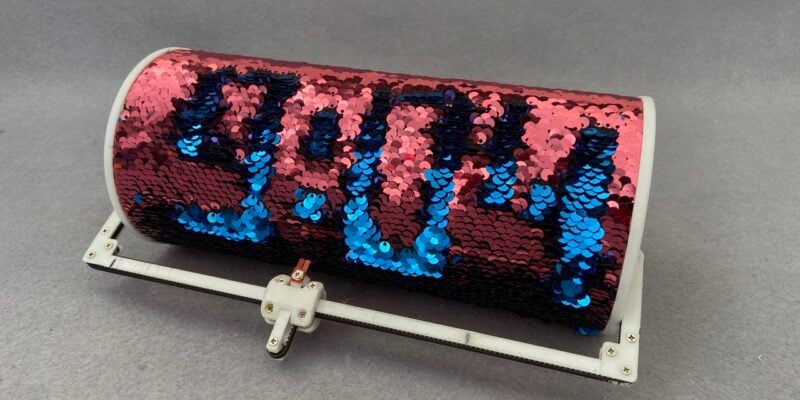
Sequino clock
This tricky build was inspired by a child’s t-shirt
Read more →
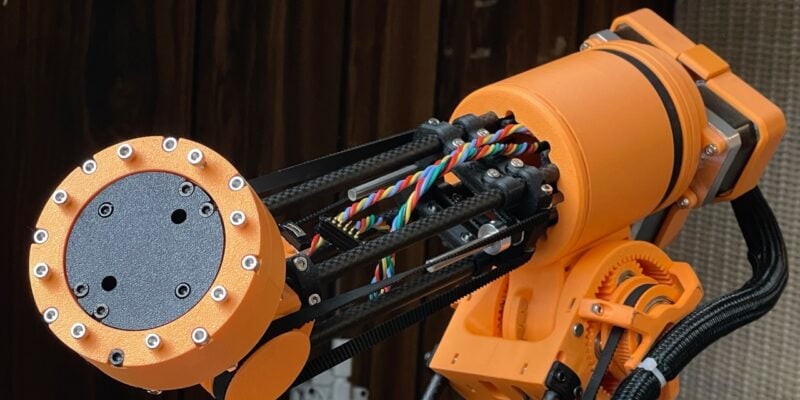
Use a robot to build a robot
This glorious, (mostly) 3D printed robot has six degrees of freedom.
Read more →
Make Music With Raspberry Pi in Official Raspberry Pi Magazine issue 166
Music production is an esoteric world of chin stroking and arguing over what kind of valve makes the best sound in a guitar amplifier – at least, it can be. Load up on software, bring your friends, and record your latest masterpiece on Raspberry Pi. We bring news from the world of 3D printing, where […]
Read more →