Bacteria sing: biology synth Micro-ritmos
By Russell Barnes. Posted

Micro-ritmos is a musical instrument that automatically generates songs based on biology.
Micro-ritmos is a biology musical instrument that automatically generates songs based on the movement of bacteria cells.
A Raspberry Pi is used to observe the patterns formed in a bacterial cell. Their movements are transformed into audio noises.
With Micro-ritmos you can hear bacteria singing.
The patterns are used to generate music using SuperCollider. This open-source software provides a platform for audio synthesis.
A Raspberry Pi and Camera Module is used to observe the patterns in a biological cell. The bacteria triggers light patterns, which are watched by the Raspberry Pi.
Inside the project, a Python program watches the bacterial cells. It then uses this info with SuperCollider. RaspiHub calls it "live-coding created by a biological process."
Micro-ritmos from LessNullVoid on Vimeo.
Build a biology synth and hear bacteria sing
The team behind the Micro-ritmos is Mexican. They are Paloma López, Leslie Garcia and Emmanuel Anguiano. The team is called Interspecfics.
- Build information for the Micro-ritmos can be found on GitHub. It’s in Spanish, but Google Translate will help.
"Micro-rhythms is a sound spatialization system where we use pattern recognition generated by potential variations in bacterial cells," says Interspifics (via Google Translate)."
It uses "machine learning written in Python and running on Raspberry Pi," the team says. "The system produces a kind of graphic score that is generated autonomously and in real-time."
Nature is a wonderful thing. And we are loving a lot of recent projects that combine Raspberry Pi with the biological elements.
Inside the Micro-ritmos is a biological material known as Geobacter. According to Geobacter.org, these organisms are interesting "because of their novel electron transfer capabilities, the ability to transfer electrons outside the cell and transport these electrons over long distances via conductive filaments known as microbial nanowires."
We think Micro-ritmos is one of the most intriguing projects we've seen in a while. It's created as an art installation. We hope it goes on display in Mexico soon.

Russell runs Raspberry Pi Press, which includes The MagPi, Hello World, HackSpace magazine, and book projects. He’s a massive sci-fi bore.
Subscribe to Raspberry Pi Official Magazine
Save up to 37% off the cover price and get a FREE Raspberry Pi Pico 2 W with a subscription to Raspberry Pi Official Magazine.
More articles
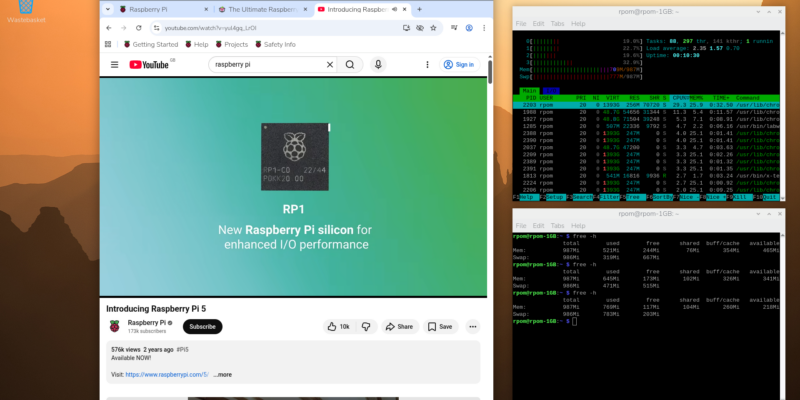
Make your RAM go further – Raspberry Pi OS memory optimisation tips
In issue 164 of Raspberry Pi Official Magazine we have been playing around with the new Raspberry Pi 5 1GB RAM. While the RAM shortage caused by the demands of AI infrastructure is annoying beyond belief, this has been a great chance for us to really get to grips with RAM. Generating images in Stable […]
Read more →
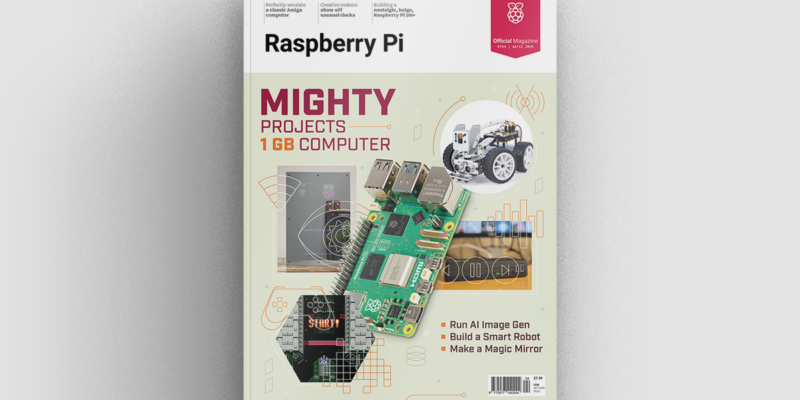
Mighty Projects – 1GB Computer in Raspberry Pi Official Magazine 164
It’s normal for computers to get faster and more pwerful, but the new-ish Raspberry Pi 5 1GB is a step in the other direction: it has all the processing power and the same GPIO pins of its more costly siblings, but with only 1GB of RAM it’s at a price that’s friendlier on the wallet […]
Read more →

Win one of five 256GB Raspberry Pi Flash Drives
If you’ve been around long enough, you know that every Raspberry Pi accessory is top quality, and the latest Flash Drive is no different. Fancy a big one? We have five up for grabs, and you can enter below… Win 1 of 5 256GB Raspberry Pi Flash Drives
Read more →