The Tube Amp Powered By Batteries
By Thomas Hafemann. Posted
This article was originally published as part of HackSpace magazine, which has since been incorporated into Raspberry Pi Official Magazine.

I started playing guitar in my teens, and saw DIY as an opportunity to build all the pedals that I could not afford at the time. I have built several mini amplifiers using sub-miniature tubes, but mostly they are still too loud to play in an apartment, and still require a lot of power just to heat up and power up the switched-mode power supply (SMPS) which multiplies the voltage, from 12 V to 200 V. I always wanted to build a battery-powered tube amplifier for the guitar, like some old radios, but wanted to use the current available LiPo batteries; much easier to recharge than the old 45 V batteries.
1J29b tubes
So, first I tested if the SMPS that I was currently using could work at lower input voltages. 3.7 V in this case was not enough, so I used two batteries in series, and that worked up to 150 V. The tubes I found while looking for battery tubes. There is an article about the 1J24b, stating that, with a much lower filament, it could deliver the same amplification as the DF96, making this tube the best gain/consumption tube available. For the power stage, I chose the 1J29b, from the same family of Russian tubes with lower filament currents.

Two main stages
The amplifier is composed of two main stages: a paraphase phase inverter, and a push-pull output stage. I used a 100 V line transformer as the output transformer, to keep the cost low, and to achieve the high primary impedance required by the output tubes. A proper transformer would be at least two times bigger, and would cost at least four times more than this one.


Thomas is a maker of small amplifier builds using subminiature tubes, miniature preamp tubes and old radio tubes.
Subscribe to Raspberry Pi Official Magazine
Save up to 37% off the cover price and get a FREE Raspberry Pi Pico 2 W with a subscription to Raspberry Pi Official Magazine.
More articles
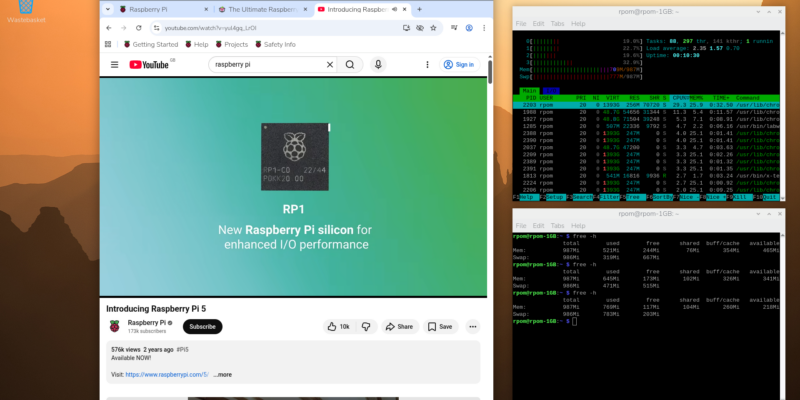
Make your RAM go further – Raspberry Pi OS memory optimisation tips
In issue 164 of Raspberry Pi Official Magazine we have been playing around with the new Raspberry Pi 5 1GB RAM. While the RAM shortage caused by the demands of AI infrastructure is annoying beyond belief, this has been a great chance for us to really get to grips with RAM. Generating images in Stable […]
Read more →
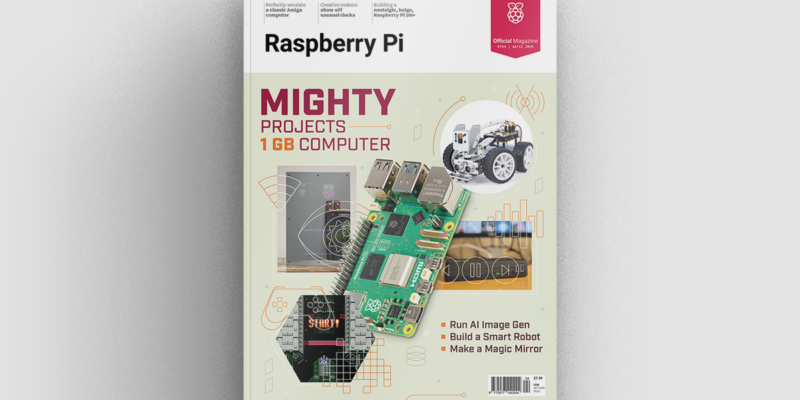
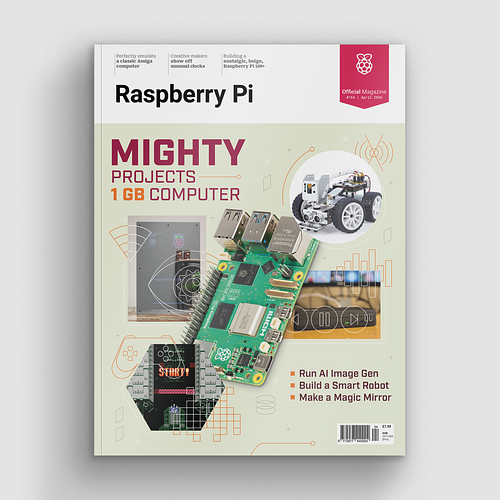
Mighty Projects – 1GB Computer in Raspberry Pi Official Magazine 164
It’s normal for computers to get faster and more pwerful, but the new-ish Raspberry Pi 5 1GB is a step in the other direction: it has all the processing power and the same GPIO pins of its more costly siblings, but with only 1GB of RAM it’s at a price that’s friendlier on the wallet […]
Read more →
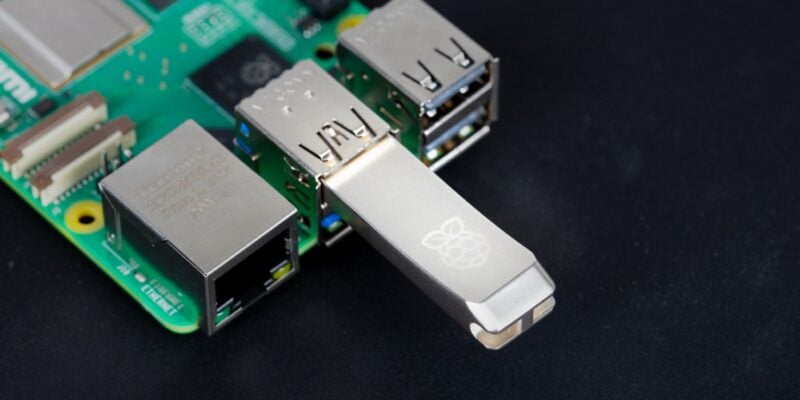
Win one of five 256GB Raspberry Pi Flash Drives
If you’ve been around long enough, you know that every Raspberry Pi accessory is top quality, and the latest Flash Drive is no different. Fancy a big one? We have five up for grabs, and you can enter below… Win 1 of 5 256GB Raspberry Pi Flash Drives
Read more →