Can We Hack It? Hot Wires
By Les Pounder. Posted
This article was originally published as part of HackSpace magazine, which has since been incorporated into Raspberry Pi Official Magazine.

It is easy to think that learning electronics is now just about picking up an Arduino and writing some code, but that is not the case. From the 1970s, there have been electronics kits that offered children the opportunity to create simple circuits from a box of components.
Typically, these kits were laid out like a board game, but in the early 2000s the kits were reinvented and now come under many names, Snap Circuit and Hot Wires being the two most popular. But are they any good, and can we hack them? Well, there is only one way to find out.
GENERAL CONSTRUCTION
The components are formed into ‘bricks’ of many different sizes and shapes. Each piece is made from a thin plastic that can be easily broken, so take care when taking them apart.
But, when we do take them apart, we see a component – such as an LED, button, or transistor – soldered to press studs.
These press studs are used to make physical connections/ circuits in the experiments, providing a firm, yet easily disconnected, mechanical connection. The press studs are the same as used in clothing, so finding replacements and fitting is a relatively easy process.
ELECTRONICS
The electronics kit comes with many different components, all packaged in plastic bricks that connect using press studs. However, inside the bricks are common through-hole electronic components. This means that they can be easily replaced, should they break. Yes, you can buy replacement parts online, but a capacitor brick will set you back a few pounds, whereas soldering a new capacitor will cost you 10p!
HACKABILITY
This is a fun kit to hack! Let’s start with the basics – we can connect the components to boards such as Adafruit’s Gemma M0 and Circuit Playground Express using crocodile clips.
So this means we can power the circuit and use the GPIO (general-purpose input/output) pins to control and react to the same components.
But, what if we wanted to make circuits using Hot Wires and Raspberry Pi or Arduino boards? Well, for that we need to use some crocodile clip to female or male header wires, which can be bought for under £10.

So this means that an electronics kit made for kids can be used to help children learn more about electronics with computers and microcontrollers.
But let’s do a little more hacking. Remember that the plastic bricks can be taken apart. Well, this means that we can replace the components with others.
So, if you really want NeoPixels, rotary encoders, or anything else, then so be it. In fact, with a little 3D printing or laser cutting, we can make our own compatible bricks. An Arduino or Raspberry Pi brick would be awesome!
Hot Wires are designed for children to learn simple electronics skills, but they can grow with the child as their learning progresses.
By adding new components, and connections to powerful devices such as Raspberry Pi, we can introduce the child to new ideas while still ensuring their safety. We wouldn’t introduce a bare resistor or LED to a small child, but with the bricks, we can easily do so.
By making your own bricks, using a laser cutter or 3D printer, there is no limit as to what you can do with Hot Wires. The easily found press studs also provide a strong mechanical connection, while still remaining easy to use for little hands.
If you have a little engineer in the family, then this would be a good start to their career.
SMALL BEGINNINGS
Your author has first-hand experience of the power of Hot Wires and Snap Circuits. Children who attend Blackpool Raspberry Jam have been using them for four years, and they have proven to be an excellent tool. When a new child comes to the Jam, we like to make them feel welcome, and so we dig into the big box of circuits and build something together. The helicopter launch project is always a big hit!
Learning electronics is a lifelong skill and every day we will learn something new, even about things which we are already experts in. These bricks offer children, and adults, a safe and engaging entrance into electronics. We have often used them to design circuits and work out ideas before creating more traditional projects. Their greatest strength is their simplicity – it removes any doubt when trying something new. We simply focus on building, rather than doubting.
Hot wires kit: £42.98

Les Pounder is a maker and author who works with the Raspberry Pi Foundation to deliver Picademy. He also helps teachers/learners to become creative technologists.
Subscribe to Raspberry Pi Official Magazine
Save up to 37% off the cover price and get a FREE Raspberry Pi Pico 2 W with a subscription to Raspberry Pi Official Magazine.
More articles
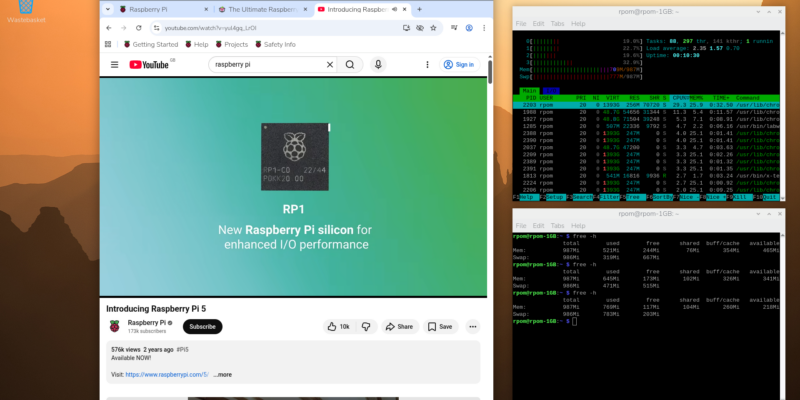
Make your RAM go further – Raspberry Pi OS memory optimisation tips
In issue 164 of Raspberry Pi Official Magazine we have been playing around with the new Raspberry Pi 5 1GB RAM. While the RAM shortage caused by the demands of AI infrastructure is annoying beyond belief, this has been a great chance for us to really get to grips with RAM. Generating images in Stable […]
Read more →
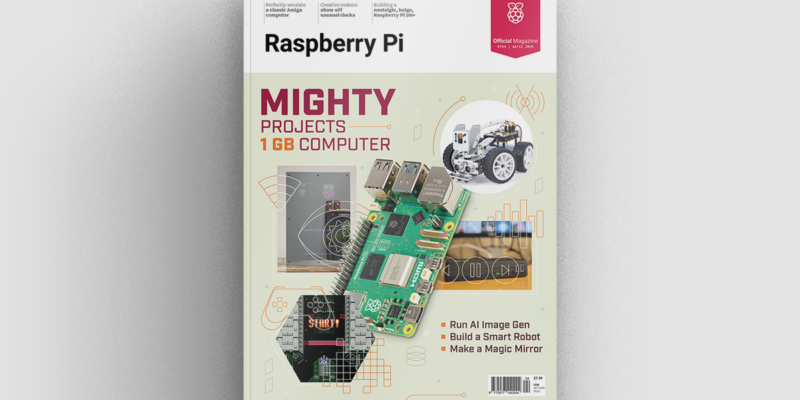
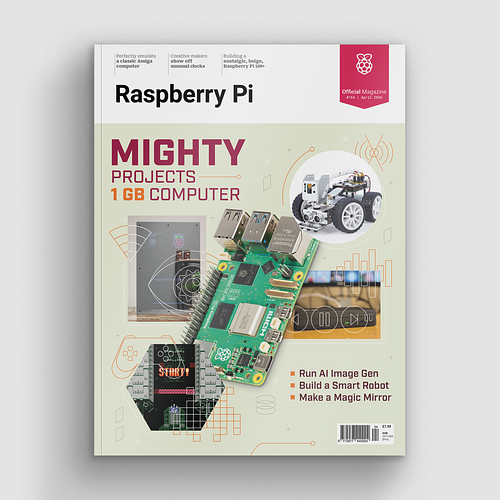
Mighty Projects – 1GB Computer in Raspberry Pi Official Magazine 164
It’s normal for computers to get faster and more pwerful, but the new-ish Raspberry Pi 5 1GB is a step in the other direction: it has all the processing power and the same GPIO pins of its more costly siblings, but with only 1GB of RAM it’s at a price that’s friendlier on the wallet […]
Read more →
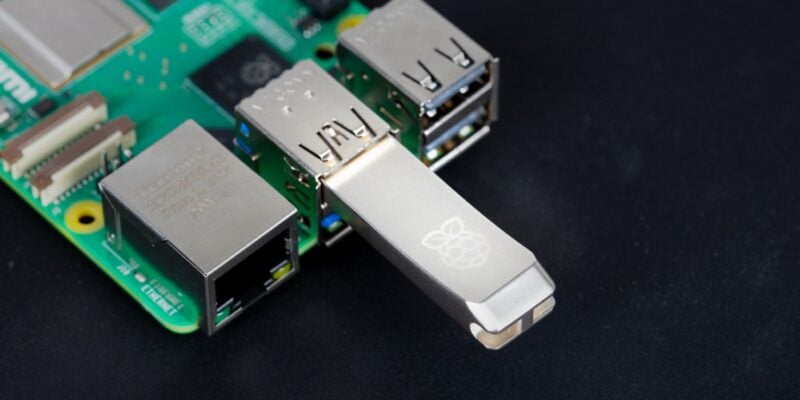
Win one of five 256GB Raspberry Pi Flash Drives
If you’ve been around long enough, you know that every Raspberry Pi accessory is top quality, and the latest Flash Drive is no different. Fancy a big one? We have five up for grabs, and you can enter below… Win 1 of 5 256GB Raspberry Pi Flash Drives
Read more →