Coding in an AI age
By Lucy Hattersley. Posted

We live in what the Chinese reputedly referred to as ‘interesting times’! LLMs (Large Language Models) such as GPT, LLama and MMLU have shaken the world, and the world of computing in particular.
It’s worth remembering that the “T” in GPT stands for “transformer” (Generative Pre-Trained Transformer in full). GPT isn’t creating its own words, it’s transforming your input into a response through a highly educated guess based on its training model. It does not – yet – seem to understand what it’s saying. And it’s often misguided. But let’s not dwell on that and look at the positives.
In the case of ChatGPT this training model is huge. GPT-4 is trained on 13 trillion tokens (parts of words) and around 10 trillion words. The training set clearly includes a lot of code from web sources, forums and books.
Artists are understandably less than thrilled that AI is producing facsimiles of their work without giving them credit, or payment. For coders: AI changes everything. It can help you write, explain, understand, and improve the quality of code, and increase productivity by enhancing performance. It’s versatile in all programming languages and can help translate code between them.
On the downside, GPT can spit out code that kind of works for people who sort of understand it. And, as it gets better, they may not need, or even want, to understand it.
Abstract arts
Everybody involved in technology knows about abstraction. The process whereby the intricate technology stack gets hidden away, and the user is presented with a simpler interface. The iPhone is easier than the GUI PC, which is easier than the DOS PC, which is easier than the PDP.
This next step: the ChatGPT “How can I help today?” rather than an IDE and knowledge of coding.
Raspberry Pi exists, on some level, counter to abstraction. We want to tear people away from their shiny slabs of glass and glue, and show them the insides of a computer. “It isn’t magic, it’s just billions of on/off switches flicking on and off at a billion times per second!” Which is, in itself, a form of magic.
Anybody doubting the importance of GPT and similar technologies isn’t really paying attention. The negative responses remind me of Douglas Adams’ three rules:
-
Anything that is in the world when you’re born is normal and ordinary and is just a natural part of the way the world works.
-
Anything that’s invented between when you’re 15 and 35 is new and exciting and revolutionary and you can probably get a career in it.
-
Anything invented after you’re 35 is against the natural order of things.
Most of us are somewhere between two and three, but objections to AI aren’t just Ludditism. When applied to creative arts, AI devalues human involvement and can be accused of plagiarism. The same can be said of code, of course, but art feels instinctively more personal.
Coding is an incredibly cerebral process and requires creativity and deep thought. But coders stand on the shoulders of giants. I may understand a merge-sort algorithm, but I sure as heck didn’t come up with it. And using AI to put it to work and explain it to me feels inherently useful. John von Neumann might disagree if he was around, but somehow I feel he’d be delighted.
Lucy is Editor of Raspberry Pi Official Magazine.
Subscribe to Raspberry Pi Official Magazine
Save up to 37% off the cover price and get a FREE Raspberry Pi Pico 2 W with a subscription to Raspberry Pi Official Magazine.
More articles
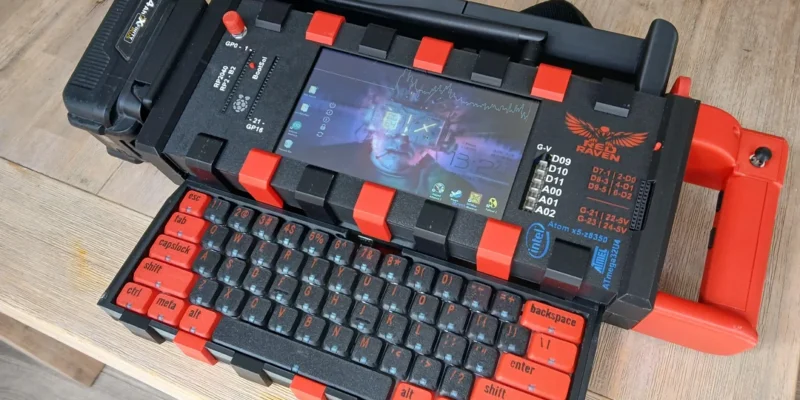
Red Raven cyberdeck
Powered by drills
Read more →
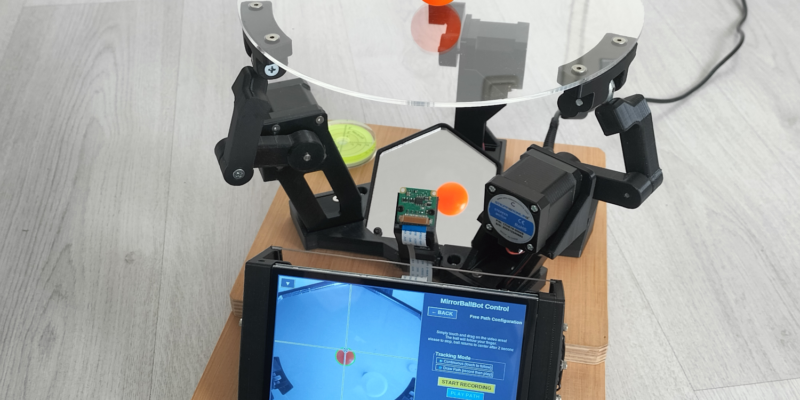
MirrorBallBot
This trick uses no smoke but it does use mirrors
Read more →
Digital Displays in Raspberry Pi Official Magazine 170
Some projects seem more like magic to us than anything else; here’s one of them. This robot by Italian engineer/magician Andrea Favero uses a mirror to widen the field of vision of a Raspberry Pi Camera Module 3, the input from which is processed by Raspberry Pi 4 and used to control three legs to […]
Read more →