E-ink shipping monitor
By Andrew Gregory. Posted
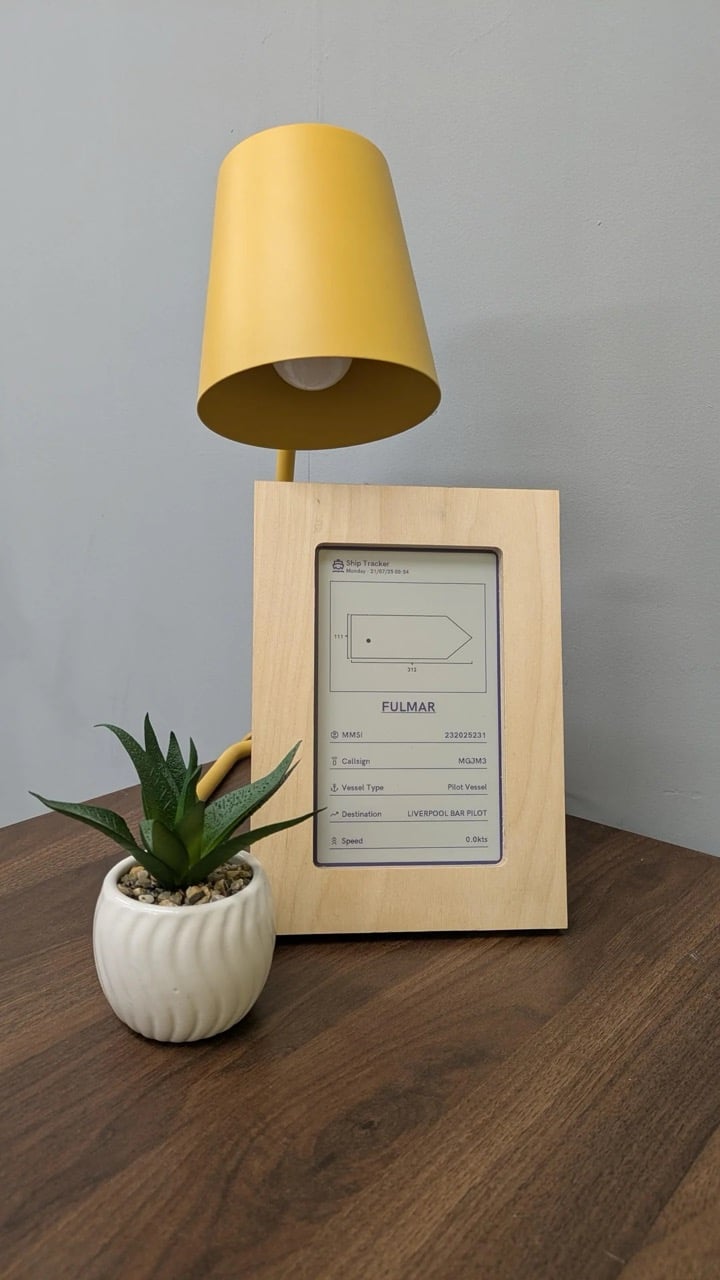
Otis Redding may have sat on the dock of the bay, watching the ships go rolling in and rolling out again, but history doesn’t record whether we ever wondered what the ships were called, or where they came from. Unlike Reddit user Embarrassed Octopus, who was curious about the glimpses of the ships on the Mersey that they get from out the window of their home.

The display comprises a Raspberry Pi Zero 2 W, a Pimoroni Inky Impression 7.3-inch display, and a Wegmatt dAISy Mini AIS receiver. AIS stands for ‘Automatic Identification System’, and it’s this device that picks up the signals coming from the ships themselves, which goes to the display via the Raspberry Pi Zero 2 W. There’s probably a website somewhere that displays the location of ships, and you could build a similar system using an API to extract data from that website, but this uses real-time data collected via VHF radio frequencies direct from the ships themselves, which makes it far, far cooler.

According to the maker, there are three screens: “geofence, table, and map. Map will show all vessels that have been heard from in the past five minutes. Table shows the most recent 20 vessels that have been seen and geofence is the most recent vessel to enter a user defined area, which I’ve set up to be right where we can see from the window.”

The geofence screen also outputs a blueprint of the ship, showing the length and breadth of the vessel plus the location of the ship’s GPS receiver, which gives you an idea where the bridge is. Ahoy!

Features Editor Andrew trawls the internet for Cool Stuff while keeping the magazine running smoothly.
Subscribe to Raspberry Pi Official Magazine
Save up to 37% off the cover price and get a FREE Raspberry Pi Pico 2 W with a subscription to Raspberry Pi Official Magazine.