Every tool’s (not) a hammer
By Dr Lucy Rogers. Posted
This article was originally published as part of HackSpace magazine, which has since been incorporated into Raspberry Pi Official Magazine.
We have probably all seen the photo of what a smartphone replaces, compared to 1980s technology – stills camera, video camera, audio recorder, calendar, diary, phone, TV, radio, etc.
But I had never really thought about it replacing items in my tool-box. Until I saw people tweeting about a multimeter that you could plug into a smartphone – and then the better idea (especially if you’re measuring high voltages etc.): a Bluetooth multimeter. We all carry our phones around with us, so why not let it be the brain of our tools?
When I first got an iPhone, I was mesmerised by the spirit-level, ruler, and compass apps – although back in those early days I did struggle with actually getting the compass to point in the correct direction. However, I have never used them instead of ‘analogue’ tools. It never crossed my mind until after I’d got a spirit-level out that I could have used the phone.
But now my interest has been piqued, I’ve started investigating phone tools (it’s quite difficult to search online for – the results include a lot of tool-kits for dismantling a phone).
Advertisement
Get started with Raspberry Pi – everything you need to know to start your journey!
Probably one of the most useful is the ‘lone worker’ or ‘man down’ safety monitoring application that allows employees (and I assume friends/family) to quickly request aid when working on their own, and no one else is around to call for help. Some of these include a panic button or a hands-free trigger, such as a tether that just needs to be pulled from the headphone jack, so a request for help can be sent without having to unlock the phone.
Something else I’d not come across, and not something I need but I can see their advantage when having a lot of tools on-site, is Bluetooth-enabled power tools. The Bluetooth is used for monitoring where each tool is on-site and how much battery life is left. Some even support wireless charging.
You can also get items that either plug into your phone, or that wirelessly connect:
• Thermal imaging/infrared sensors
• Moisture and humidity meters
• Inspection scopes
• Stud finders
• Clamp and infrared thermometers
• Thermal and vane anemometers
• Laser distance measurers
• Differential pressure meters
You can also use your phone to measure – up to certain limits – audio power or noise levels, vibration, and magnetic flux. Then there are augmented reality apps that calculate slope, distance, and height. And of course, there’s always the torch!
Combined with all these, you can get phones and cases that are waterproof and even MIL-spec rugged – so they can withstand drops, and extremes in temperature and barometric pressure.
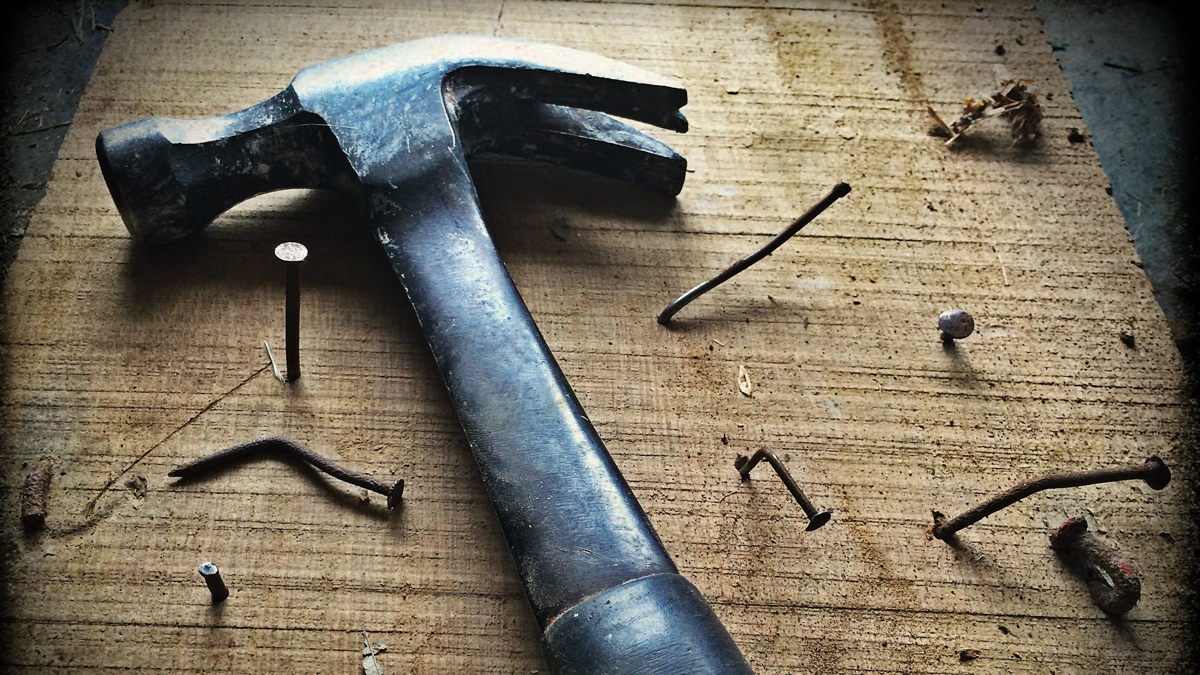
Still, I doubt it will ever replace my hammer.

Lucy is a maker, an engineer, and a problem solver. She is adept at bringing ideas to life. She is one of the cheerleaders for the maker industry and is Maker-In-Chief for the Guild of Makers.
Subscribe to Raspberry Pi Official Magazine
Save up to 37% off the cover price and get a FREE Raspberry Pi Pico 2 W with a subscription to Raspberry Pi Official Magazine.
More articles
Get started with Raspberry Pi in Raspberry Pi Official Magazine 161
There’s loads going on in this issue: first of all, how about using a capacitive touch board and Raspberry Pi 5 to turn a quilt into an input device? Nicola King shows you how. If you’re more into sawing and drilling than needlework, Jo Hinchliffe has built an underwater rover out of plastic piping and […]
Read more →

Win one of three DreamHAT+ radars!
That’s right, an actual working radar for your Raspberry Pi. We reviewed it a few months ago and have since been amazed at some of the projects that have used it, like last month’s motion sensor from the movie Aliens. Sound good? Well we have a few to give away, and you can enter below. […]
Read more →
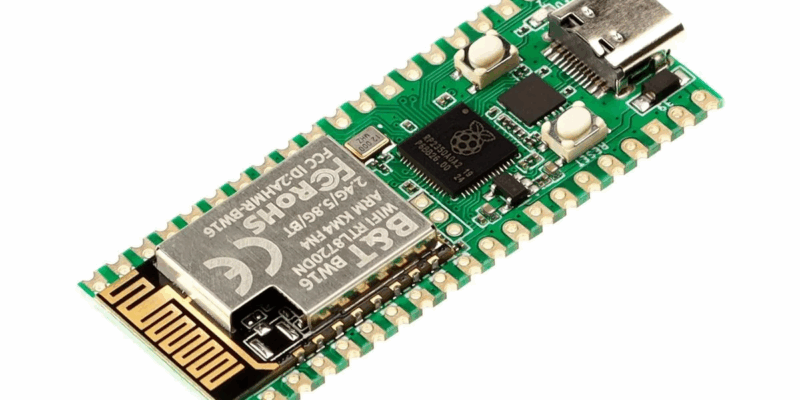
RP2350 Pico W5 review
It’s Raspberry Pi Pico 2, but with a lot more memory
Read more →