Giant Hornet Detector
By Rosemary Hattersley. Posted

Murder hornets have become the stuff of tabloid hyperbole and alarming YouTube video clips, but Asian giant hornets (as they’re more properly termed) aren’t all that common. However, they’ve been making inroads in the US state of Washington where maker and long-term apiarist Sean Cusack lives. Keen to avoid seeing local bees’ nests destroyed, he set about creating the Murder Hornet Detector, a citizen science project that identifies the invasive species and demonstrates a rather good use of Raspberry Pi.
Program a robot arm, with Raspberry Pi and Python code
Sean has been keeping bees for around seven years and began developing a small photo booth – the HoneyBee Booth – that would use artificial intelligence to detect and count Varroa mites, and notify him of the findings. He adapted it to detect other species on hearing about the murder hornets’ arrival.
Geolocation data of any affected hives is sent to a Microsoft Azure IoT Central dashboard. Washington’s Department of Agriculture can use this in their efforts to eradicate the invasive species. “Using Raspberry Pi 3, Arducam [camera], small motion sensor, and 3D-printable case, I’m able to classify an image in about two seconds,” claims Sean. However, keen to make this an easily and cheaply replicable project, he suggests a $5 Raspberry Pi Zero will work almost as well, with the caveat that identification takes closer to a minute.

Sharing the resulting images poses a problem, since many beehives are remotely located, but Sean is hoping LoRaWAN (Long Range Wide Area Network) will help. LoRaWAN is designed to work with low-power devices over vast areas and will work well in locations not covered by 3G or wireless LAN. “All the image classification takes place on Raspberry Pi, leaving only the need to transmit telemetry data, which should fit nicely within packet size limitations that exist with LoRaWAN.”
Track and trace
Sean is keen to ensure others can replicate his project, envisaging “a non-tech savvy beekeeper” putting one together and watching for Asian giant hornets. Cost, open-source code, and a simple build were therefore priorities. “I love the idea of a community contributing to a large pool of images that can be used to further train and improve the learning models,” he says. It also means Raspberry Pi Zero can be used, keeping all-important costs low.

He sketched and 3D-printed his own basic, but weatherproof, case as the camera booth and to house Raspberry Pi. There’s a hole on the top for the LED, while the camera and wires for the motion sensor were inserted via the booth door and attached at the end. Sean enabled SSH and I2C using the command prompt (see the setup instructions) so Raspberry Pi can be accessed remotely. A funnel added at the end helps ensure insects are hustled into the booth to be photographed. Getting the camera focus right and clear images of booth visitors was time-consuming but, as Sean’s enthusiasm shows, the results have proved rewarding.
Exciting sightings
Sean is excited about the possibilities of the project based around a camera, motion sensor, and a learning model. “Maybe you want to spot an incoming locust migration, get up-close pictures of a very rare insect species, [or] spot elephants on a train track and alert the conductor or train station to stop?” he enthuses. “I can’t wait to see what people come up with!”

Rosie has worked for consumer tech titles such as PC Advisor, Computeractive, CNET and Macworld and written For Dummies books on using iPads, Androids and tablets
Subscribe to Raspberry Pi Official Magazine
Save up to 37% off the cover price and get a FREE Raspberry Pi Pico 2 W with a subscription to Raspberry Pi Official Magazine.
More articles
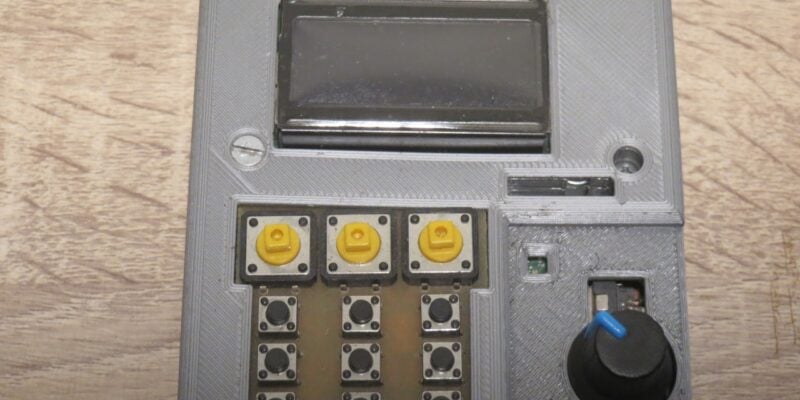
Kuensa portable music sequencer
We like the look of where this device is going.
Read more →
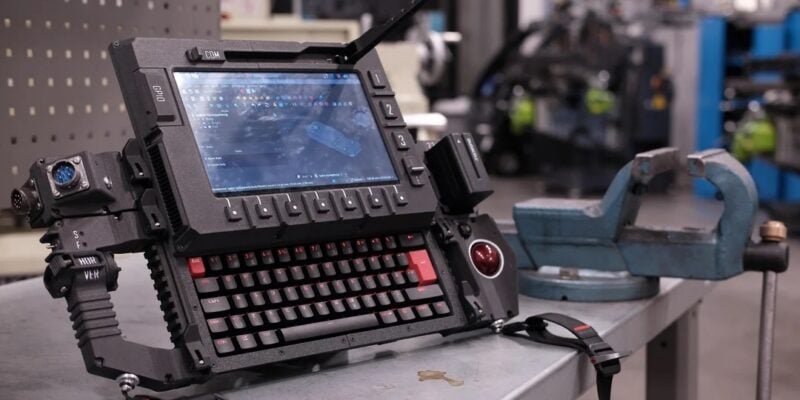
Cyberdeck
We can’t imagine the looks you’d get using this machine on your daily commute, but apparently the maker of this wonderful machine does just that.
Read more →
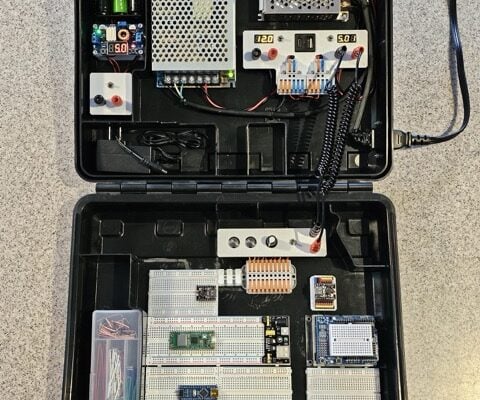
Programming station
Spot the microcontroller: we can see an Arduino Uno, Arduino Nano, a pair of ESP32 boards, and a Raspberry Pi Pico, all waiting to be played with.
Read more →