Global Meteor Network
By Phil King. Posted
This article was originally published as part of HackSpace magazine, which has since been incorporated into Raspberry Pi Official Magazine.

Many space-related citizen science projects require participants to analyse collections of existing photos and other data such as radio bursts. Global Meteor Network takes a more hands-on approach to observing the night sky, although it makes use of cameras rather than telescopes.
Did you know that every day, hundreds of tons of small interplanetary objects enter Earth’s atmosphere? These tiny, typically pea-sized fragments can offer us a unique view on the formation and evolution of our solar system. Yet most of them remain unobserved.
The Global Meteor Network’s mission is to observe these meteors, aka shooting stars, using a global network of cameras pointed at the night sky. Each camera is connected to a Raspberry Pi running open-source software for video capture, compression, and meteor detection. Currently, the project has over 200 camera stations based in 20 countries, with data published daily on the project website.

To join the network, you can either buy a ready-to-use meteor camera or build your own from scratch – the parts cost around €200 (£170). An ultra-low-light camera and Raspberry Pi are placed in a waterproof enclosure attached to a heavy-duty mounting arm to secure it to a wall. Power and a network connection are supplied via a Power-over-Ethernet cable, injector, and module board. If you live in a cold climate, an optional heater can be added to the setup. Software-wise, a pre-built OS image is available for Raspberry Pi – a 128GB microSD card is recommended.
With the camera in place and pointed skywards, you then send its location, azimuth, and elevation to Global Meteor Network (so they know which part of sky it’s covering) to generate a unique station ID. Detailed instructions for camera setup and calibration are given on the website.

Not only is it fascinating to observe meteors, but the project also has a serious purpose. With at least two of these systems whose cameras are looking at the same volume of the sky, meteor orbits can be calculated, revealing from which part of the solar system they emanated. Crucially, it can point us to where to look for unknown parent bodies – there could be a comet out there on a collision course with Earth!

When not editing books and contributing to The MagPi, Phil enjoys playing the piano (badly), astronomy, and watching classic sitcoms.
Subscribe to Raspberry Pi Official Magazine
Save up to 37% off the cover price and get a FREE Raspberry Pi Pico 2 W with a subscription to Raspberry Pi Official Magazine.
More articles
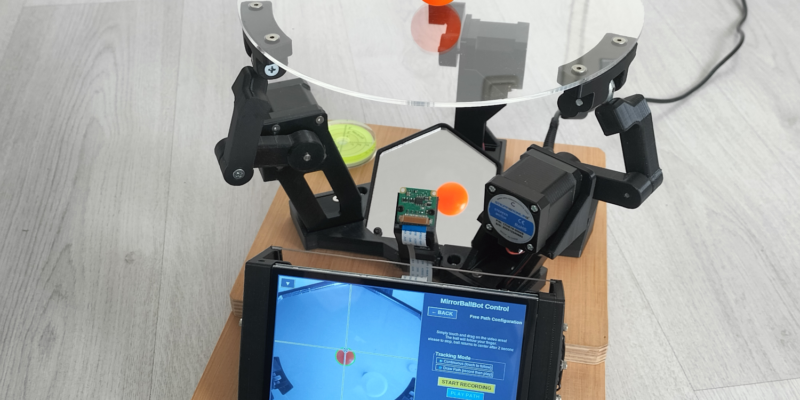
MirrorBallBot
This trick uses no smoke but it does use mirrors
Read more →
Digital Displays in Raspberry Pi Official Magazine 170
Some projects seem more like magic to us than anything else; here’s one of them. This robot by Italian engineer/magician Andrea Favero uses a mirror to widen the field of vision of a Raspberry Pi Camera Module 3, the input from which is processed by Raspberry Pi 4 and used to control three legs to […]
Read more →
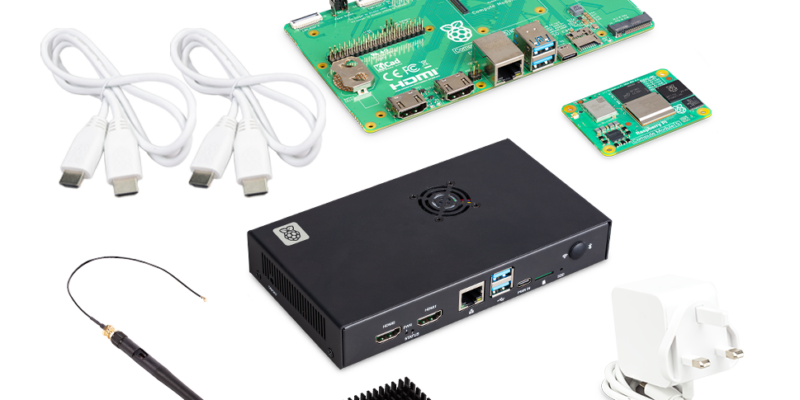
Win a Development Kit for Compute Module 5
Make CM5 development easier with our competition
Read more →