Unusual tools: degaussing tool
By Dr Andrew Lewis. Posted
If you’re old enough to remember when computer monitors were big boxes that took up an entire desk, then you might also recall that some monitors had a tiny button with ‘degauss’ printed next to it. Pressing the button would make the screen distort and produce a satisfying whomping sound from somewhere inside the box. Those monitors had a built-in degaussing coil to demagnetise the chassis and prevent distortion on the screen. Most large colour TV sets had them too, and they would fire as soon as the TV was powered on. Other monitors didn’t have a built-in degaussing coil and would have to be degaussed manually using an external coil or wand. When technology moved over to LCD monitors, there was no more need for degaussing and the magic of the degaussing button was lost to a generation.

Cyberdeck projects – survive in style with Raspberry Pi!
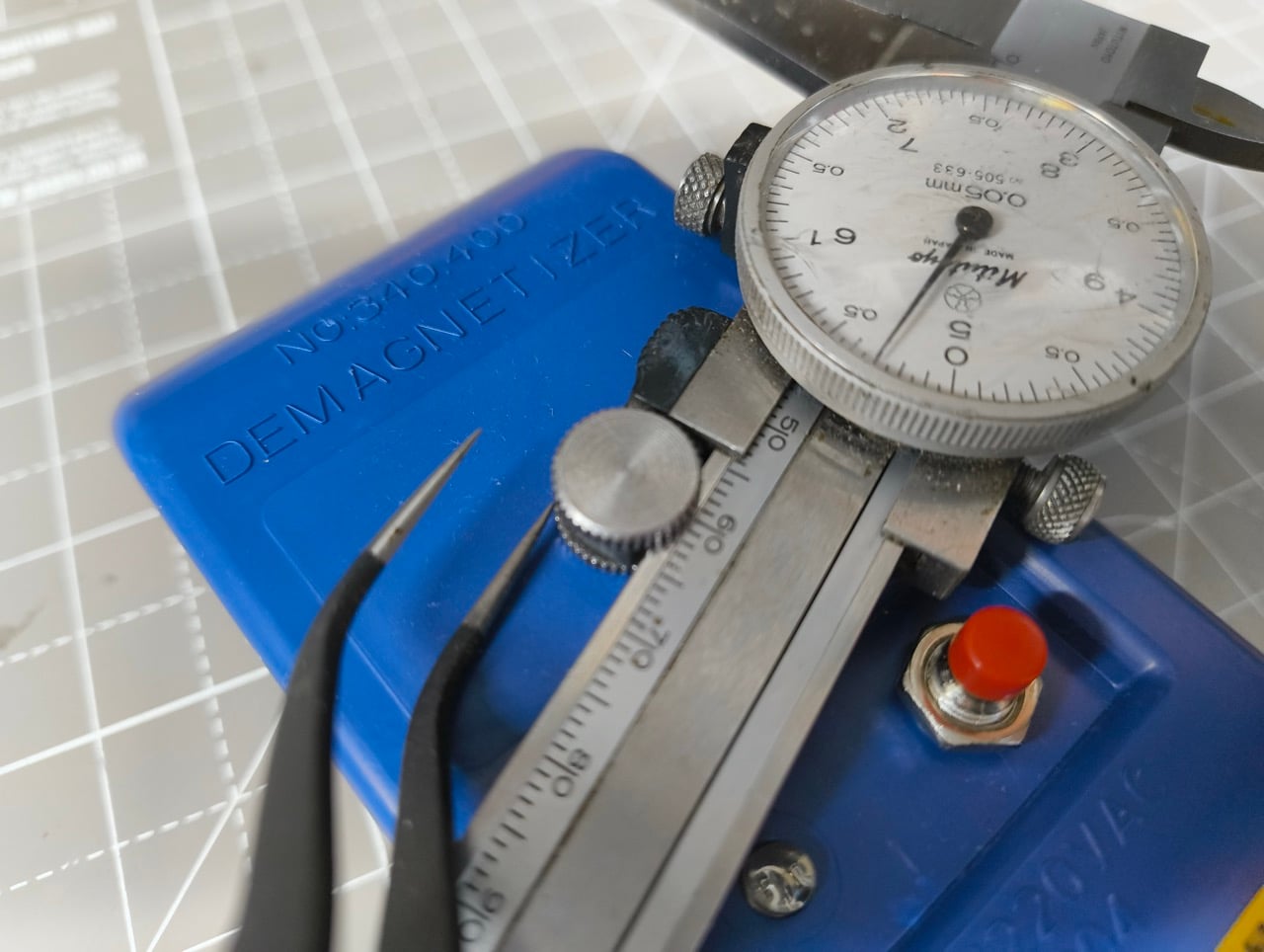
Degaussing isn’t just something that happened to CRT monitors back in the day. There are a surprising number of situations where degaussing tools are needed, and they are used in everything from watchmaking to marine engineering. The modern world is full of magnetic fields, and precision instruments like mechanical wrist-watches and measuring tools can be affected by all of that electromagnetic chaos. When the parts of a watch get magnetised, it can cause the finely balanced mechanisms to run at the wrong speed and stick against each other. Tabletop degaussing tools for watches are becoming increasingly common, and they can also be used to demagnetise other small objects like micrometers and screwdrivers. Techniques vary, but while holding down the button, you move the object into the field from the side, then lift it upwards while also moving it in circles parallel to the desktop.

Image: OlegErm, CC BY-SA 4.0
In the simplest form, a degaussing tool is a coil of wire that generates an alternating magnetic field that demagnetises ferrous metals. The practical reality of the situation is a bit more complicated. Flipping a magnetic field at 50 or 60Hz will scrub any existing field, but when you turn the coil off, you probably won’t exactly hit the zero-crossing point of the sine wave and the ferrous metal will still have some residual magnetism. To reduce this effect, you can either use a very fancy degaussing tool that can control the power and frequency of the field (sometimes called a pulse degausser), or you can do the traditional ‘degaussing dance’ and use the fact that the power of the field reduces as distance from the coil increases. Moving the coil in small circles around the area you are demagnetising (or moving the object itself, if the coil is fixed) will help create an even effect, and then increasing the distance between the coil and the object at the same time will reduce the overall strength of any residual field

Subscribe to Raspberry Pi Official Magazine
Save up to 37% off the cover price and get a FREE Raspberry Pi Pico 2 W with a subscription to Raspberry Pi Official Magazine.