Haptic navigation
By Rob Zwetsloot. Posted

Accessibility is an oft overlooked aspect of modern technology development. Sukriti Chadha’s job is to not overlook it, and has become an advocate for accessibility in the process. This is exemplified by one of her recent projects.
“For people with hearing impairments, walking on a busy street while looking at a phone screen can be a challenge, and maybe even dangerous,” she explains. “For example, while driving, they might not be able to effectively use voice navigation and take their eyes off the street to look at directions. For those with visual impairments, navigating indoor spaces that are noisy, or experiences such as museums, can be less enjoyable because of voice navigation interruptions.”
There are other ways to relay the information, though, such as how Sukriti has made use of touch: “This open-source solution uses a Raspberry Pi Zero W and a mobile phone to relay turn-by-turn instructions with haptic feedback, more commonly known as vibrations, over an SSH connection with the mobile device.”
A running thread
Sukriti tells us that around 466 million people worldwide have disabling hearing loss, 34 million of which are children. The WHO believes that this number will double in the next 30 years.

“Having worked in the distracted navigation space at a Tel Aviv startup in 2014, I was acutely aware of the limitations of voice navigation for those with hearing impairments,” she says. “My interest in the space was reignited during a conversation with Pete Cossaboon, who runs obstacle races as a blind athlete. I learned that he wanted to be more independent in navigating the space he is in. Both of these problems could potentially be solved with a haptics-based solution, and this is the first version of it.”
Using Raspberry Pi made sense in this context due to price and small size, and Sukriti found it easier to work with as well. “For me as a developer, programming on Raspberry Pi is intuitive, especially since I was looking for an interface between a mobile phone and a physical device.”
Touch and go
The system currently works using MapBox, a third-party mapping and navigation service, which provides the directions that are then translated to vibrations on the device. It can be extended to other frameworks with an API that allows for HTTP requests to be sent to Raspberry Pi, such as iOS and mobile web.

“It works really well in terms of navigation … for people with hearing impairments,” Sukriti reveals. “I can see its applications in VR navigation as well. The solution would be even more useful for visually impaired users with proximity sensors to help avoid obstacles, in addition to navigation outdoors.”
Work is ongoing with the project, with Sukriti wanting to add more haptic sensors for different navigation commands, proximity sensors, PWM output for varying intensity, and more.
“I have tested the prototype with a couple of people, and the feedback has been really positive,” she says. “I have personally been using it on runs, so my music is not interrupted if I go on unfamiliar paths.”

Rob is amazing. He’s also the Features Editor of Raspberry Pi Official Magazine, a hobbyist maker, cosplayer, comic book writer, and extremely modest.
Subscribe to Raspberry Pi Official Magazine
Save up to 37% off the cover price and get a FREE Raspberry Pi Pico 2 W with a subscription to Raspberry Pi Official Magazine.
More articles
Make your RAM go further – Raspberry Pi OS memory optimisation tips
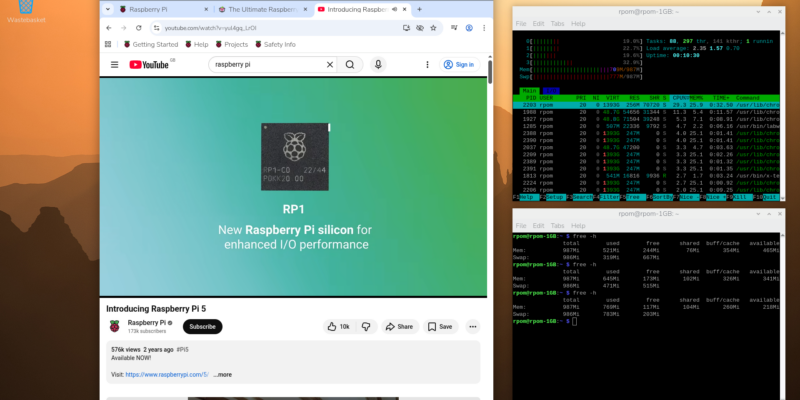
In issue 164 of Raspberry Pi Official Magazine we have been playing around with the new Raspberry Pi 5 1GB RAM. While the RAM shortage caused by the demands of AI infrastructure is annoying beyond belief, this has been a great chance for us to really get to grips with RAM. Generating images in Stable […]
Read more →
Mighty Projects – 1GB Computer in Raspberry Pi Official Magazine 164
It’s normal for computers to get faster and more pwerful, but the new-ish Raspberry Pi 5 1GB is a step in the other direction: it has all the processing power and the same GPIO pins of its more costly siblings, but with only 1GB of RAM it’s at a price that’s friendlier on the wallet […]
Read more →
Win one of five 256GB Raspberry Pi Flash Drives
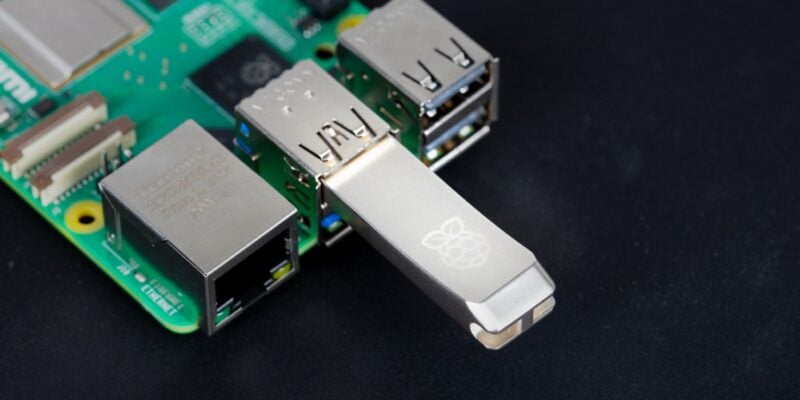
If you’ve been around long enough, you know that every Raspberry Pi accessory is top quality, and the latest Flash Drive is no different. Fancy a big one? We have five up for grabs, and you can enter below… Win 1 of 5 256GB Raspberry Pi Flash Drives
Read more →