How do you tell the time in binary?
By Andrew Gregory. Posted
This article was originally published as part of HackSpace magazine, which has since been incorporated into Raspberry Pi Official Magazine.

I am David Watts (yes, I have heard the song), and I am a self-styled maker/tinkerer. I learnt how to wire a plug at school, but that is about as far as my electronics education extends.
I call this the ‘BCD Crap Clock’ – why? Well, it lowers expectations with the hope of exceeding them. BCD stands for Binary-Coded Decimal – you see, it isn’t a true binary clock.
Advertisement
Get started with Raspberry Pi – everything you need to know to start your journey!
This is a fairly crap ‘binary’ clock kit made with CMOS logic, a simple design without a microcontroller, and it has the unique feature of being both difficult to read and difficult to set the time! It is a curiosity rather than a real timepiece, but it is at least better than guessing the time. Consider it an exercise in learning about CMOS logic and making my first kit that would go on to sell out in a day on Tindie.
It uses quite a few ICs for something that could be achieved with one PIC or ATmega but hey, there are advantages. It runs down to about 2.7–3 V, consuming 0.5 mA with LEDs enabled or ~6 µA with the LEDs disabled, meaning it could keep time for decades on a few AA cells. Also, I get ‘no microcontroller’ bragging rights.

Features Editor Andrew trawls the internet for Cool Stuff while keeping the magazine running smoothly.
Subscribe to Raspberry Pi Official Magazine
Save up to 37% off the cover price and get a FREE Raspberry Pi Pico 2 W with a subscription to Raspberry Pi Official Magazine.
More articles

Get started with Raspberry Pi in Raspberry Pi Official Magazine 161
There’s loads going on in this issue: first of all, how about using a capacitive touch board and Raspberry Pi 5 to turn a quilt into an input device? Nicola King shows you how. If you’re more into sawing and drilling than needlework, Jo Hinchliffe has built an underwater rover out of plastic piping and […]
Read more →

Win one of three DreamHAT+ radars!
That’s right, an actual working radar for your Raspberry Pi. We reviewed it a few months ago and have since been amazed at some of the projects that have used it, like last month’s motion sensor from the movie Aliens. Sound good? Well we have a few to give away, and you can enter below. […]
Read more →
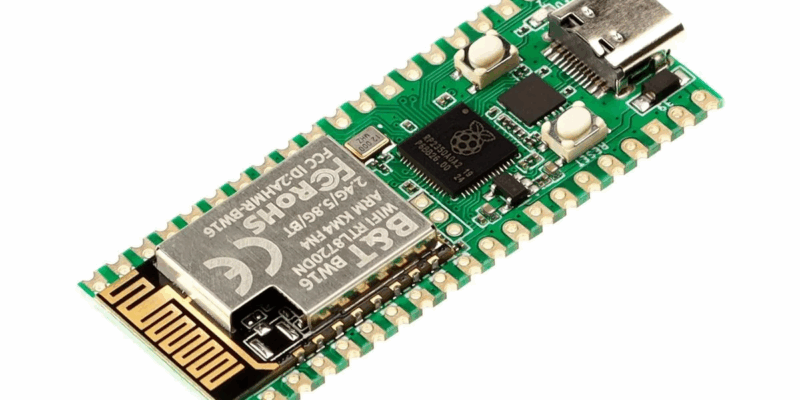
RP2350 Pico W5 review
It’s Raspberry Pi Pico 2, but with a lot more memory
Read more →