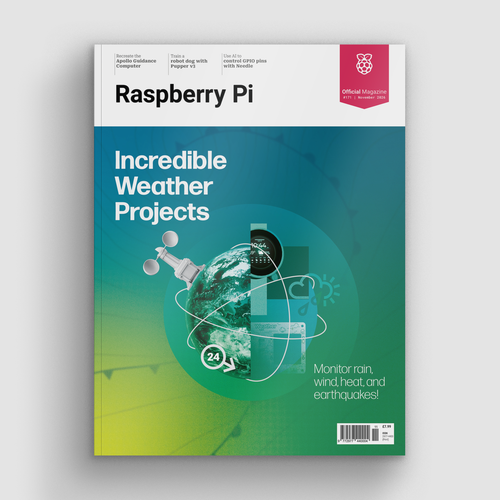
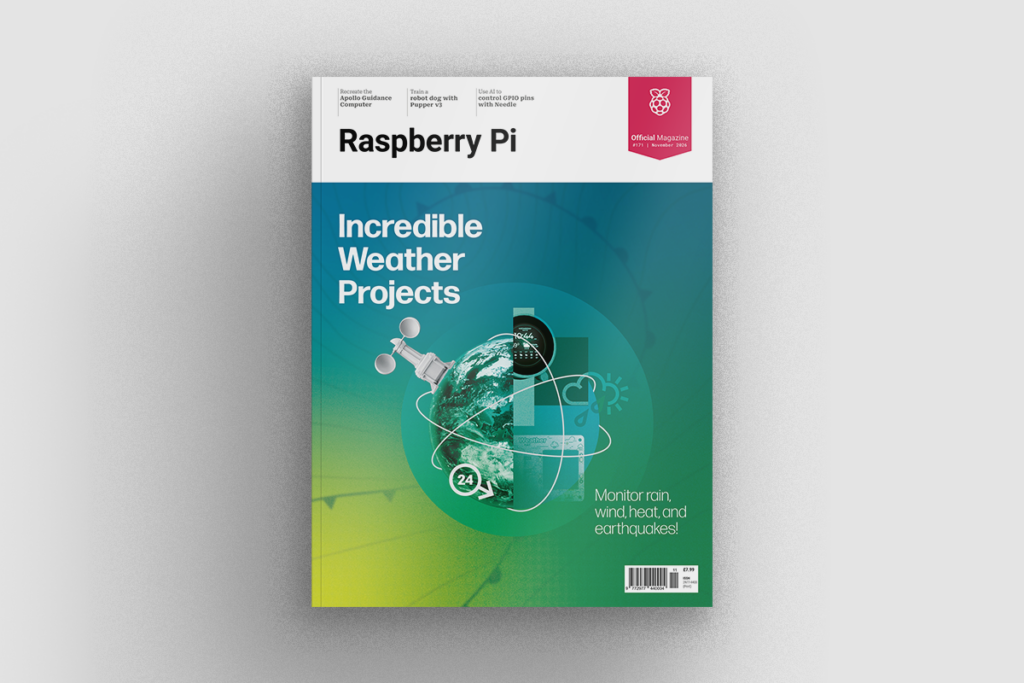
Incredible Weather Projects in Raspberry Pi Official Magazine issue 171
By Andrew Gregory. Posted
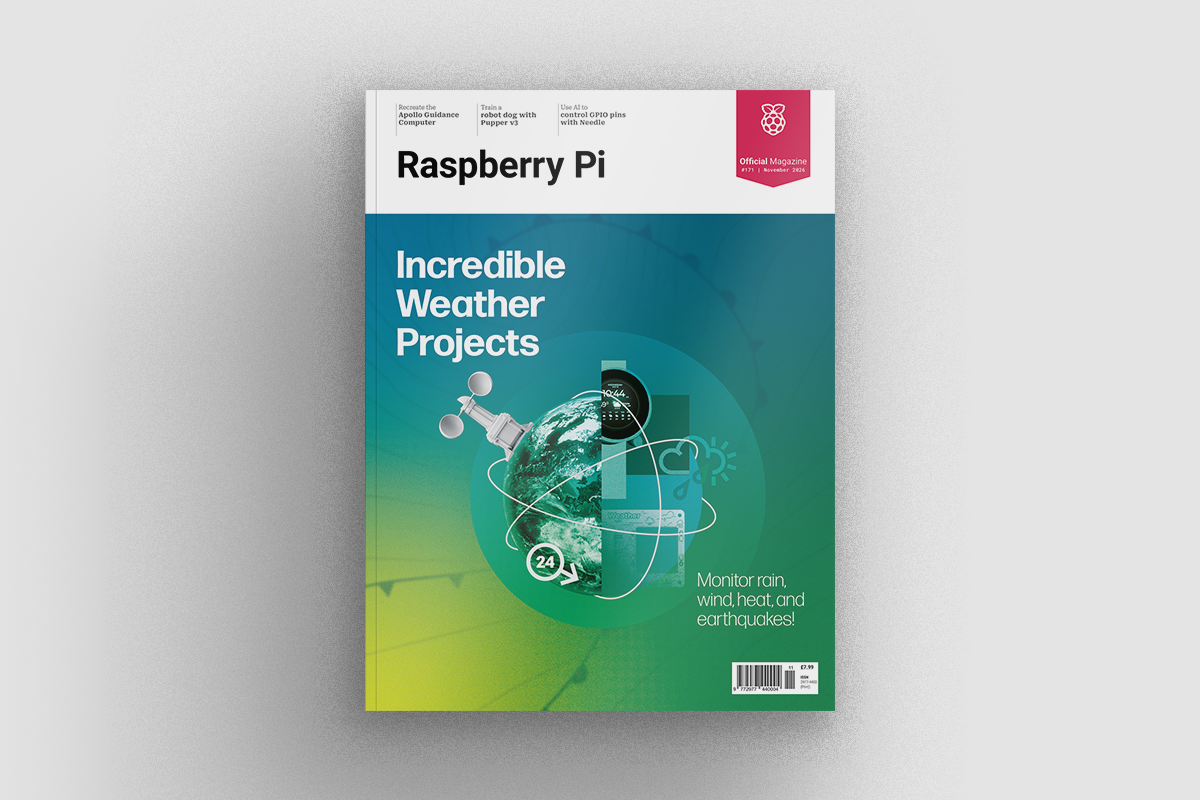
The weather is, as any British person will tell you, endlessly fascinating. It’s always changing, partly predictable, partly random. At least in the UK it’s not trying to kill you, and it’s great for making flowers grow. It’s also a brilliant source of data, and data is brilliant for making graphs, spreadsheets and websites – all things that we love to do. So with that in mind, we’ve corralled a few of our favourite weather-adjacent projects in one place to inspire your next build.
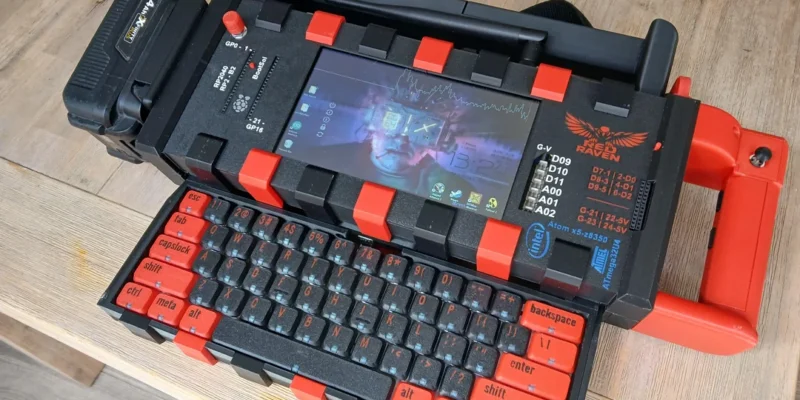
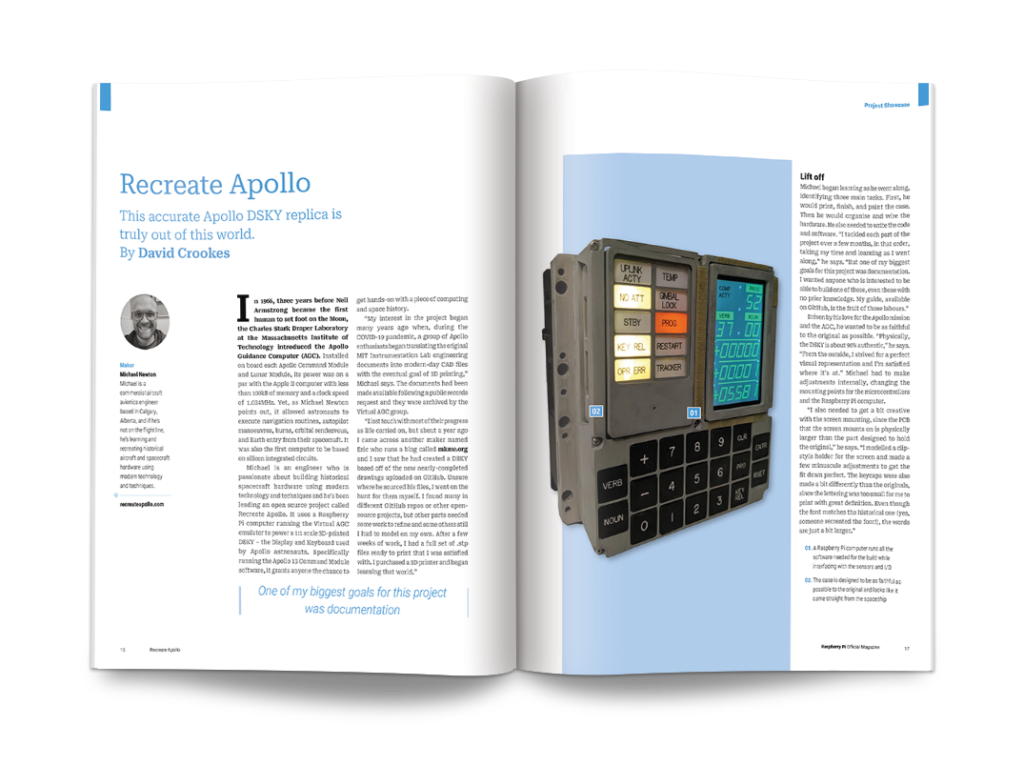
If the planet gets too hot/too cold/too drizzly for human habitation, we’ll probably want to leave Earth in search of a better one. That means we’ll need a flight computer, and maker Michael Newton is one step ahead: he’s built a replica of the DSKY (display keyboard) interface from the Apollo Guidance Computer. Now you just have to source your own rocket.
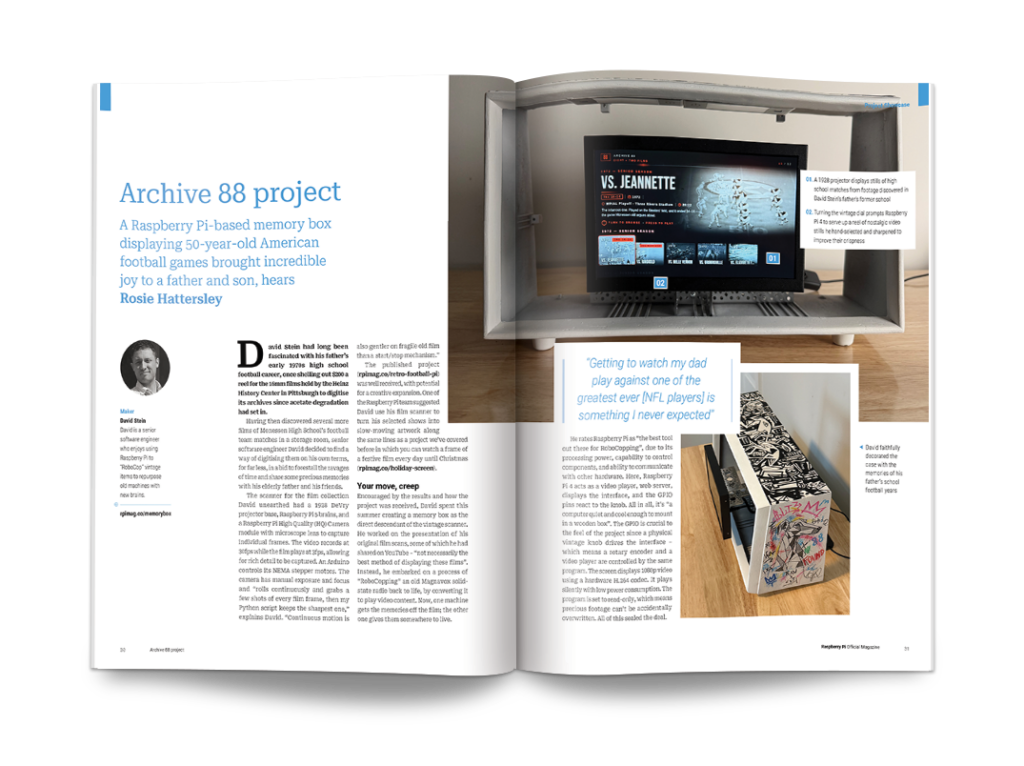
There are commercial outfits that will digitise old rolls of film for you in exchange for money. But where’s the fun in that, when you can build a setup based on a Raspberry Pi High Quality Camera and Raspberry Pi 5 to grab images from film reels, sharpen them up using a Python script and display the resulting films on demand using an integrated screen. David Stein did just this with his nostalgic build, which he used to digitise old footage of his father’s high school American football career.
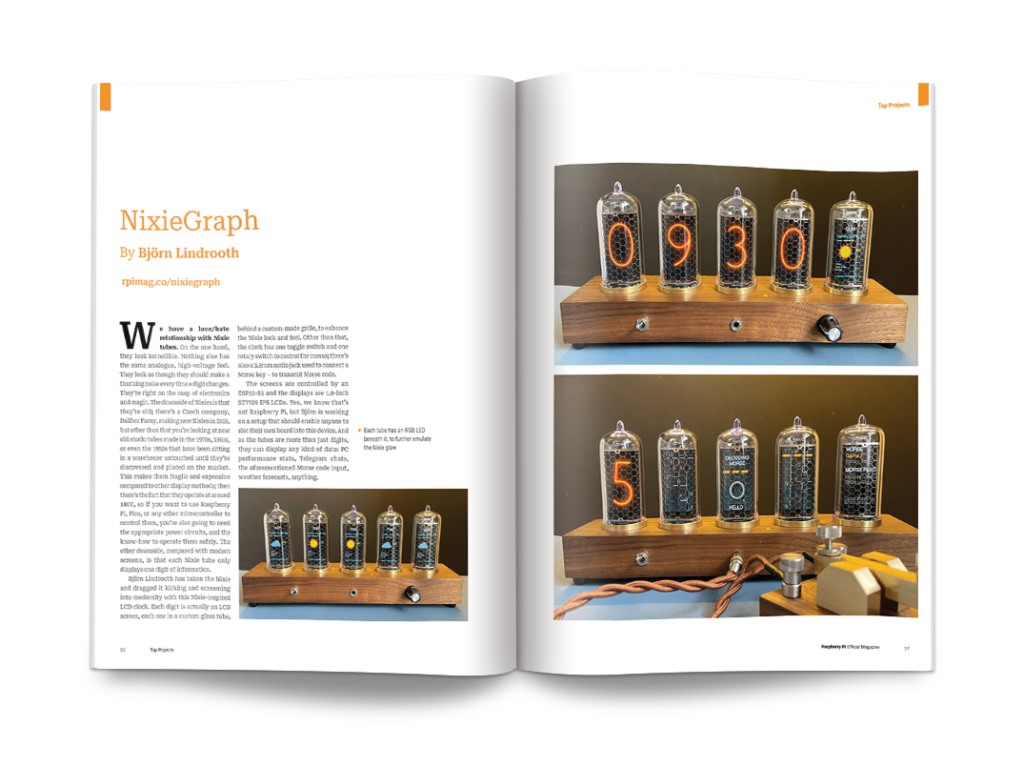
Nixie tubes are great: they look like nothing else, and thanks to the high voltages they run on, they also sound, smell and make the air around them taste like nothing else (or maybe that’s our imagination). Unfortunately, the same high voltages make them a bit unwelcoming for beginners. Björn Lindroth has reimagined the nixie tube to make it safer and more useful – this nixie clock tells the time, but also gives you weather information, a calendar, and even lets you send morse code messages.
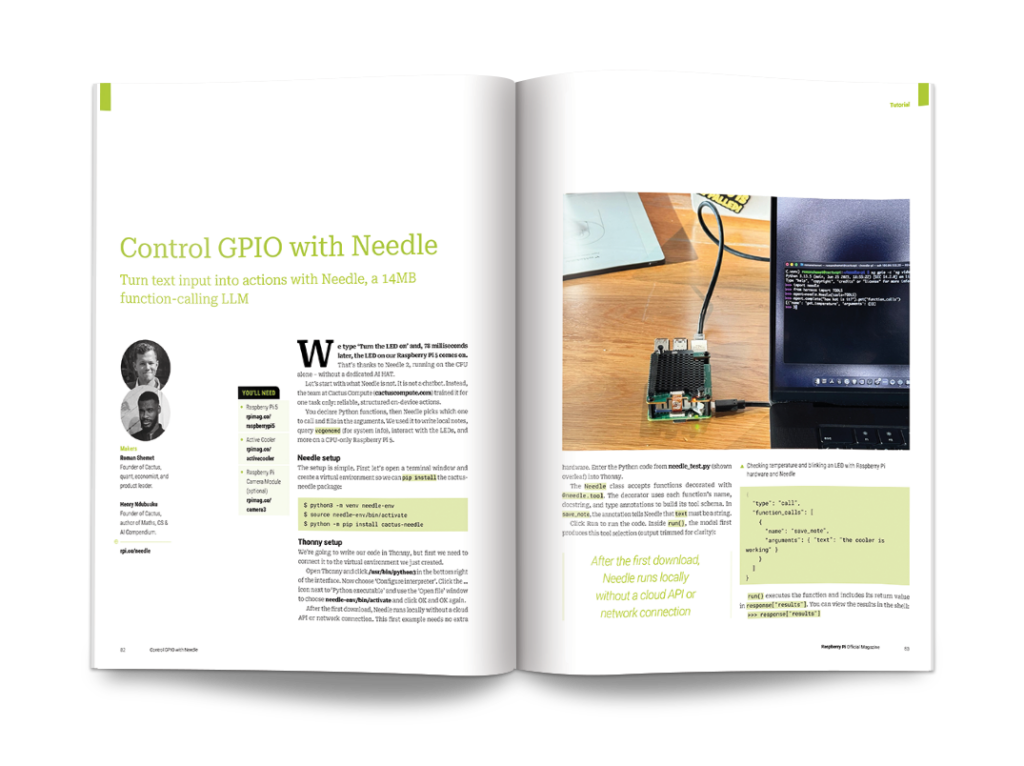
We’ve seen many an example of vibe coding, thanks to artificial intelligence. The premise is that you state what you want to happen using natural human language, and the AI translates that into Python, C or some other computer programming language to give the use the powers of a computer programmer without having to learn the syntax of the programming language. This month we have a tutorial on Needle, an LLM that enables anyone to control Raspberry Pi’s GPIO pins with artificial intelligence.
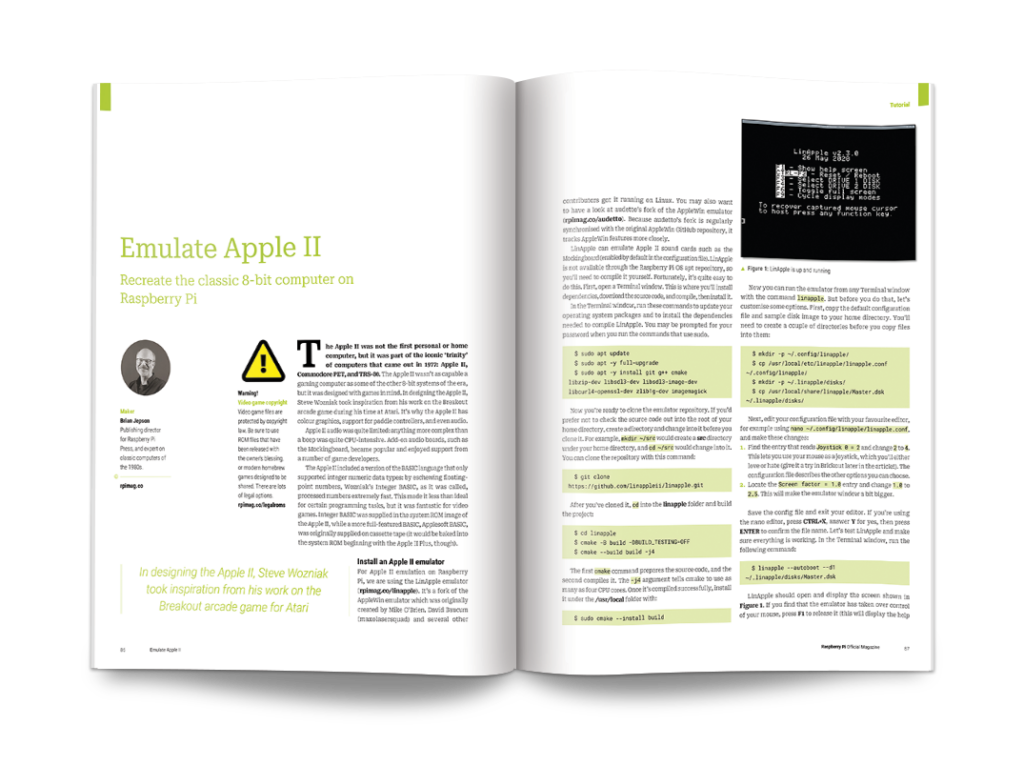
As everyone knows, things were better in the olden days. That’s because our minds are simple; things were not better in any objective way, but we’re fuddled by nostalgia. There is, however, a case to be made for retro computing. It’s simpler than the way computers work today, and thanks to the power of emulation, we can try out systems today that would have cost the equivalent of a house or a family car back in the day. One such is the Apple II. For the princely sum of $1300 at its launch [the equivalent of £5,400 in today’s money] you got a whopping 4k of RAM. Follow Brian Jepson’s tutorial and you too can sample this incredible power.
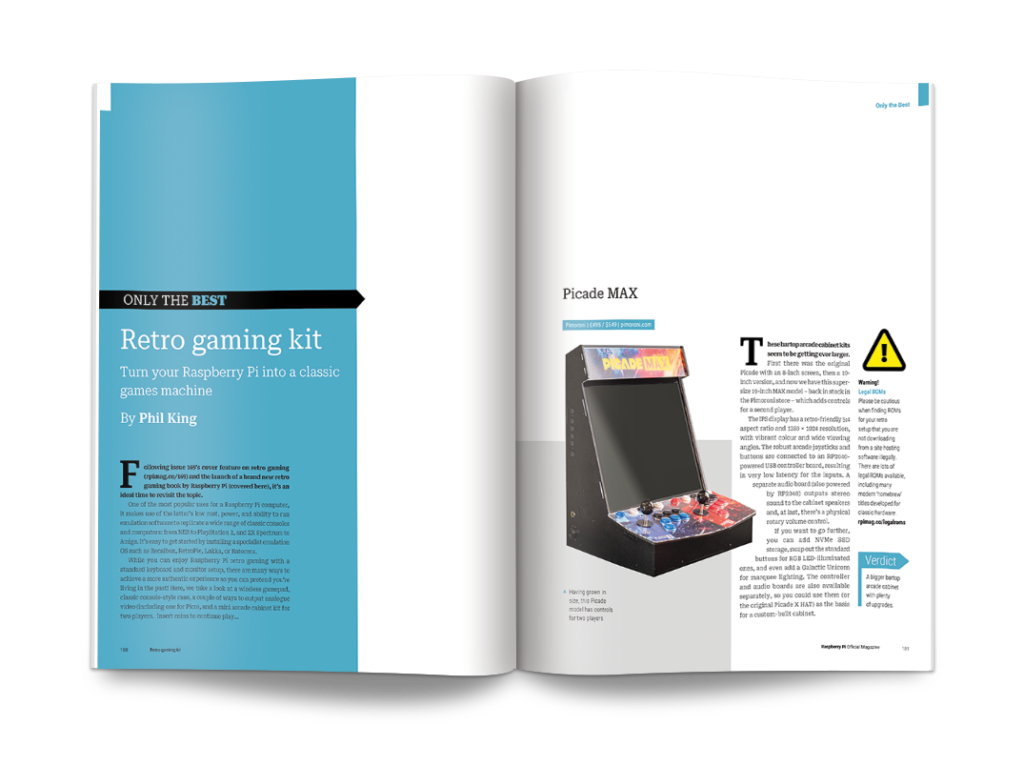
Maybe we were too harsh on the olden days earlier; computer games certainly were a lot more fun before we had mortgages and bills to think about, and we’ve rounded up a selection of the best playthings to remind us of how good gaming was before everything went 3D (or worse, online and multiplayer).
There’s a whole load more to make and do in the latest issue of Raspberry Pi Official Magazine; buy it online here, or subscribe to get it delivered to your door.

Features Editor Andrew trawls the internet for Cool Stuff while keeping the magazine running smoothly.
Subscribe to Raspberry Pi Official Magazine
Save up to 37% off the cover price and get a FREE Raspberry Pi Pico 2 W with a subscription to Raspberry Pi Official Magazine.