Linear clock
By Andrew Gregory. Posted
This article was originally published as part of HackSpace magazine, which has since been incorporated into Raspberry Pi Official Magazine.

There’s a time and a place for the half-finished aesthetic. Wires everywhere, visible bits of PCB or even perfboard, and a slight roughness around the edges help give a project a homemade feel. But when you’re as good at woodwork as James Wilson is, why not go the extra mile and make your projects beautiful?
Look closer at the display: there’s something not right about it. Rather than break up the day into 24 hours, James has decided to display time as a percentage of the day that’s elapsed. Even better than that, the display actually marks the percentage of daylight that has elapsed, with the blue dot showing the middle point of the day when the sun is at its highest. That’s a lot to take in, and a lot for the electronics to take care of. James borrowed the calculations from Astronomical Algorithms, 2nd edition, by Jean Meeus, and put the whole thing in walnut and maple.

Take back control of your online data, with Raspberry Pi.

Features Editor Andrew trawls the internet for Cool Stuff while keeping the magazine running smoothly.
Subscribe to Raspberry Pi Official Magazine
Save up to 37% off the cover price and get a FREE Raspberry Pi Pico 2 W with a subscription to Raspberry Pi Official Magazine.
More articles
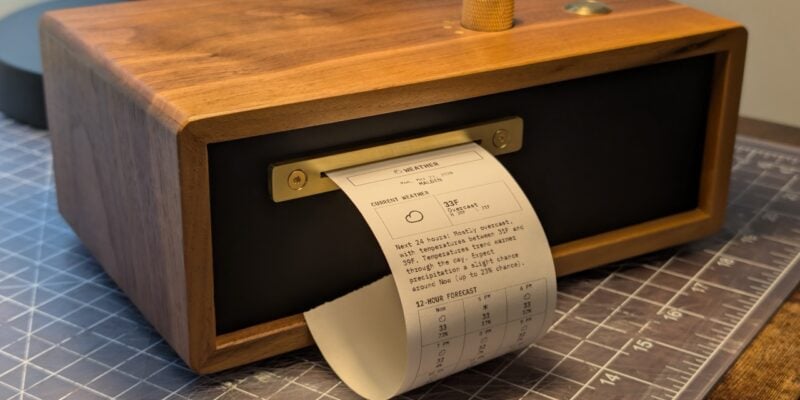
Paper console
Look at those physical controls! This device is built to be beautiful: it’s made out of walnut and brass.
Read more →

Take Back Your Cloud in Raspberry Pi Official Magazine 165
We’re all-too accustomed to the feling of being watched on the internet. A search for any product leads to adverts, emails, and goodness knows how many bots tracking you. It feels weird and intrusive, and we aren’t being paranoid – they really are watching us. Luckily you don’t have to reply on online services that […]
Read more →
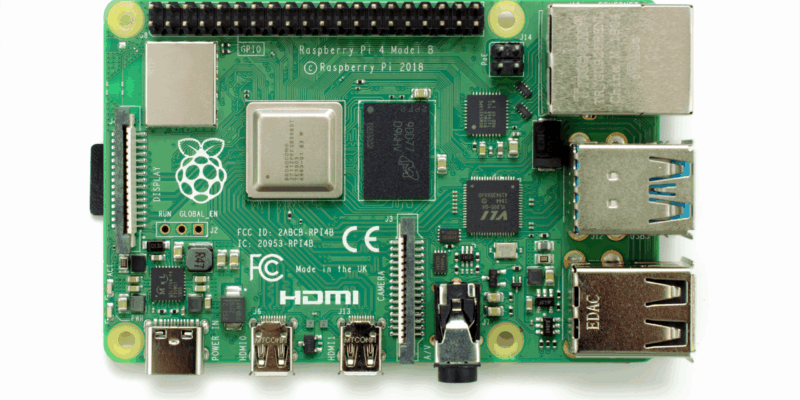
Win one of three Raspberry Pi 4 with 3GB RAM!
Raspberry Pi 4 is still a powerful piece of kit, and this new 3GB version is great for projects and builds that need slightly more than 2GB of RAM but don’t quite need 4GB. We have three to give away and you can enter below. Win 1 of 3 Raspberry Pi 4 3GB
Read more →