Lyra Handheld Game Console review
By Wes Archer. Posted

Even with the plethora of kits available today, playing your favourite retro games on the go with a Raspberry Pi typically involves a do-it-yourself approach. Often this involves a 3D printed case and a lot of trial and error with small and fiddly components.
The Lyra Handheld Game Console (£229 / $300) is attempting to change that. After a successful launch in July 2019, Kickstarter veteran Creoqode set out to make a handheld gaming system that looked the part, was easy to assemble, and was more powerful than any other Raspberry Pi-powered handheld game console on the market at the time. The result is Lyra, a handheld game console that is available in kit form (or fully assembled if you fear nuts and bolts) and utilises the power of Raspberry Pi Computer Module 3 Lite. Unlike many other Raspberry Pi-based handheld game consoles available today, the Lyra resembles the form factor of a Sony PSP and Nintendo’s Game Boy Advance, which makes a nice change to the tried-and-tested Game Boy-style systems, along with the bonus of a larger, widescreen display.
Easy assembly
When the Lyra arrived, we were impressed with the packaging, which can double up as a protective case when your Lyra is not in use, and the quality of the parts in the kit – we loved having the option of clear or black buttons to choose from.

As we are partial to a bit of tinkering, we opted for the kit version, so we had to assemble our Lyra ourselves. Whilst there were no physical instructions provided, the online tutorial is packed with detailed photos and step-by-step instructions and we had our Lyra assembled in under 15 minutes. The fiddliest part was attaching the screen when closing the case! For convenience, Creoqode has created a custom-built image that utilises RetroPie, so once this was downloaded and flashed to our microSD card, we were up and running in no time. It’s a shame that a manual install guide was not available for those who prefer setting up RetroPie to work on the Lyra themselves, especially as pre-build SD card images can quickly become outdated.
Small but mighty
One thing we liked about the Lyra was the inclusion of the Raspberry Pi Compute Module 3 Lite (CM3L). Whilst pricier than a Raspberry Pi Zero, the CM3L brings the power and small footprint that is perfect for a handheld game console.

The CM3L clips into Creoqode’s custom-made circuit board and whilst the lack of WiFi is a shame, the micro-USB port allows you to connect your own USB devices (with the help of an adapter) for Internet connectivity. The addition of an HDMI port allows you to connect your Lyra directly to a large display / TV, which is great for gaming at home too. We did notice that the case didn’t quite close perfectly, so small gaps were visible by the micro-USB charging and headphone ports, and the lack of a screen protector was a shame, but the performance of the Lyra is second to none in a competitive market for handheld gaming.
Verdict
8/10 The Lyra is a great product in a competitive market. Assembly was straight forward and the power the CM3L brings is fab. The case could be better, but for gaming on the go, it is ideal.

Wes is a gadget and Raspberry Pi who publishes his own how-to guides at https://www.raspberrycoulis.co.uk
Subscribe to Raspberry Pi Official Magazine
Save up to 37% off the cover price and get a FREE Raspberry Pi Pico 2 W with a subscription to Raspberry Pi Official Magazine.
More articles
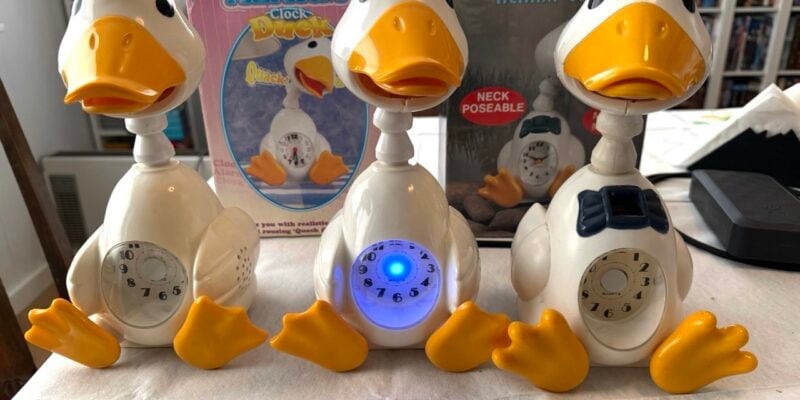
oDuckberry
A novelty alarm clock has been turned into something ‘pro-duck-tive’
Read more →
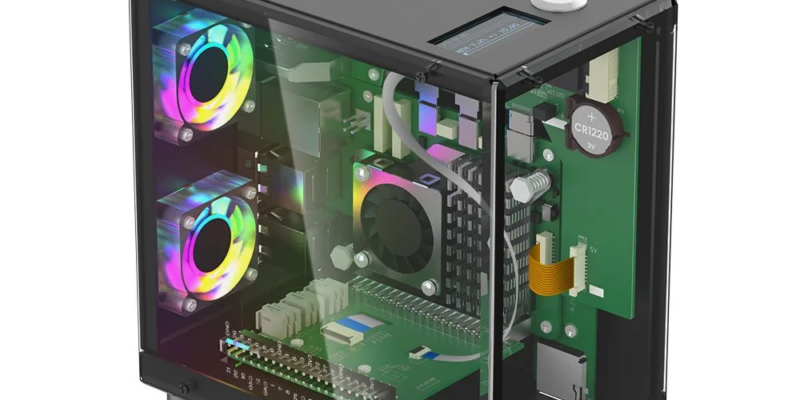
Review – Pitower Gen 1 case
It seems quite popular now for folks to make their Raspberry Pi look like a diminutive desktop PC. The Pitower Gen 1 from Elecrow manages to do that while also making sure you can still use your Raspberry Pi as, well, a Raspberry Pi. Construction is fairly simple if lengthy – it took the better […]
Read more →
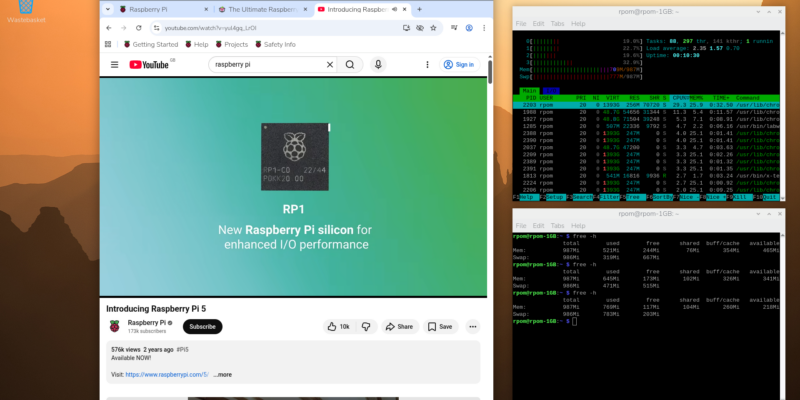
Make your RAM go further – Raspberry Pi OS memory optimisation tips
In issue 164 of Raspberry Pi Official Magazine we have been playing around with the new Raspberry Pi 5 1GB RAM. While the RAM shortage caused by the demands of AI infrastructure is annoying beyond belief, this has been a great chance for us to really get to grips with RAM. Generating images in Stable […]
Read more →