Meet the Maker: Michael Dales
By Andrew Gregory. Posted
This article was originally published as part of HackSpace magazine, which has since been incorporated into Raspberry Pi Official Magazine.
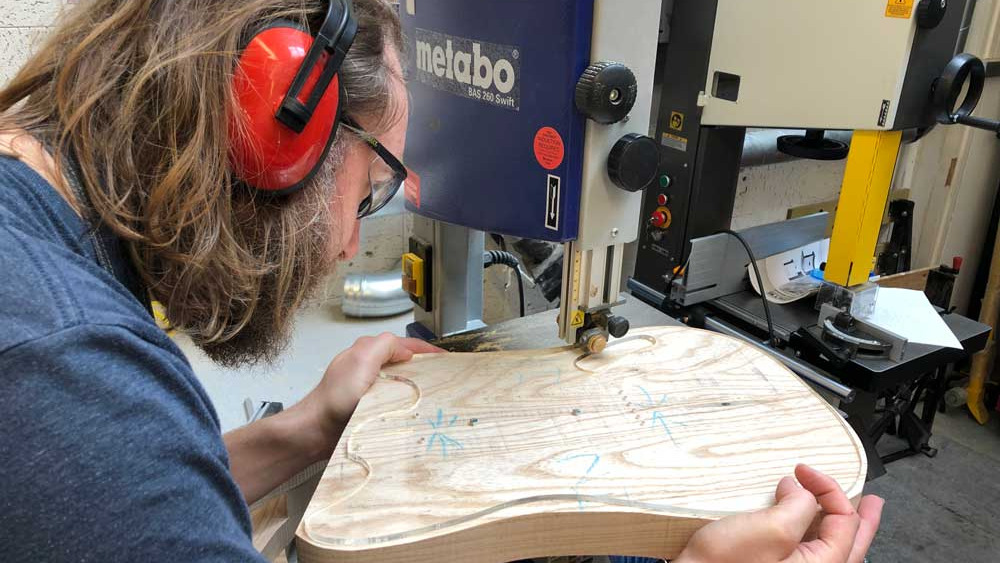
When the gods handed the first guitar down from Mount Olympus, humanity was given a mighty gift. When you pick up a guitar, you’re part of a global lineage that includes Hendrix, Mick Ronson, Nancy Wilson, and any number of musicians from every continent.
We doff our caps therefore to Michael Dales, who for the last three years has been making guitars under the name Electric Flapjack. We spoke to Michael to find out how working in a makerspace has shaped his attitude to the noble craft of making guitars, his tools, his attitudes, and why it’s good to share.
 SOFTWARE TO SOFTWOOD
“[In my day job] I’ve done bits of hardware; I’ve done digital circuit designs, FPGA stuff. And I’ve done a lot more software in my career than hardware. That’s also why I enjoy woodwork so much, because it exercises a completely different part of my brain. It’s still problem solving, but it’s very different.

“You kind of find with places like this, that you have a general set of tools available to the populace, but [if you try] anything niche you end up by yourself. The makerspace isn’t here to cater for luthier [guitar making] requirements. That comes from in part just getting into enabling me to have the confidence to try things.
“I watched a lot of YouTube videos, and the luthier community is very good at sharing; there are lots of great tutorials by professional luthiers on how they do stuff.
“I don’t have all the luthier tools, but I have identified that there are some that are quite important; they’ll save you a lot of time and effort. The Japanese saw for doing the fret slots is a good example of that. I have a specific requirement of that saw, because it had to be narrow enough that when I put a fret in it’ll stick, so it had to be a narrow blade and quite sharp. That was one where it was working for money, which enabled me to do that.
“The first year was fine, but then everything went wrong. My first commission was late – I said it would take three months, but it took me a year. The CNC router stopped working, so I had to learn how to do it by hand. Like when any automation breaks down, it exposes whether you understood the thing you were automating or not.
“It’s been an interesting journey. Thankfully the guy who commissioned the guitar was very accepting; he was happy to be part of that journey. I kept him involved as much as I could, and it worked out well.
MAKERSPACE WORKING
“Being in a makerspace, you have tools available that traditional luthiers don’t. And this is the counter to the fact that I don’t have all the tools that a traditional luthier would have. So, for example, I have access to a laser cutter.
“One of the bits you really have to get right, otherwise it’s not a musical instrument, is the fret spacing. Those have to be right, because otherwise, it’s not going to sound correct. So, being a software engineer and having access to a laser cutter, I wrote a small tool that lets me type in ‘22 frets, 25 1/2 inch scale length’, and it will etch a design.
“I still have to cut the slots by hand – the kerfing on the laser cutter means that you get a V-shape rather than a straight slot – but I can use the tools around me to my advantage. The nice thing is that I know that other people use that tool. Even if they don’t have a laser cutter, that’s how a whole bunch of people generate their fretboards now, using that little tool that I made. It’s nice to be able to give back to the luthier community, which has given me so much.
“It’s fun being in an environment like a makerspace, where you don’t have everything you need, but you’ve got more stuff. ‘How can I solve my problem using the tools around me? If there are better tools, how do I find someone who can point me in the right direction?’

ART & SCIENCE
“Necks are totally under-appreciated. When you look at a guitar, you tend to look at the body and the pickups and the controls, Those are the eye-catching bits. But all the labour and effort is really in the neck – if you don’t get that right, it’s not a musical instrument. It’s, at best, a bit of art.
“On the second guitar, I did the fretwork, which I shouldn’t have done, because that made the project run over way more than it should have done. I broke my own rule and made too big a jump. I bought a neck without frets, and I ended up having to do the frets three times before I got it right.
“Guitars three and four were built together, and I’m about to replace the neck on guitar three. It was an OK first effort, but I’m a slightly better guitarist than I was two years ago, and it now annoys me.
“A guitar has to speak to you in many ways. We are emotional beings, and our relationship with our instruments is partly based on how we feel when we look at them. I care about getting the details right so that the person who gets it has that sense of pride. I want them to go on stage. What makes me happiest is when people are on stage playing a guitar that I built. That’s the most awesome thing in the world. I went to one of my brother’s gigs, and he was there on the stage playing a guitar that I’d made. In some small way I was responsible for the audience having a good night. That’s an amazing sensation – nerve-racking as well, because if the guitar breaks, it’s all my fault.
THE QUEST CONTINUES
“Ultimately I’d love to do archtops. I think those jazz-style guitars are amazing. But it’s just a journey. I started with a Fender Telecaster, because it’s the simplest, dumbest guitar. It’s the original solid-body guitar, right? It’s a great starting place for someone who’s got no experience.
“I’d always had a Telecaster so I knew what it should feel like. And on each one, I try to do a bit more. The builds I’ve got going at the moment, one of them is the first one where the body design is my own. And it’s got some features from a Les Paul – it’s got the electronics cavities in the rear. That, to me, is a very sensible design decision. Whereas the fact that you have to take the strings off to do anything with the electronics on a Fender design just strikes me as insane.
“What I want to get to is making guitars that people like, in the shapes that they like, and I bring along the engineering elements that make them a good instrument.”
Features Editor Andrew trawls the internet for Cool Stuff while keeping the magazine running smoothly.
Subscribe to Raspberry Pi Official Magazine
Save up to 37% off the cover price and get a FREE Raspberry Pi Pico 2 W with a subscription to Raspberry Pi Official Magazine.
More articles
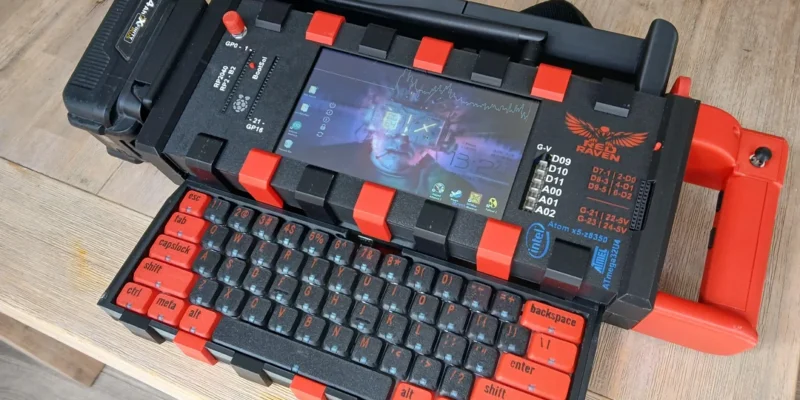
Red Raven cyberdeck
Powered by drills
Read more →
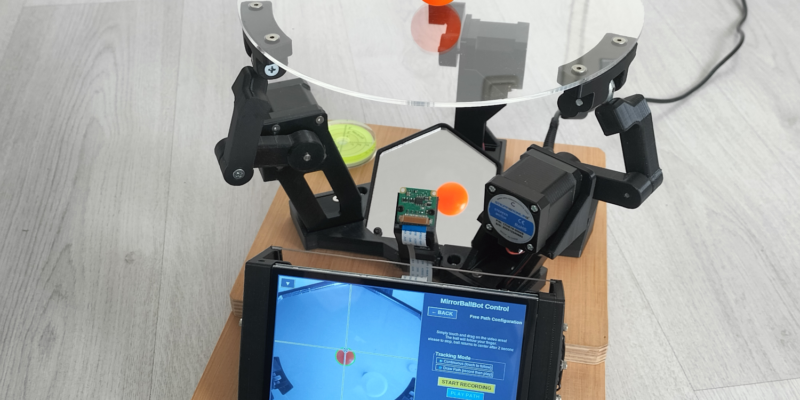
MirrorBallBot
This trick uses no smoke but it does use mirrors
Read more →

Digital Displays in Raspberry Pi Official Magazine 170
Some projects seem more like magic to us than anything else; here’s one of them. This robot by Italian engineer/magician Andrea Favero uses a mirror to widen the field of vision of a Raspberry Pi Camera Module 3, the input from which is processed by Raspberry Pi 4 and used to control three legs to […]
Read more →