Moore and Wright Dial Calliper review
By Jo Hinchliffe. Posted
This article was originally published as part of HackSpace magazine, which has since been incorporated into Raspberry Pi Official Magazine.

While we love the ubiquity of cheap and affordable digital vernier callipers available online, the ones at the cheaper end of the market do sometimes have their issues. We’ve lost track of how many cheap digital callipers we have had that have accidentally turned on in their case and then had no battery power when needed, or indeed that pair of callipers ordered online that, on arrival, turned out to be made of plastic! At the other end of the scale (pun intended), original analogue-style vernier callipers with a vernier scale can often be confusing for those who don’t know how to read the system, and therefore have become a less common sight on the workbench.
Sitting in the middle of these extremes are mid-priced dial callipers, such as this set of Moore and Wright 150 mm metric callipers available from the Machine DRO company, which is a part of the larger Allendale Group. Moore and Wright are an iconic tool brand in engineering and machining circles – tools from their extensive back catalogue, which dates back to their formation in 1906, are still collected and revered and used in many tool rooms.
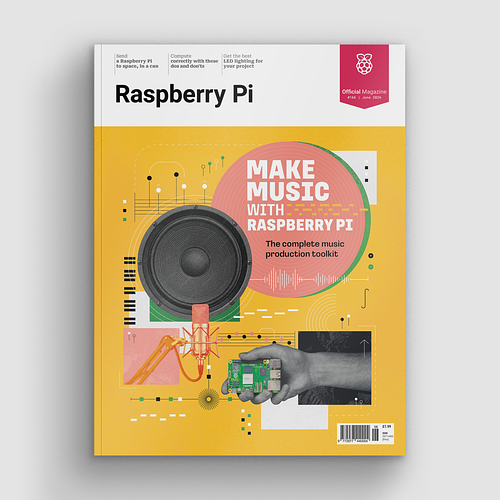
Make beautiful beats with the complete Raspberry Pi music production toolkit.
These dial callipers arrived promptly and well-packed; the callipers themselves were in a fitted plastic case, inside a cardboard sleeve, inside a cardboard box. Once unwrapped and in hand, it was immediately obvious that they’re a quality item. Sliding the calliper open and closed felt incredibly smooth, and puts to shame many of the £10 internet-ordered digital callipers we’ve had over the years! We went with the yellow-faced, high-contrast dial, which is easy to read and has prominent markings.
As is common to most callipers, these have a locking bolt to hold the jaws of the calliper in a certain position, but they also have another screw mechanism under the dial bezel to be able to zero the dial graduations. It’s a simple procedure to zero the dial: loosen the bolt, ensure the calliper jaws are clean, close the jaws, rotate the bezel so that the dial’s zero mark aligns with the needle, and then re-clamp the bezel bolt. This method of zeroing also means you can zero the dial at a particular reference point if needed.

The callipers are made of good-quality steel, and the jaws are hardened and ground to a high-precision finish. There are the usual internal and external jaws, and also the depth rod for measuring heights and depths. Measuring on these callipers is very straightforward. The nearest millimetre graduation is read off the ruler scale marked along the calliper, and the dial is marked with 100 graduations, each representing 0.02 mm. This means that a single rotation of the dial results in 2 mm of travel.
The dial is nicely marked with every 1/10th of a millimetre labelled 0.1, 0.2, 0.3, etc., and restarts at 0 for the second millimetre of travel. It becomes second nature to read this dial to 0.02 mm very quickly and, while accuracy may vary, it’s possible to predict roughly the third decimal place as to how far between 0.02 mm markings you are. If you need accuracy to thousandths of a millimetre though, you probably need to move beyond callipers! As mentioned, the set we have reviewed are the 150 mm option, but a 300 mm version is also available.
At a little over £40 plus VAT, we feel these callipers are accurate, well-made, and extremely nice to use, with the added bonus that they will never have run out of batteries when you need them most. Couple that with a company that offers great customer service and prompt delivery.
VERDICT
Accurate and easy to use
10/10

Maker, talker, and passionate about all things DIY space
Subscribe to Raspberry Pi Official Magazine
Save up to 37% off the cover price and get a FREE Raspberry Pi Pico 2 W with a subscription to Raspberry Pi Official Magazine.
More articles
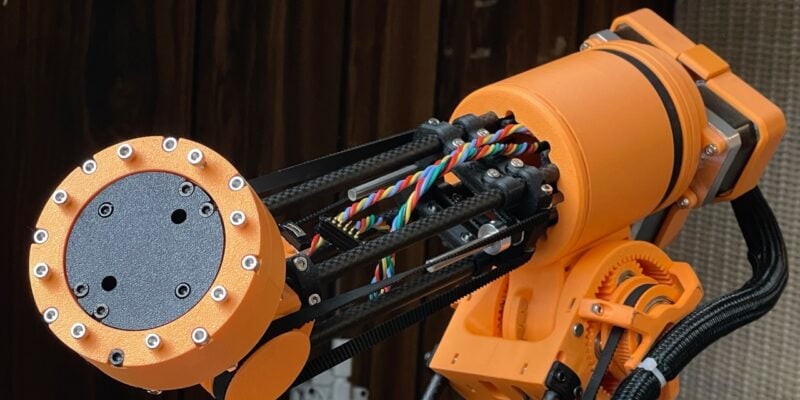
Use a robot to build a robot
This glorious, (mostly) 3D printed robot has six degrees of freedom.
Read more →
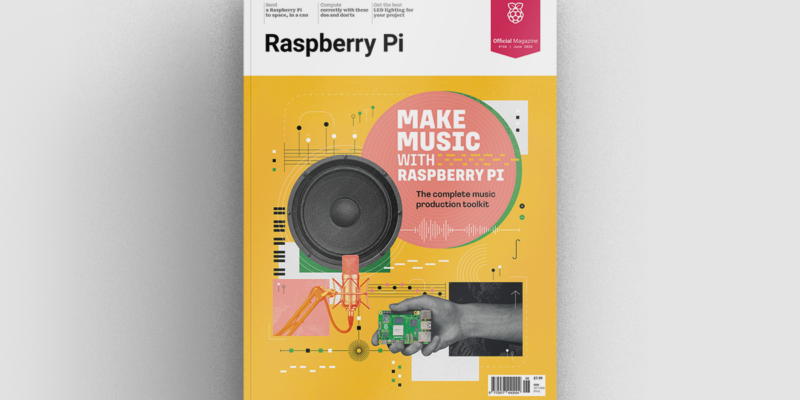
Make Music With Raspberry Pi in Official Raspberry Pi Magazine issue 166
Music production is an esoteric world of chin stroking and arguing over what kind of valve makes the best sound in a guitar amplifier – at least, it can be. Load up on software, bring your friends, and record your latest masterpiece on Raspberry Pi. We bring news from the world of 3D printing, where […]
Read more →
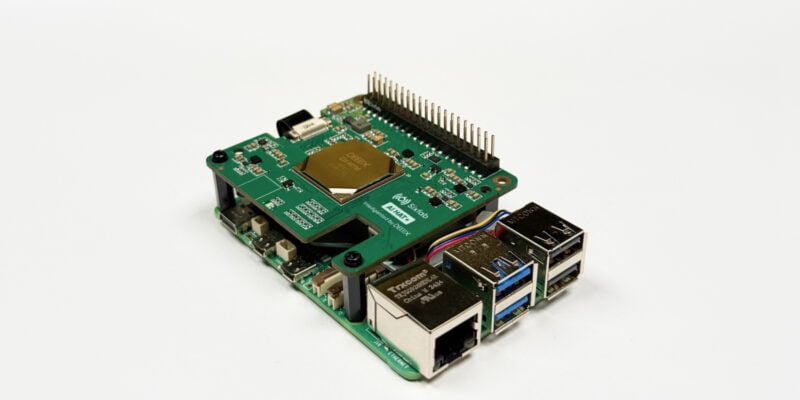
Win one of ten Sixfab AI HAT+
The new add-on could be yours
Read more →