Sage Cadence interview
By Rob Zwetsloot. Posted
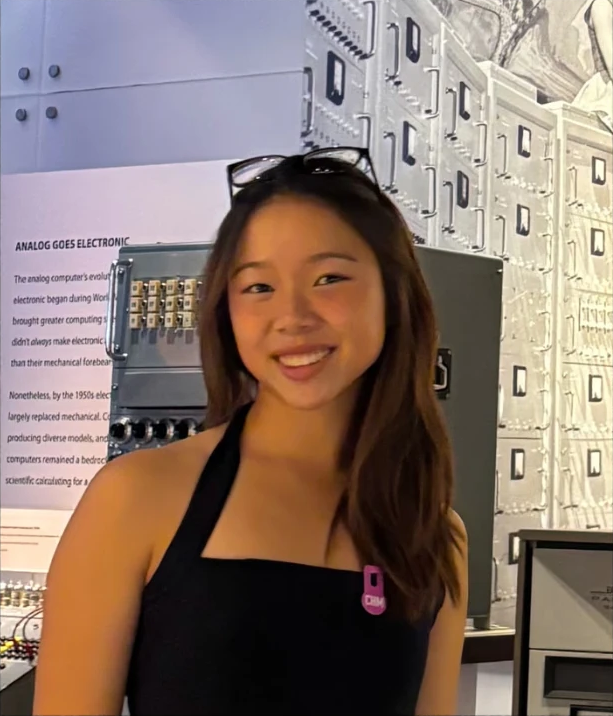
As we’ve mentioned a lot over these past 169 issues, Raspberry Pi was created to help get more younger students into computer sciences. While that has definitely worked, there are always a few that slipped the net – at least during school, that is. Sage Cadence discovered it when she entered higher education.
“It was through the space club at my university [that I discovered Raspberry Pi]: the Stanford Student Space Initiative,” Sage tells us. “Arriving at college, I was itching to get hands-on experience with engineering. I walked into the club meeting room on the first day when one of the upperclassmen handed me a box with a Raspberry Pi 4B… They told me it was my job to write some firmware for Ringo, and from that day forth began my long – and wonderful – journey with Raspberry Pi!”
What is your history with making?
I love making all sorts of things. For school and work I’ve done pretty ‘serious’ stuff such as circuit boards for satellites, network systems for cars, and even chip design, but it’s my personal projects that lean into the realm of whimsy and fun. I first went viral on Instagram for building the iconic Raspberry Pi Magic Mirror which tells you the time, weather, and gives you words of encouragement. For Valentine’s Day I made a custom heart-shaped circuit board for my boyfriend; it featured blinking lights controlled by the best electronic component ever: the 555 timer!
How did you become an online personality?
There were two gaps I wanted to fill. First, electrical engineering is hard and there are relatively few educational resources surrounding it. For instance, you have big educational companies dedicated to teaching people software (e.g. Codecademy), but there’s no equivalent of this for hardware – in fact, many hardware videos online actually explain concepts incorrectly! I wanted to make educational content that would have helped me when I was learning. Second, there are very few women in electrical engineering or hardware in general – in my classes at university, in industry, and online. I felt that there was a need for more female voices in the space, so I became one of them.
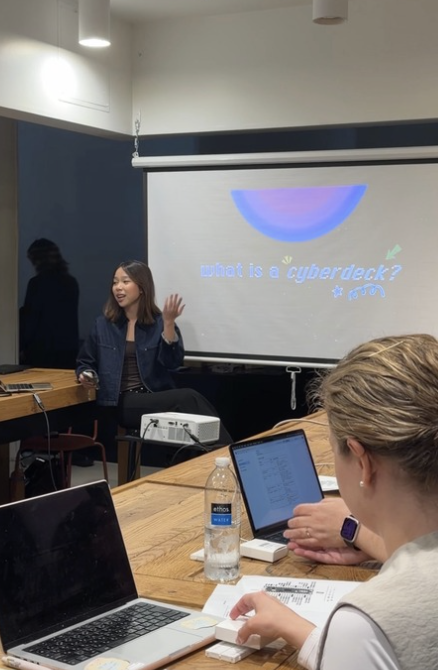
How did you get into cyberdecks?
I had seen the r/Cyberdeck reddit a few years ago, but it was earlier this year that many cyberdeck videos began popping up on my feed. I was so excited to see many people building (and customising) their own decks! It brought a breath of fresh air to the conventional ‘hardware look’. It was also bringing in new faces – people who had never touched a Raspberry Pi in their life were suddenly making these super-sick systems. I knew that the trend would be a great way to teach electronics to more folks, so I started making videos explaining the ‘how to’ of cyberdecks… at the end of the day, electronics is not a very flexible discipline – you either supply a steady 5V rail or suffer the consequences – and through my videos I hoped to bridge the gap between wanting to build something cool and actually being able to do it.
What are some of your favourite things you’ve made with Raspberry Pi?
It definitely has to be the satellite I helped build for Stanford’s Student Space Initiative. And yes, this is a real satellite! We’re launching later this year, which is super-exciting! The circuit boards on our satellite are designed around Raspberry Pi’s RP2350B [chip], not excluding the one I worked on: the Attitude Determination and Control System (ADCS) board which controls the satellite’s movements. I spent a lot of time diving deep into the RP2350B’s capabilities and features, ultimately designing a system that integrated reaction wheels, sun sensors, and motor controllers. The RP2350B came at a time of desperation for our club – our previous chip turned out to have extremely bad radiation tolerance due to a variety of factors (manufacturing defects, the current phase of the solar cycle), and the RP2350B passed our radiation tests with flying colours. Huge shout-out to the Raspberry Pi team for supporting our club during the entire process!
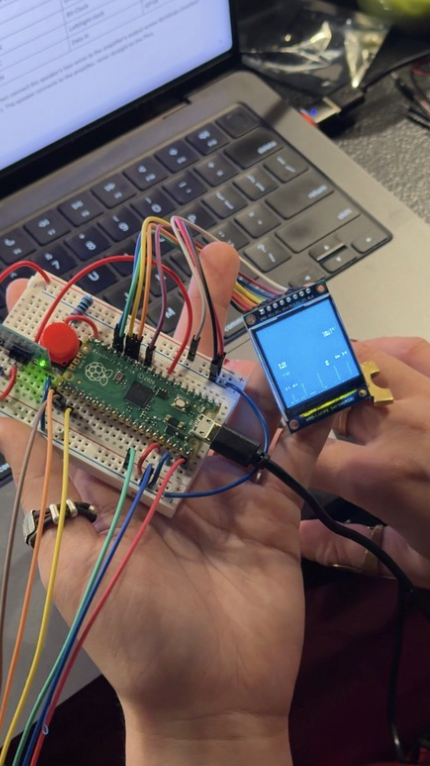
Cyberdeck workshop
Sage is currently touring workshops on how to build cyberdecks, and tickets are still available.

Rob is amazing. He’s also the Features Editor of Raspberry Pi Official Magazine, a hobbyist maker, cosplayer, comic book writer, and extremely modest.
Subscribe to Raspberry Pi Official Magazine
Save up to 37% off the cover price and get a FREE Raspberry Pi Pico 2 W with a subscription to Raspberry Pi Official Magazine.
More articles
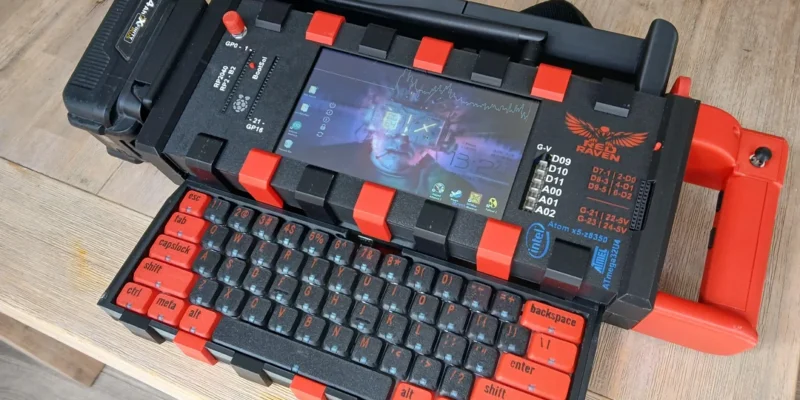
Red Raven cyberdeck
Powered by drills
Read more →
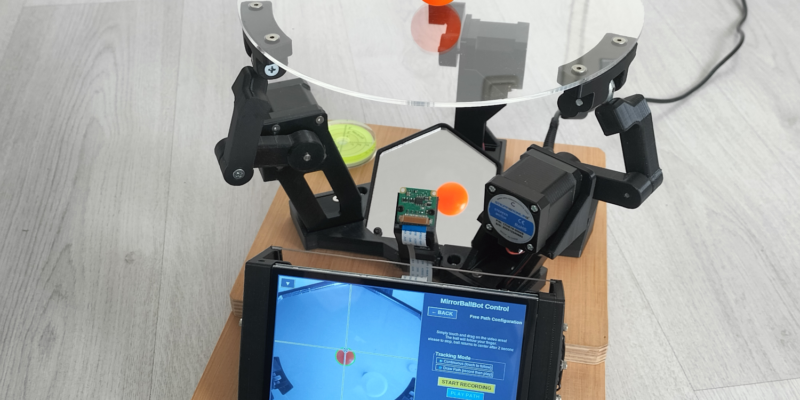
MirrorBallBot
This trick uses no smoke but it does use mirrors
Read more →
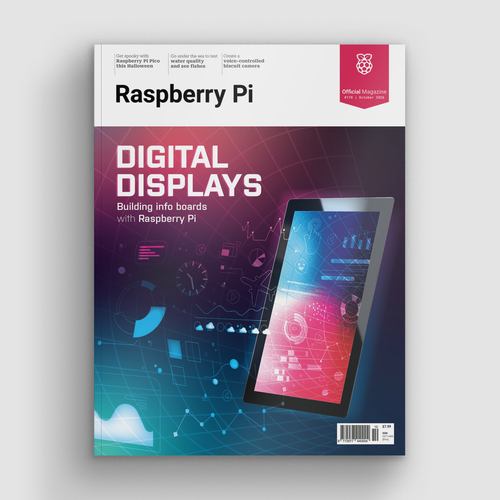
Digital Displays in Raspberry Pi Official Magazine 170
Some projects seem more like magic to us than anything else; here’s one of them. This robot by Italian engineer/magician Andrea Favero uses a mirror to widen the field of vision of a Raspberry Pi Camera Module 3, the input from which is processed by Raspberry Pi 4 and used to control three legs to […]
Read more →