Second Astro Pi turned on!
By Russell Barnes. Posted

Izzy, the Astro Pi with an IR camera attached to it, was finally activated today to start her mission
It's been a couple of weeks since Ed the first Astro Pi was turned on. After being delayed for almost a month due to a space walk and other bits and pieces, he finally started running some of the experiments loaded onto him from the Astro Pi winners. Izzy was slightly different though – as she was going to be looking down at the Earth, she needed a window clear. The Cygnus capsule now gone and no longer obstructing the window's view, she was able to begin.
After a short conversation on Twitter, astronaut Tim Peake and Ed got Izzy to 'wake up' and begin running the Flags program. This shows the flag of the country the ISS is currently over on the Sense HAT's LED matrix. Later, she'll start taking pictures and other footage of the Earth using the IR camera to assess the flora on the ground below.

Now with both Astro Pi's on, their proper mission can begin! We look forward to seeing what results the experiments yield. For more information on Astro Pi, visit the website and learn about all the individual experiments. You'll also find the files to 3D print your own Astro Pi case, and you can check out our Experiment with Sense HAT book to perform your own experiments like the Astro Pis.

Russell runs Raspberry Pi Press, which includes The MagPi, Hello World, HackSpace magazine, and book projects. He’s a massive sci-fi bore.
Subscribe to Raspberry Pi Official Magazine
Save up to 37% off the cover price and get a FREE Raspberry Pi Pico 2 W with a subscription to Raspberry Pi Official Magazine.
More articles
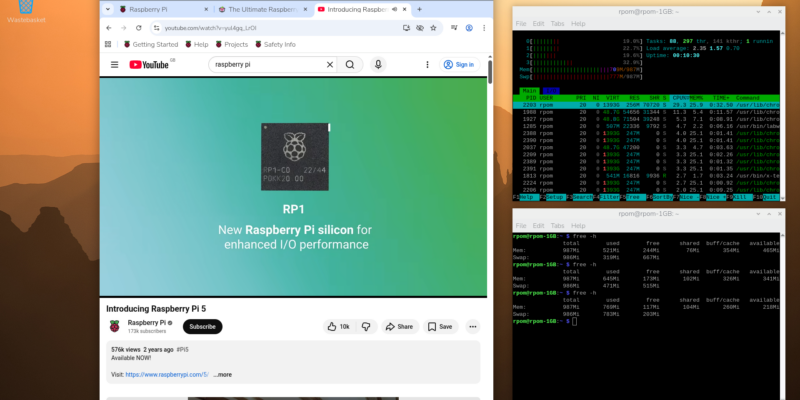
Make your RAM go further – Raspberry Pi OS memory optimisation tips
In issue 164 of Raspberry Pi Official Magazine we have been playing around with the new Raspberry Pi 5 1GB RAM. While the RAM shortage caused by the demands of AI infrastructure is annoying beyond belief, this has been a great chance for us to really get to grips with RAM. Generating images in Stable […]
Read more →
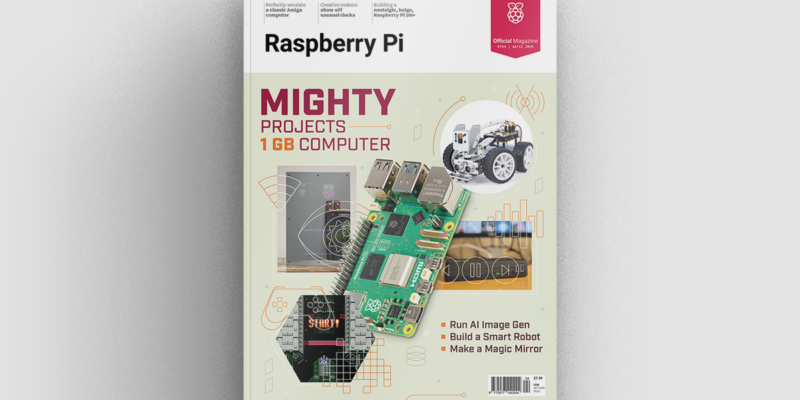
Mighty Projects – 1GB Computer in Raspberry Pi Official Magazine 164
It’s normal for computers to get faster and more pwerful, but the new-ish Raspberry Pi 5 1GB is a step in the other direction: it has all the processing power and the same GPIO pins of its more costly siblings, but with only 1GB of RAM it’s at a price that’s friendlier on the wallet […]
Read more →
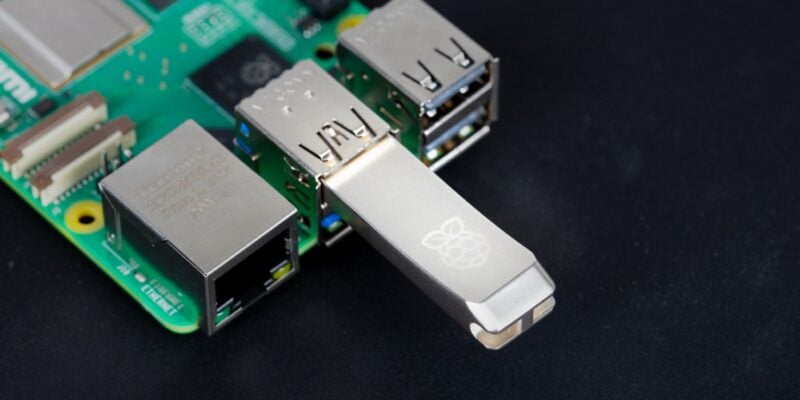
Win one of five 256GB Raspberry Pi Flash Drives
If you’ve been around long enough, you know that every Raspberry Pi accessory is top quality, and the latest Flash Drive is no different. Fancy a big one? We have five up for grabs, and you can enter below… Win 1 of 5 256GB Raspberry Pi Flash Drives
Read more →