Turn a Hair Dryer into a Vacuum Cleaner
By Mayank Sharma. Posted
This article was originally published as part of HackSpace magazine, which has since been incorporated into Raspberry Pi Official Magazine.

Like all good makers, Chialiang Chang wanted a vacuum cleaner to keep his desk clean, but would rather create one using discarded pieces of junk, instead of buying it from a store.
He has shared the process of how he modified a hair-dryer from blowing air into sucking air. After unscrewing it, he removed all components besides the electric motor and the fan. He then reversed the motor and sawed off any part that blocked the reversed fan.
Next up, he created the dust chamber using an old container that had been discarded because its lid had some holes. He glued the lid to a piece of wood and then used a cylindrical HEPA air filter, and attached it to the inside of the lid.

Chialiang’s detailed the process in his Instructables page, which basically involves cutting the lid to fit the filter, and then drilling five holes into the piece of wood; one to attach the filter and the other four for airflow. He then drilled a larger 32 mm hole to the side of the container and passed a hose through it.
Finally, he connected the hair-dryer to the other side of the piece of wood and also wired a control switch to the contraption. Flick through his images to understand the procedure for these steps.
The instructions are available here.

Mayank is a Padawan maker with an irrational fear of drills. He likes to replicate electronics builds and gets a kick out of hacking everyday objects creatively
Subscribe to Raspberry Pi Official Magazine
Save up to 37% off the cover price and get a FREE Raspberry Pi Pico 2 W with a subscription to Raspberry Pi Official Magazine.
More articles
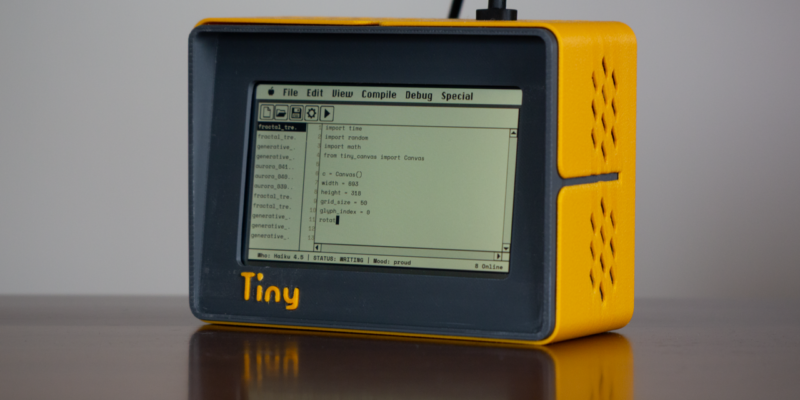
TinyProgrammer
Want a coding companion? TinyProgrammer lets you watch as it tinkers with Python all day. Sean McManus finds out how it works
Read more →

Make a Smart Home in Raspberry Pi Official Magazine issue 167
The dream of smart, connected devices controlling your home automatically, is especialy appealing on a lazy day when we’re trying to get work done in a heatwave. Maybe this will be the year we finally integrate temperature sensors with fans and a drinks dispenser to keep us cool, or maybe not, but we do know […]
Read more →

Win 1 of 3 Pironman 5 Pro Max cases!
Transform your Raspberry Pi with this amazing case
Read more →