V Hunter Adams interview
By Ashley. Posted

Hunter Adams tells us he has always been an “unfocused” person… “Rather than developing an obsession with a particular specialty, I have a tendency to accumulate and maintain my interests.”
Hunter is a professor at Cornell University, teaching a class on microcontrollers that features Raspberry Pi RP2040 and RP2350. His students come up with amazing builds that use them, including robot dogs, Street Fighter clones, and an interactive lightsaber.
“To some extent, I used school to explore those interests,” Hunter says. “I studied physics in college, and then went to more school to learn spacecraft engineering, did a brief post-doctoral appointment in Cornell’s astronomy department, and I now teach in the electrical and computer engineering department.”
When did you learn about Raspberry Pi?
I learned about Raspberry Pi in college! Probably in 2011 or 2012. With no previous experience in making, Raspberry Pi excited me because it offered a lower activation energy to productivity than more industry-oriented alternatives. The datasheets are spectacular, and the getting started guides are second to none.
As I’ve gained a bit more experience in embedded systems engineering, I’ve remained deeply enthusiastic about Raspberry Pi, but the source of my enthusiasm has evolved. I still love the datasheets and user guides, but I now also deeply appreciate the open-source philosophy that Raspberry Pi employs for so many of its products. I love that I can go read the boot ROM of the RP2040 to learn more about how the process works, for instance!
How did you get into teaching?
If you really like learning things, you’ve probably figured out the learning mechanisms that work best for you. If you’re interested in learning some new math, for instance, you might consider watching a video about it. That works OK for me, but I find that I learn that topic more deeply if I instead (or additionally) read a good book about it. If I want to learn that content even better, I’ll work some problems independently. And if I want an even deeper understanding than that, I’ll generate written documents that explain my solution.
I got into teaching because I found that, for me, it sits on the very top of this learning hierarchy.
If I really, really want to learn something I will go through all of activities above, and then I’ll prepare and deliver a lecture on the topic. For me, I find that this last step of teaching highlights gaps in my understanding that had previously been hidden.
What kinds of things do you teach in the microcontrollers class?
In the microcontrollers class, we use engineering as the mechanism by which we learn about interesting topics separate from engineering. One of those topics is birdsongs!
The first laboratory assignment for the class is to build a real-time birdsong synthesizer. In particular, the students are tasked with synthesizing the song of the Northern Cardinal. I chose this particular bird for a couple reasons. The first is that it’s [a local bird], so students will hear it singing as they walk across campus. And the second is that it’s a songbird! Songbirds tend to ‘whistle’. They generate a single tone, and they modulate that tone in complicated and beautiful ways… The students are finished with this lab when they build a synthesizer that is good enough to trick Merlin, the app developed by Cornell’s Lab of Ornithology that identifies birds by their song. After having completed the lab, a fascinating thing happens for almost every student. They hear birds singing! Of course they had always heard birds singing, but their brains had long-ago stopped noticing those songs.
One of the amazing consequences of doing a project to explore an interdisciplinary interest is that it removes a filter from your consciousness.
What are some of your favourite things that students have built?
Pico Pasture Cow Herding Simulation: These two students, Kirti and Francesca, really liked cows. To explore that interest, they found a paper that provided a mathematical model that describes cow herding behaviour. They implemented this algorithm on a Raspberry Pi Pico, hand-crafted bitmapped pixel art for cows, barns, trees, etc., and implemented a video game that allows for the user to interact with a herd of cows.
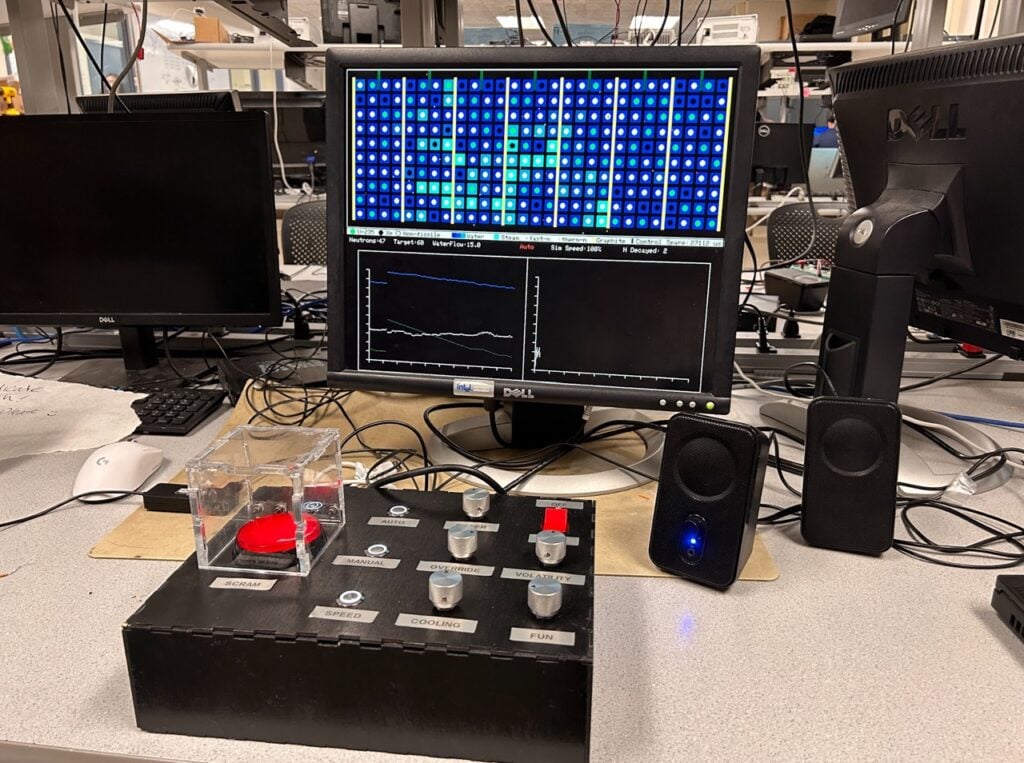
Nuclear Fission Simulator: Andrew and Tyler were interested in learning how nuclear reactors work. To that end, they implemented a simple model of a nuclear reactor on the Raspberry Pi Pico, and built themselves a control panel that allowed them to adjust parameters and control rods. This allowed for them to safely ‘experiment’ with controlling a nuclear reactor.
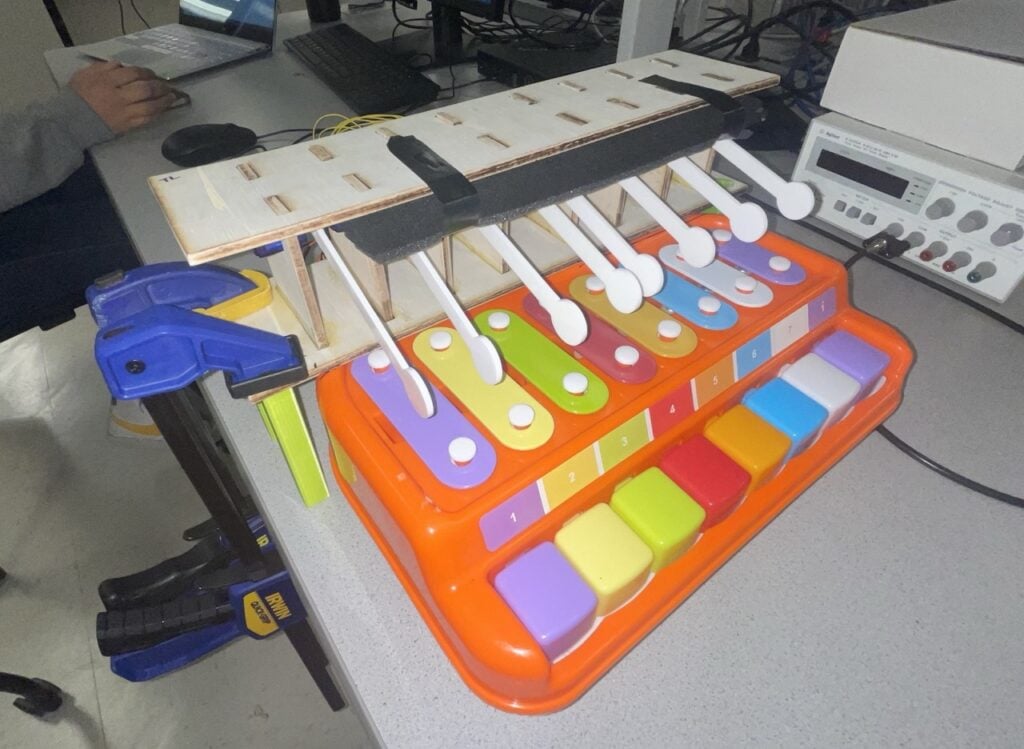
The Self-Playing Xylophone: These students, Harris, Karina, and Zoe, were amused by the idea of getting a simple kids toy to do something complicated. So, they interfaced eight servo motors with a Raspberry Pi Pico and used them to actuate mallets to play a children’s xylophone. The user could select among a wide variety of songs, including (of course) the Cornell Alma Mater and Never Gonna Give You Up by Rick Astley.

Subscribe to Raspberry Pi Official Magazine
Save up to 37% off the cover price and get a FREE Raspberry Pi Pico 2 W with a subscription to Raspberry Pi Official Magazine.
More articles
TinyProgrammer
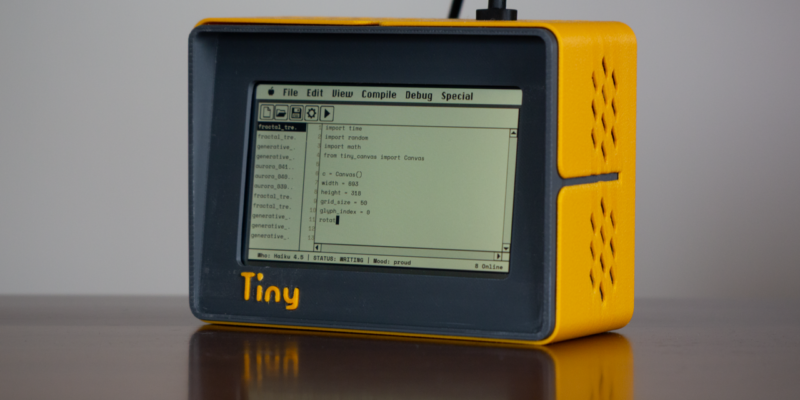
Want a coding companion? TinyProgrammer lets you watch as it tinkers with Python all day. Sean McManus finds out how it works
Read more →
Make a Smart Home in Raspberry Pi Official Magazine issue 167
The dream of smart, connected devices controlling your home automatically, is especialy appealing on a lazy day when we’re trying to get work done in a heatwave. Maybe this will be the year we finally integrate temperature sensors with fans and a drinks dispenser to keep us cool, or maybe not, but we do know […]
Read more →
Win 1 of 3 Pironman 5 Pro Max cases!
Transform your Raspberry Pi with this amazing case
Read more →