3D Printed Record
By Andrew Gregory. Posted
This article was originally published as part of HackSpace magazine, which has since been incorporated into Raspberry Pi Official Magazine.

Back in the olden days, people used to listen to music on flat plastic discs covered in tiny grooves. A needle on the end of an arm would bounce around in these tiny grooves as the disc span, and the vibration was amplified electronically to produce music. It was the best of times, it was the worst of times.
Amanda Ghassaei used a UV-cured resin printer called the Objet Connex500, which has a resolution of 600 dpi in the x and y axis, and 16 microns in the z axis to create a playable record (a film of WD-40 is about 17 microns deep). Despite that, the grooves on the 3D-printed record are about ten times deeper and ten times wider than those on a pressed vinyl record, so the 3D-printed record can’t hold anywhere near as much audio as a pressed record.
Amanda has published a detailed explanation of using the Python programming language to extract useful data from an audio file, turning the data into an STL file and, from there, into a printed resin object, along with the ups and downs of getting the process right.
She’s also released recordings of 3D-printed sample tunes, including Nirvana’s Smells like Teen Spirit, Daft Punk’s Around the World, Debaser by Pixies, and songs by Joy Division, New Order, and Aphex Twin.

Features Editor Andrew trawls the internet for Cool Stuff while keeping the magazine running smoothly.
Subscribe to Raspberry Pi Official Magazine
Save up to 37% off the cover price and get a FREE Raspberry Pi Pico 2 W with a subscription to Raspberry Pi Official Magazine.
More articles
Raspberry Pi Official Annual 2027 is out now!
New name, same fantastic content
Read more →
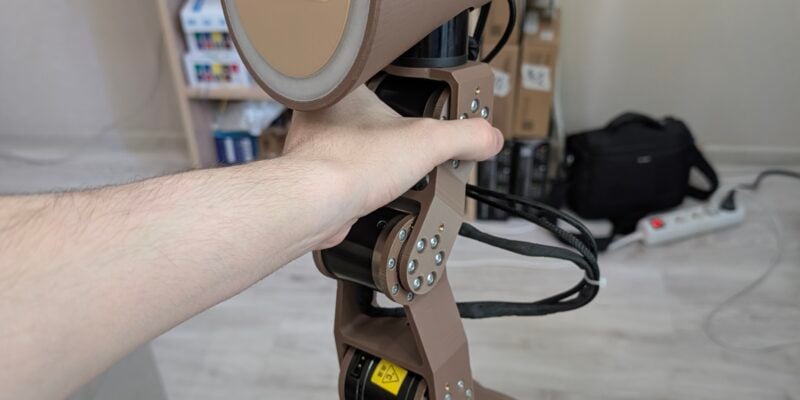
Robot arm lamp
This won’t be jumping on any animation studio logos
Read more →
Sage Cadence interview
An electrical engineering student trying to provide the educational content she would have wanted
Read more →