3D printed spectacle case
By Toby Roberts. Posted

Around 5000 years ago, something catastrophic happened to humans: we started farming. No longer hunters and gatherers, living off what we could forage from the forests and streams, we succumbed to an innovation from the Middle East that would guarantee us a larger supply of calories for less effort. Urbanisation, spreadsheets, student loans, and mortgages all came from this fateful event.
But recent evidence suggests it’s not as simple as that. Examination of grave sites indicates that instead of the Mesolithic locals learning how to farm, they were replaced by far more successful Neolithic farmers. One of the differences in the evidence left by the two populations is skull length. The newcomers with their fancy ability to plant seeds and eat what they grew had smaller skulls, and that’s why it’s all but impossible to go into an optician’s shop today and buy a pair of glasses with a temple length of more than 140mm.

If, like our features editor Andrew, you have a gloriously long skull, you might appreciate this flexible glasses case created by Rorys3D. The maker has made the STL files available on Printables, so if you find that your eyewear doesn’t fit the puny standard sizes offered for today’s humans, you can scale the design in whatever dimension you need to fit longer/wider/deeper frames.
Other than that, the interesting thing is the flexible flexure. We printed ours on a Bambu Lab Mini using PETG filament. PETG was selected for its improved flexibility compared to PLA, which can be more brittle – making it a more suitable material for a case that may be opened and closed frequently.

Maker in Chief at Raspberry Pi
Subscribe to Raspberry Pi Official Magazine
Save up to 37% off the cover price and get a FREE Raspberry Pi Pico 2 W with a subscription to Raspberry Pi Official Magazine.
More articles
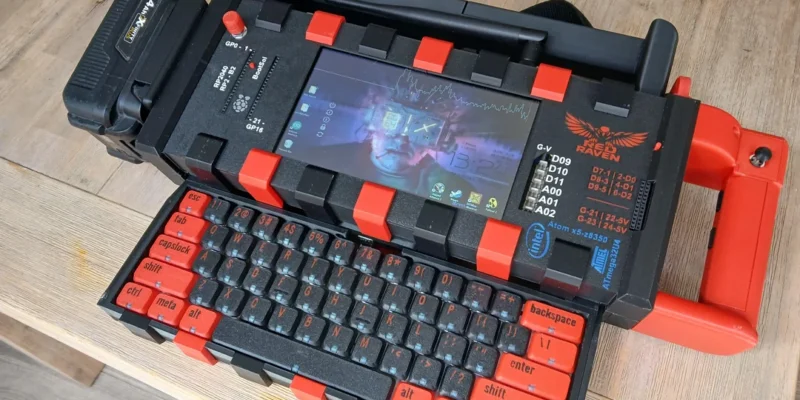
Red Raven cyberdeck
Powered by drills
Read more →
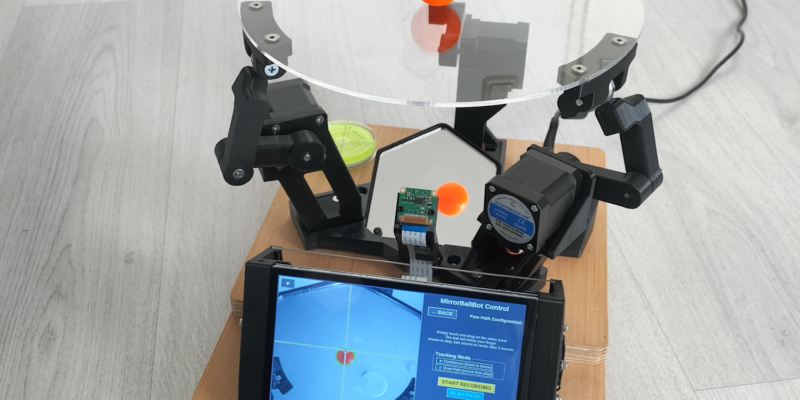
MirrorBallBot
This trick uses no smoke but it does use mirrors
Read more →
Digital Displays in Raspberry Pi Official Magazine 170
Some projects seem more like magic to us than anything else; here’s one of them. This robot by Italian engineer/magician Andrea Favero uses a mirror to widen the field of vision of a Raspberry Pi Camera Module 3, the input from which is processed by Raspberry Pi 4 and used to control three legs to […]
Read more →