Boxes.py Review
By Ben Everard. Posted
This article was originally published as part of HackSpace magazine, which has since been incorporated into Raspberry Pi Official Magazine.

Using parametrics in our designs allows us to customise an object to our needs. For example, a parametric box may let you enter the width, height, and depth, and then output the files needed to cut a box.
Boxes.py hosts a wide range of parametric designs for different structures, that you can tweak to your needs. As the name suggests, there are lots of boxes, but also trays, pulleys, gears, robots, and a miscellany of other parts. It’s not completely exhaustive in any area (though the range of different box designs is quite extensive), but does provide a good first place to check when you’re looking for parametric laser-cutting patterns.

Take back control of your online data, with Raspberry Pi.
It's available as a webpage, standalone program, or Inkscape plugin. Click here for details on installation. We found the webpage easiest to use.
It produces SVGs that you can download and import into your laser cutter software of choice. Depending on exactly how you drive your laser cutter, you may find that you have to adjust the colour or width of the lines on the SVGs in order for them to cut properly.
All the boxes are held together with finger joints which do work well, but it would be nice to have a few more options, particularly T-slots for cases that need to be put together and taken apart (these are available in the Python library, but don’t exist in any of the generator designs).
We printed out several designs including a ‘ShutterBox’ (which most British people will know as a bread bin), an ‘UnevenHeightBox’, and a ‘TwoPiece’ box. All cut well and fitted together securely. However, they don’t come with instructions. This isn’t a problem for the simple designs, but some of the more complex options (such as the ‘FlexBox’) can end up resembling 3D jigsaw puzzles.
Overall, this is a great repository of parametric laser-cut designs, but we’d appreciate a few more options for joint types.
Verdict: 8 out of 10
Lots of easy-to-use, laser-cuttable designs.

Ben is the Editor of HackSpace magazine. When not wrangling words, he enjoys cycling, gardening, and attempting to identify wild mushrooms.
Subscribe to Raspberry Pi Official Magazine
Save up to 37% off the cover price and get a FREE Raspberry Pi Pico 2 W with a subscription to Raspberry Pi Official Magazine.
More articles
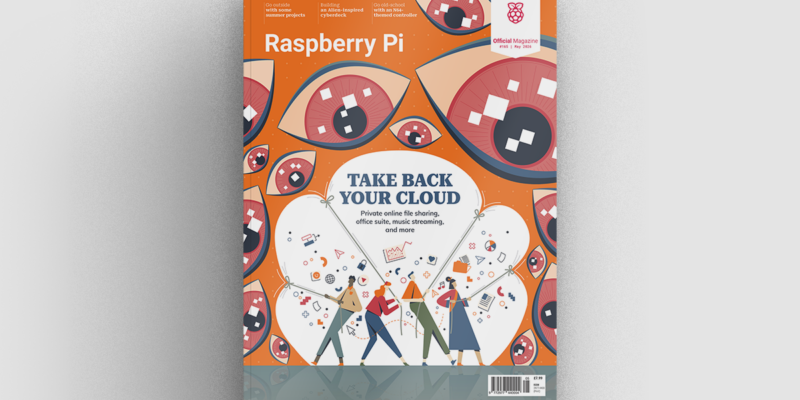
Take Back Your Clound in Raspberry Pi Official Magazine 165
We’re all-too accustomed to the feling of being watched on the internet. A search for any product leads to adverts, emails, and goodness knows how many bots tracking you. It feels weird and intrusive, and we aren’t being paranoid – they really are watching us. Luckily you don’t have to reply on online services that […]
Read more →
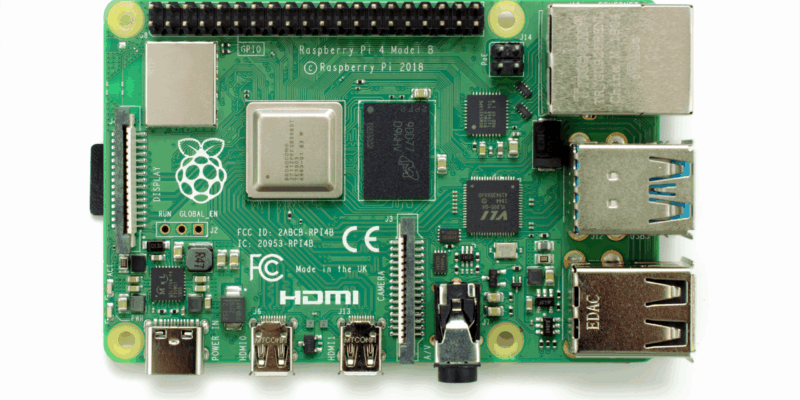
Win one of three Raspberry Pi 4 with 3GB RAM!
Raspberry Pi 4 is still a powerful piece of kit, and this new 3GB version is great for projects and builds that need slightly more than 2GB of RAM but don’t quite need 4GB. We have three to give away and you can enter below. Win 1 of 3 Raspberry Pi 4 3GB
Read more →
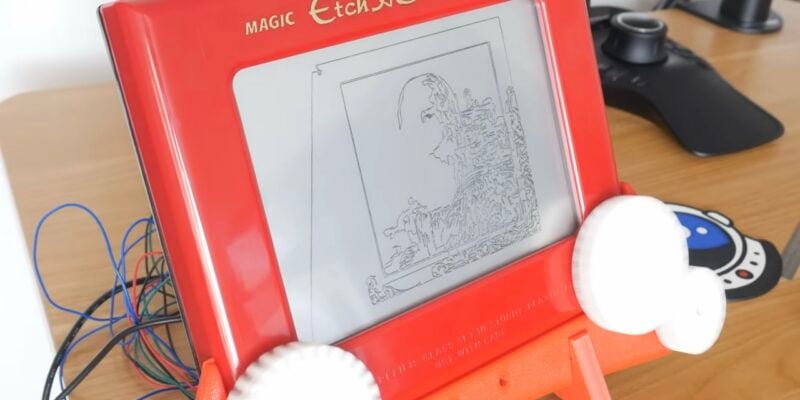
Etch A Sketch CNC machine
The software controlling the Etch A Sketch logs the image, turns it into vectors, turns the vectors into G-code, then sends the G-code to the Etch A Sketch – and it was all written by AI
Read more →