BrailleRAP
By Ben Everard. Posted
This article was originally published as part of HackSpace magazine, which has since been incorporated into Raspberry Pi Official Magazine.

Braille, the tactile alphabet used by blind and partially sighted people, was invented almost 200 years ago by Louis Braille, in 1829. It’s still widely used, but if you want to print anything in Braille (actually, there’s no ink involved, so the correct term is embossing rather than printing) it’s going to set you back a few quid. The Royal National Institute of Blind People (RNIB) has a few on offer on its website, with prices starting at £1760 for the cheapest model. You can get a roughly equivalent home inkjet printer for under £30. The difference is absurd, and it’s all because of the much more limited market, and the number of moving parts that machines like Braille embossers need.

This combination – of high price, established tech, and a market that isn’t being met by commercial forces – makes Braille embossers ripe for open-source hardware makers. And here, we have one such product: the BrailleRAP, released under the CERN Open Hardware Licence v1.2. We hope to bring you more about this wonderful project in a forthcoming issue of HackSpace magazine but, for now, just enjoy the clean lines of all that laser-cut acrylic, and ponder that the build pictured here cost around $250 to produce – around 10% the cost of the cheapest commercial solution.

Ben is the Editor of HackSpace magazine. When not wrangling words, he enjoys cycling, gardening, and attempting to identify wild mushrooms.
Subscribe to Raspberry Pi Official Magazine
Save up to 37% off the cover price and get a FREE Raspberry Pi Pico 2 W with a subscription to Raspberry Pi Official Magazine.
More articles
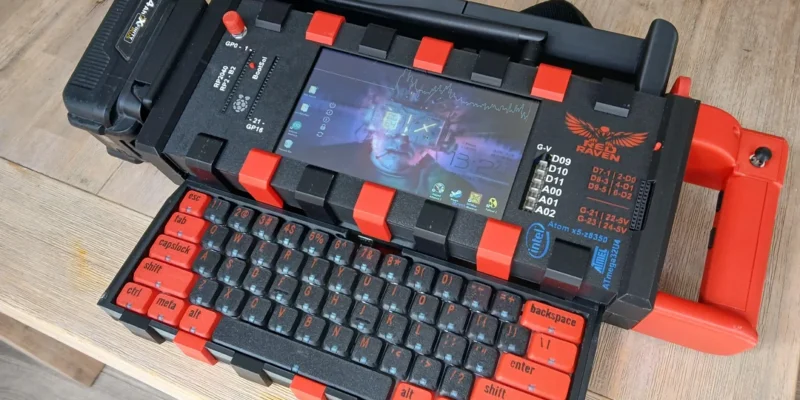
Red Raven cyberdeck
Powered by drills
Read more →
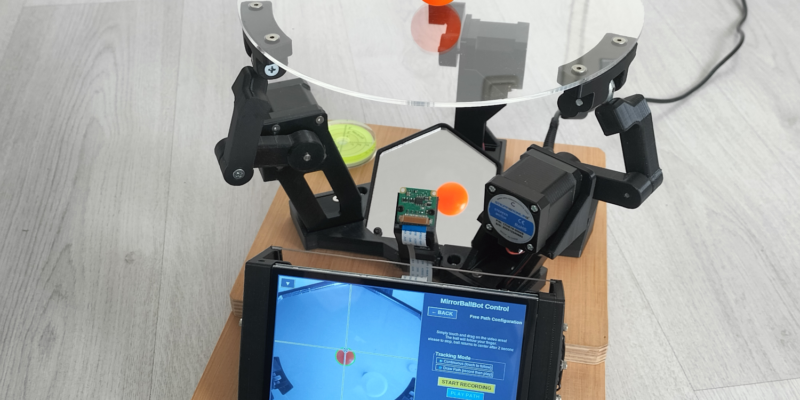
MirrorBallBot
This trick uses no smoke but it does use mirrors
Read more →
Digital Displays in Raspberry Pi Official Magazine 170
Some projects seem more like magic to us than anything else; here’s one of them. This robot by Italian engineer/magician Andrea Favero uses a mirror to widen the field of vision of a Raspberry Pi Camera Module 3, the input from which is processed by Raspberry Pi 4 and used to control three legs to […]
Read more →