Chop saw tape dispenser
By Andrew Gregory. Posted

Much as we love a simple, elegant solution to an everyday problem, we’re also big fans of people reinventing the wheel. Why tell the time with the clock on your smartphone, or the one in the top-right of your computer screen, when you could build a device that uses 3D-printed widgets and obsolete electronics to do the same job? Why buy a laptop off the shelf when you could build something that does the same job but in a wildly impractical form factor? Why use any mundane tool when you could use something far more awesome that you’ve made yourself?

It’s in this spirit that Bunchowills has made the world’s smallest chop saw that is also a tape dispenser. Yes, the spinny 3D-printed blade won’t give you the same clean edge as a pair of scissors, but it looks considerably more awesome, and that’s the whole point.

This mostly 3D-printed build runs on a pair of AA batteries, and can technically be used for woodworking projects as well as stationery management (its maker claims it can cut through toothpicks). Download the STL files, fire up your printer, and make one today for the woodworker with everything in your life.
Warning! Moving parts
Be careful when handling this project because it has moving parts. Children should be supervised.

Features Editor Andrew trawls the internet for Cool Stuff while keeping the magazine running smoothly.
Subscribe to Raspberry Pi Official Magazine
Save up to 37% off the cover price and get a FREE Raspberry Pi Pico 2 W with a subscription to Raspberry Pi Official Magazine.
More articles

Incredible Weather Projects in Raspberry Pi Official Magazine issue 171
If the planet gets too hot/too cold/too drizzly for human habitation, we’ll probably want to leave Earth in search of a better one. That means we’ll need a flight computer, and maker Michael Newton is one step ahead: he’s built a replica of the DSKY (display keyboard) interface from the Apollo Guidance Computer. Now you […]
Read more →

Win one of five Sense HAT bundles
Get a Sense HAT add-on and book in our latest competition
Read more →
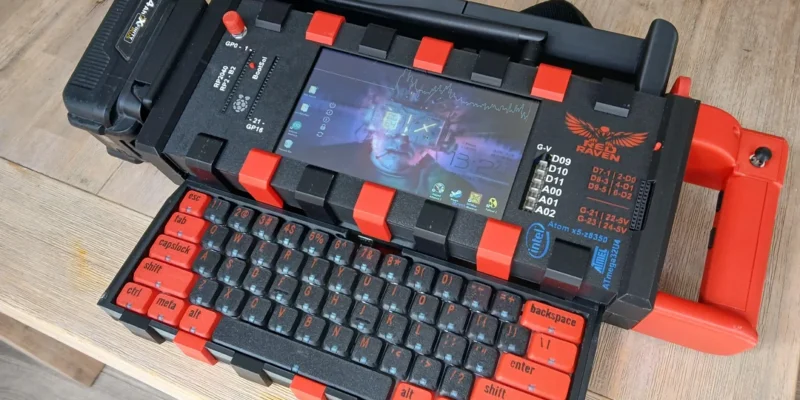
Red Raven cyberdeck
Powered by drills
Read more →