FRILLER shape-changing robot
By Lucy Hattersley. Posted

This amazing robot changes the shape of its wheels to overcome obstacles, as Phil King discovers
A two-wheeled robot scoots under a glass table, turns around, and… its wheels expand into spiky petal-like ‘legs’ for a larger radius, enabling it to clamber over the top of the table. This is the phenomenal FRILLER, created by Al Bencomo and based on an original body design by Carter Hurd.
“The idea was inspired by the STAR robot from UC Berkeley and some of the research done at [NASA] JPL,” Al reveals, “which includes prototypes of collapsible robots and robots with tails.”
While the wheel transformation process looks complex, Al tells us that the 3D-printed design and mechanism is a lot simpler than we’d expect. “The first proof-of-concept trial had a tendon-like connector in order to tension the wedges in one state or the other. However, the latest version relies on interlocking sections, which can be 3D-printed without having to print support structures.”
Friller handles Rough terrain
Solarbotics GM3 224:1 gear motors are used for the wheel transformation, each one able to provide 0.343 Nm of torque at 3 V. Combined with the spiky expanded wheels, 1.2 Nm 12 V advancing motors, and a flat fishtail to aid balance, this enables FRILLER to traverse a range of rugged terrains: so far, it has been tested on snow, dirt, grassland, and small gravel.
“FRILLER’s preliminary field tests haven’t been particularly challenging,” admits Al, “but they can still be counted as a success. Future tests will include areas such as steep slopes and sand dunes.”
Al says the deformable wheel concept has huge potentials for serious practical uses in fields like geology, “since it can be used in hard-to-reach locations like volcano ledges, for example. It could also be used as a scout for larger rovers to enhance the way they currently do exploration science.”


3D-printed design
The FRILLER project took Al 80 person-hours to build and program. “Normally, it would have been complicated and long-winded to create the resulting robot, but 3D printing saves a lot of time.” All the 3D print STL files and code are open-source if you want to build your own.
At FRILLER’s heart is a Raspberry Pi 3 running Android Things. The TouchOSC app on an Android phone is used to manually control the robot. “During field tests, the Android device is set up as an access point (hotspot) and FRILLER connects to it to receive commands via UDP packets.”
Al plans to add autonomous control to conduct science beyond line-of-sight. He plans other improvements too: “The next step is adding some sensors like a spectrometer to study the chemical makeup of its environment, and GPS to help navigation when you’re not directly guiding it.”

Lucy is Editor of Raspberry Pi Official Magazine.
Subscribe to Raspberry Pi Official Magazine
Save up to 37% off the cover price and get a FREE Raspberry Pi Pico 2 W with a subscription to Raspberry Pi Official Magazine.
More articles
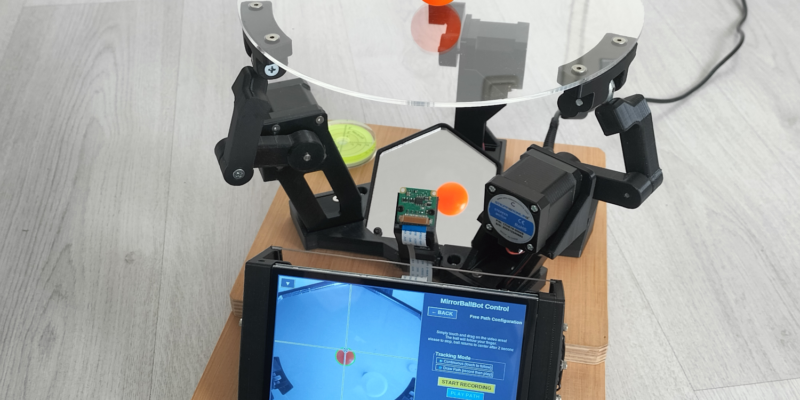
MirrorBallBot
This trick uses no smoke but it does use mirrors
Read more →
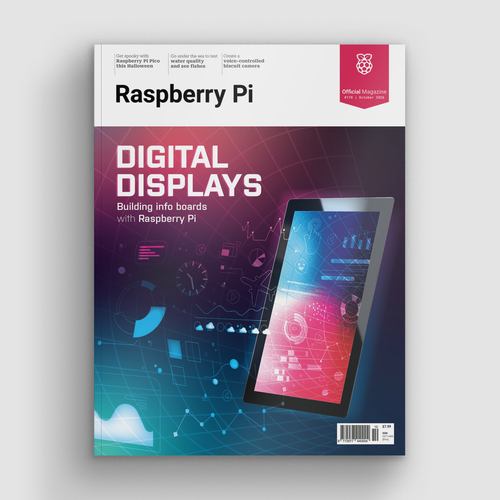
Digital Displays in Raspberry Pi Official Magazine 170
Some projects seem more like magic to us than anything else; here’s one of them. This robot by Italian engineer/magician Andrea Favero uses a mirror to widen the field of vision of a Raspberry Pi Camera Module 3, the input from which is processed by Raspberry Pi 4 and used to control three legs to […]
Read more →
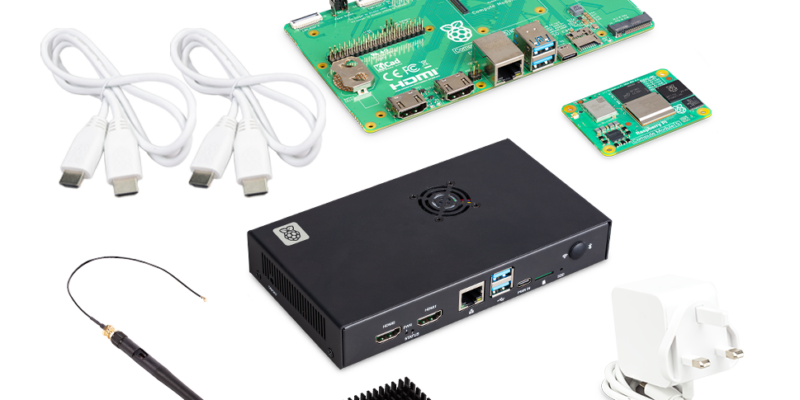
Win a Development Kit for Compute Module 5
Make CM5 development easier with our competition
Read more →