Mike Cook interview: a legacy of incredible projects
By Rob Zwetsloot. Posted
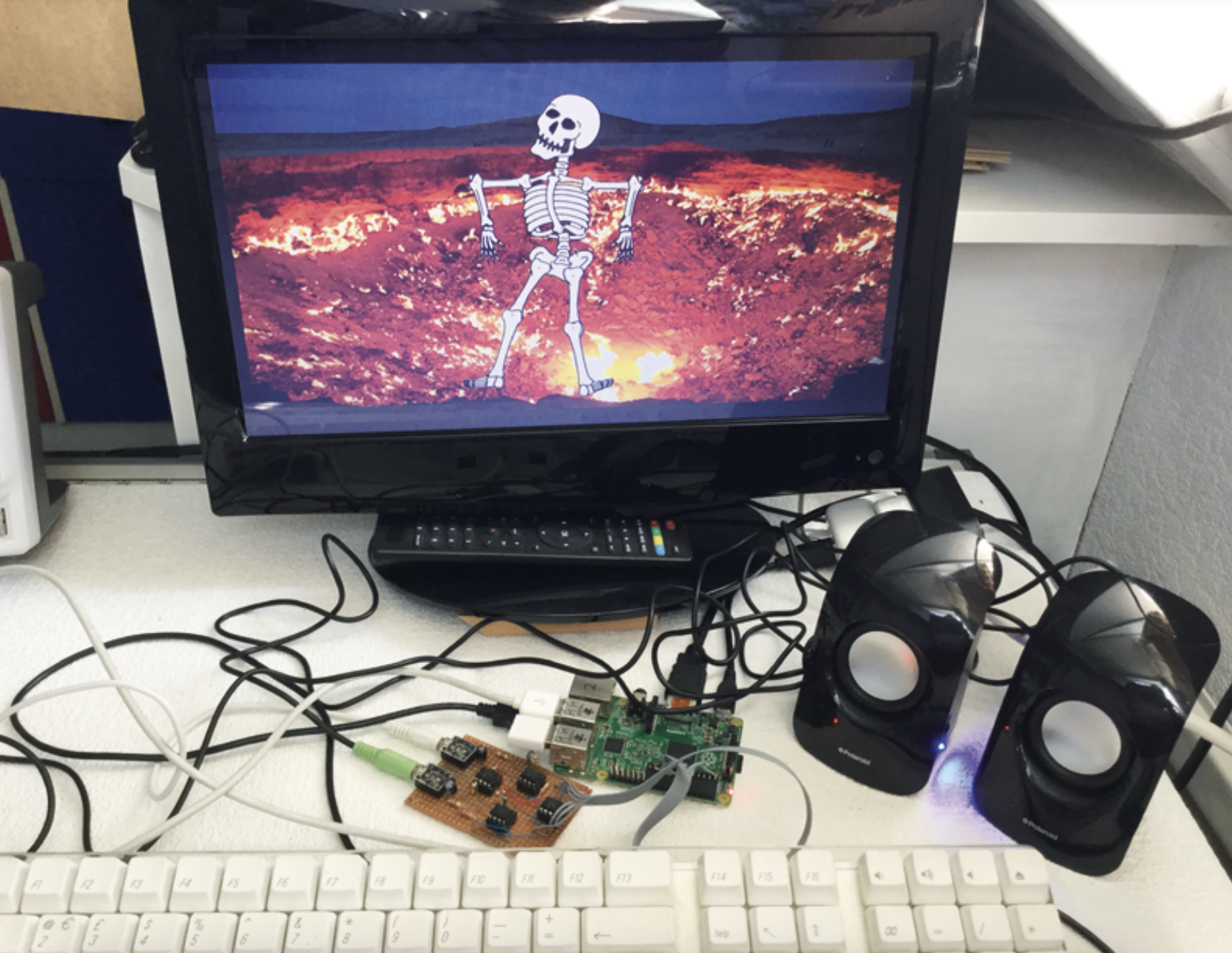
For a very long time, you could find a wonderful tutorial from Mike Cook and his Pi Bakery right here in the pages of The MagPi. From dancing skeletons to handmade MIDI guitars, he showed readers how to create an incredible variety of projects. He’s well-known to older readers from his regular columns in The Micro User and Acorn User in the 1980s.
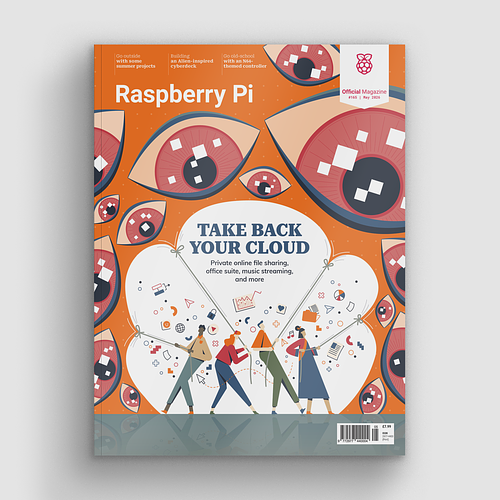
Take back control of your online data, with Raspberry Pi.
“I am addicted to making stuff,” Mike tells us. “Now retired, but I was a university lecturer for 21 years and an electronic engineer in a mass-production consumer electronics company for the rest of my career.”
What is your history with electronics and programming?
My first electronic kit was called Trans Tronic. I got it when I was nine, and was making and selling crystal sets to my classmates when I was 13. Left my secondary modern school at 16, although 14 was the minimum school leaving age then. I went to work for a local industrial electronics company. There I did day release and night school for an ONC qualification. This allowed me to attend Newcastle Polytechnic, where I took a joint degree in Physics/Electronics. This is where I had my only formal education about computers. I had three one-hour lectures on programming with Fortran IV, but that was enough to get me hooked.

When did you start writing about it?
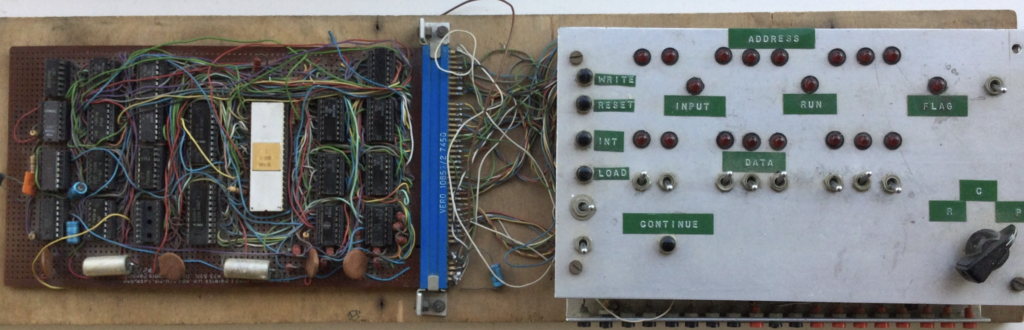
After I made my own computer in 1976, from just a datasheet of the processor, and no idea what software did in them. My first published article on computing was in 73 Magazine, a ham radio magazine from the USA. It was about making music with a microcomputer. Later, I went on to write about the BBC computer in The Micro User, and after that in Acorn User. My first publication was in The MagPi #5, but I didn’t start writing my Pi Bakery series until The MagPi #33.
When did you learn about Raspberry Pi?
From a blog post online about six months before it first came out. I wasn’t quick enough to get one of the first batch, although I did apply for, and got, a second-batch machine.
What was the first thing you made with a Raspberry Pi?
I adapted a project I had done in The Micro User for a computer-controlled glockenspiel.
What is your favourite thing you’ve made?
What, just one? Too hard, you get eight on Desert Island Discs. Well, I will give you my top three. Dancing Skeletons – The MagPi #50, Tap-n-LED, – The MagPi #97, and Pico Voice – The MagPi #106.
What other hobbies have inspired you?
Astronomy. I have a 10˝ Cassegrain telescope. I even lectured in it as part of the physics courses at the university. Speleology, although it is some years since my wetsuit actually fitted me. Photography, analogue stuff with trays of chemicals. I was a professional wedding photographer for three years in the late 1960s. Also, amateur radio, live music gigs, stained glass work, and hill walking.

Anything else you’d like to add?
I just love helping people with their projects. There was no ‘online’ when I started, and so I had to work it all out myself. It is good to give people a helping hand.

Rob is amazing. He’s also the Features Editor of Raspberry Pi Official Magazine, a hobbyist maker, cosplayer, comic book writer, and extremely modest.
Subscribe to Raspberry Pi Official Magazine
Save up to 37% off the cover price and get a FREE Raspberry Pi Pico 2 W with a subscription to Raspberry Pi Official Magazine.