IoT battery charger
By Ben Everard. Posted
This article was originally published as part of HackSpace magazine, which has since been incorporated into Raspberry Pi Official Magazine.

The internet is cluttered with pointless devices, promising convenience but offering little more than outdated software, security vulnerabilities, and subscription services offering an umbilical link to companies that can put up prices when they feel like it or even go bust.
This IoT battery charger by Liz Clarke, Kattni Rembor, and the Ruiz brothers avoids all these pitfalls. For one, it’s built using open-source hardware and software, so should Adafruit vanish tomorrow, it’ll still work. And in contrast to many other IoT devices, it’s actually useful.
This is a pretty simple build, beautifully executed: it’s just an Adafruit ESP32-S2 Reverse TFT Feather (a Feather word with a built-in TFT screen) and a MAX17048 LiPoly battery monitor chip. The chip detects your battery’s charge, and the Feather displays it on screen. So far so good, but the IoT element is where this build shines. Using Adafruit IO, the device can let you know when the battery is charged, via a text message or an email.

Ben is the Editor of HackSpace magazine. When not wrangling words, he enjoys cycling, gardening, and attempting to identify wild mushrooms.
Subscribe to Raspberry Pi Official Magazine
Save up to 37% off the cover price and get a FREE Raspberry Pi Pico 2 W with a subscription to Raspberry Pi Official Magazine.
More articles
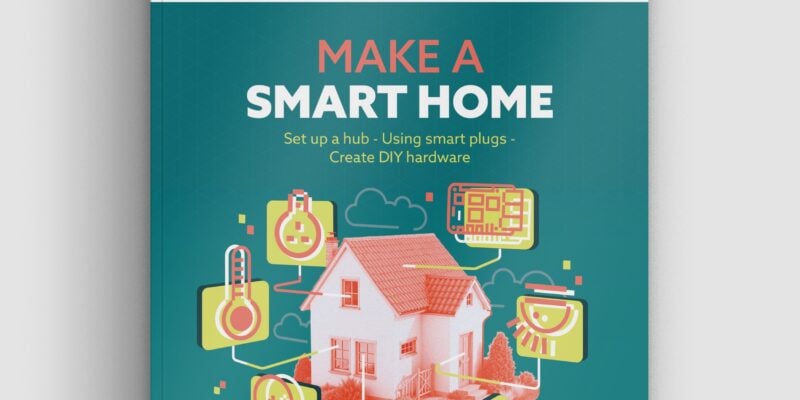
Make a Smart Home in Raspberry Pi Official Magazine issue 167
The dream of smart, connected devices controlling your home automatically, is especialy appealing on a lazy day when we’re trying to get work done in a heatwave. Maybe this will be the year we finally integrate temperature sensors with fans and a drinks dispenser to keep us cool, or maybe not, but we do know […]
Read more →

Win 1 of 3 Pironman 5 Pro Max cases!
Transform your Raspberry Pi with this amazing case
Read more →

Learning to code in an AI age
A new Raspberry Pi Foundation course helps young people learn to code.
Read more →