IV-12 VFD tube calculator
By Ben Everard. Posted
This article was originally published as part of HackSpace magazine, which has since been incorporated into Raspberry Pi Official Magazine.

If you love the look of Nixie tubes but are scared by high voltages, VFD tubes could be the retro display device for you. They work using the same logic as Nixies, with a connecting pin for each segment of the display plus three pins to provide power, and you can get hold of them at reasonable prices from online auction sites.
Maker Oskar wanted to build a project incorporating IV-12 VFD tubes as a display, and chose to build this beautiful calculator. It uses an Arduino Nano, Cherry MX Brown switches, key caps bought on AliExpress, and a custom PCB to allow the 1970s Soviet technology of the VFDs to work with an Arduino Nano.

Programming in Arduino’s custom version of the C programming language can be scary for anyone used to working with the relatively more user-friendly Python language, but a calculator is a relatively simple concept that gives you an ideal reference point if you want to make the jump. And if you don’t want to code, but you do like the look of a retro Soviet-looking desktop calculator, Oskar has made the code available on his GitHub page. This project has been so beautifully realised that you may, at first glance, think the case has been upcycled from an existing build. It hasn’t: the case is made from 3 mm plywood, designed in the Onshape CAD software, and cut out by a laser cutting company, finished off with a walnut veneer and a few coats of linseed oil. Gorgeous!

Ben is the Editor of HackSpace magazine. When not wrangling words, he enjoys cycling, gardening, and attempting to identify wild mushrooms.
Subscribe to Raspberry Pi Official Magazine
Save up to 37% off the cover price and get a FREE Raspberry Pi Pico 2 W with a subscription to Raspberry Pi Official Magazine.
More articles

SPOKE review – programmable MIDI controller
An RP2040-powered touch controller for music and a lot more.
Read more →
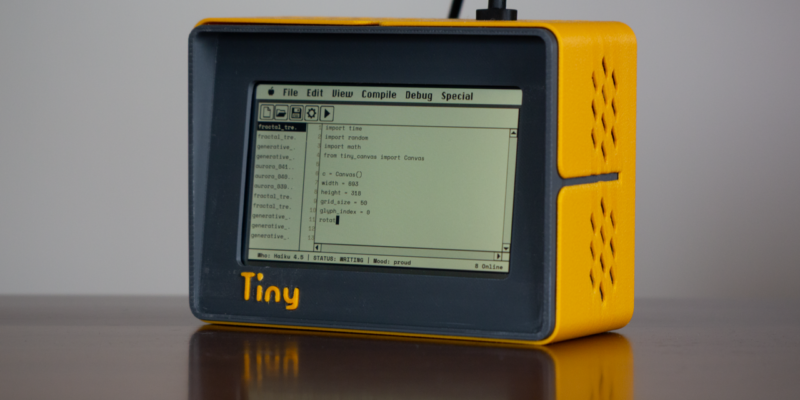
TinyProgrammer
Want a coding companion? TinyProgrammer lets you watch as it tinkers with Python all day. Sean McManus finds out how it works
Read more →

Make a Smart Home in Raspberry Pi Official Magazine issue 167
The dream of smart, connected devices controlling your home automatically, is especialy appealing on a lazy day when we’re trying to get work done in a heatwave. Maybe this will be the year we finally integrate temperature sensors with fans and a drinks dispenser to keep us cool, or maybe not, but we do know […]
Read more →