KIWI digital KVM review
By Rob Zwetsloot. Posted

Screen capture tools are very common these days; however, usually you cannot interact with the screen on the other end. KIWI, on the other hand, hooks your mouse and keyboard right up to it.
The concept is fairly simple – download the software, do a quick install, and then plug your Raspberry Pi into the device using an HDMI cable and an (included) USB-A to USB-C cable to connect keyboard and mouse. We’ve used several screen capture tools in the past for various reasons – whether it’s live streaming, video making, or screenshot taking – and while a lot of them are in theory plug-and-play like this, that’s not always the case. Surprisingly, we had no such issue with KIWI, despite it also providing input.
Plug ‘n’ play
There is a little bit of noticeable lag when working over KIWI. The mouse cursor feels a little bit like it’s being dragged through mud, although keyboard inputs feel more responsive. It’s faster than Raspberry Pi Connect at least, but we wouldn’t want to be doing any twitch FPS gaming using it.
It also provides several very useful functions for this kind of screen capture – sending some basic key commands, allowing you to paste from your host computer and even do a screen recording. The interface for this is all very customisable, even allowing for a random ‘mouse jiggle’ to keep a screen alive.

Extra functions
A fairly unique ability in its PRO version is the ability to (physically) uncover some extra GPIO ports on the device and control them via the interface, which also have UART. They’re marketed at IT professionals, allowing for debugging and control of ATX power, and there’s even an extra function of turning the input cable into a virtual serial cable. It’s quite impressive.
With the myriad ways you can connect to a Raspberry Pi from another device, we did wonder if this would be superfluous. However, due to the speed of getting it working, no need for any local networking, and its fairly small footprint, it’s a great alternative to Connect and other network-based remote connection tools. These network tools also only work once a system has fully booted up, whereas KIWI’s physical connection allows you to see the boot process, which means you can troubleshoot any misbehaving Raspberry Pi without plugging it into another monitor.
If you use Raspberry Pi a lot, this is definitely worth considering adding to your arsenal of add-ons.

Verdict
9/10
A surprisingly functional and full-featured digital KVM and screen capture device, and much smaller than even a Raspberry Pi.
Specs
I/O: USB-C (host connection), USB-C (input connection), HDMI, 6 × GPIO (PRO version)
Dimensions: 46 × 46 × 15 mm
Connectivity: 1080p video, human input devices, virtual serial connection, UART, ATX

Rob is amazing. He’s also the Features Editor of Raspberry Pi Official Magazine, a hobbyist maker, cosplayer, comic book writer, and extremely modest.
Subscribe to Raspberry Pi Official Magazine
Save up to 37% off the cover price and get a FREE Raspberry Pi Pico 2 W with a subscription to Raspberry Pi Official Magazine.
More articles
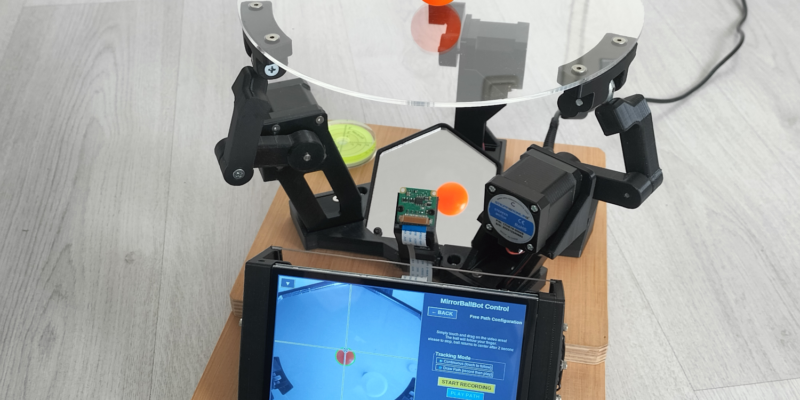
MirrorBallBot
This trick uses no smoke but it does use mirrors
Read more →
Digital Displays in Raspberry Pi Official Magazine 170
Some projects seem more like magic to us than anything else; here’s one of them. This robot by Italian engineer/magician Andrea Favero uses a mirror to widen the field of vision of a Raspberry Pi Camera Module 3, the input from which is processed by Raspberry Pi 4 and used to control three legs to […]
Read more →
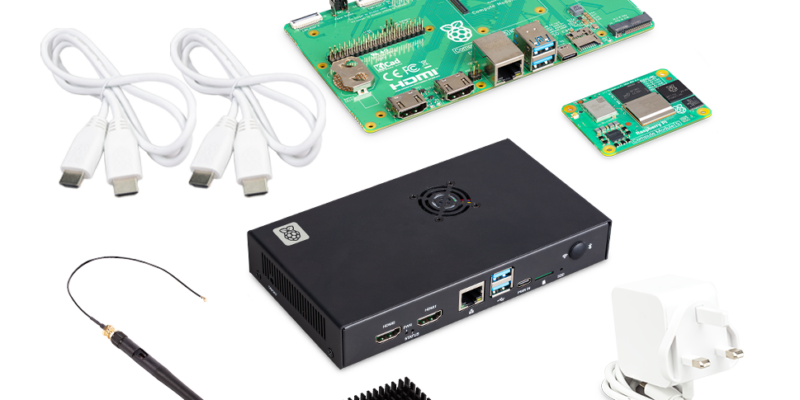
Win a Development Kit for Compute Module 5
Make CM5 development easier with our competition
Read more →