Turn A Hack Into A Product
By Dr Lucy Rogers. Posted
This article was originally published as part of HackSpace magazine, which has since been incorporated into Raspberry Pi Official Magazine.
"What simple tip would you give to a maker to turn their ‘thing’ from a ‘hobbyist hack’ to a ‘beautiful / saleable product’?”
I recently asked this question when I hosted the Guild of Makers’ #MakersHour on Twitter (every Wednesday, 8pm UK time) and wasn’t expecting quite so many amazing responses…
Confidence
“Add confidence. Being confident about your abilities, being confident about your ‘thing’, being confident that your ‘thing’ does what it should, is ‘sorted and right’, and has a decent lifespan. Being confident over your pricing, being confident telling people.”
@MakerofThings
“Get on with it! We all tend to think we’ll do it eventually, and that it’s not quite there yet, but I find nine times out of ten it’s already good enough for people to buy it. The other thing would be set a deadline and stick to it!”
@NathanBurley25
“Know when to outsource.”
@fowkc
Finishing (and starting)
“Attention to detail. Even on the parts you find boring.”
@baileysteinfadt
“Finish it off. It’s the small things. Colours, rounded corners, make it easy to use.”@ExtElec
“Make it easily repeatable or really expensive – that seems to work for others.”
@ste5eu
“Perfect 3D printing using Autodesk Fusion 360, and design beautiful casing and outsides for your electronic spaghetti!”
@Ka81
Make beautiful beats with the complete Raspberry Pi music production toolkit.
Documentation
“I found giving good examples of how it could be used and documentation helps.”
@concreted0g
“For anything technical (physical or virtual): documentation and examples. Don’t be afraid to do an extra step if it improves clarity. For anything artistic: Kill your darlings – excise what doesn’t fit well, without mercy.”
@monkeysailor
Simplification
“For any electronics products, it has to be PCBs. They make it possible to scale and simplify building and add reliability.”
@M_Fkill
“Cabling and connectors are very important. Also simplify as much as possible.”
@Workshopshed
Marketing
“Make it, put it up for sale, sell it, listen to feedback, refine it. (Also, try to make it fit within a ‘large letter’ size package to reduce postage costs).”
@semachthemonkey
“Without banging on about making sure it doesn’t explode and/or do something dangerous, make them quick to turn around and market yourself. Nobody will buy your thing if they don’t know it exists.”
@dr_monkeyface
“Put it in a nice box.”
@boeeerb
“Hire a museum to exhibit the stuff. I did.”
@strangecurios
“Take good photos, and don’t be afraid to brag – chances are, it’s already beautiful”
@MissSpencerDT
The final word, though, came from @WokStation…
“Hide the glue”
Interested in contributing to the next Makers Hour? Use the hashtag #MakersHour on Twitter every Wednesday from 8pm (UK time). Connect with HackSpace magazine on Twitter here.

Lucy is a maker, an engineer, and a problem solver. She is adept at bringing ideas to life. She is one of the cheerleaders for the maker industry and is Maker-In-Chief for the Guild of Makers.
Subscribe to Raspberry Pi Official Magazine
Save up to 37% off the cover price and get a FREE Raspberry Pi Pico 2 W with a subscription to Raspberry Pi Official Magazine.
More articles
Sequino clock
This tricky build was inspired by a child’s t-shirt
Read more →
Use a robot to build a robot
This glorious, (mostly) 3D printed robot has six degrees of freedom.
Read more →
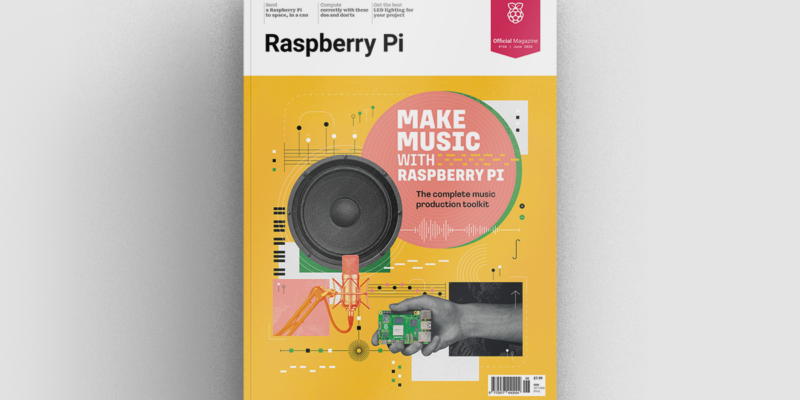
Make Music With Raspberry Pi in Official Raspberry Pi Magazine issue 166
Music production is an esoteric world of chin stroking and arguing over what kind of valve makes the best sound in a guitar amplifier – at least, it can be. Load up on software, bring your friends, and record your latest masterpiece on Raspberry Pi. We bring news from the world of 3D printing, where […]
Read more →