OPINION: A life in electronics
By Mike Cook. Posted

It was all a mistake, I was meant to be a chemist. Back when I was five-years-old I knew I wanted to be a scientist, and by ten, various science toys convinced me it was chemistry. But I was dyslexic, which was not recognised in those days. This caused my teachers to predict low-level manual work to my parents when I was five. Also dyslexia resulted in me going to a Secondary Modern school, but they had no Chemistry Lab. So when it came to picking a science subject at the age of thirteen, it was Physics.
I left school at the age of 16 and got a job as an apprentice technician at a small electronics company in Oldham, being paid the princely sum of £5.50 a week. They allowed me to do a day release where I took an ONC (Ordinary National Certificate) course in Electrical Engineering.
This, in turn, enabled me to take a combined Physics & Electronics degree at Newcastle upon Tyne Polytechnic. When I went for an interview, my first encounter with a strong Geordie accent did leave me wondering where the hell I was. The maths module had three lectures about programming in Fortran II, these were the only lessons I had in programming, but I was hooked!
After graduation, I worked on a form of audio compression called adaptive delta, pulse code modulation or ADPCM, later to be used by Microsoft and Apple.
I was in the right place at the right time. In 1976 I built my first computer from just the information in the data sheet of the Signetics 2650 microprocessor. I got a lecturing position at Manchester Polytechnic’s Physics department, and one day I was contacted out of the blue by Mike Bibby. He had been asked to start a magazine about home computers and an ex-student had told him about me. I agreed to do four articles, convinced the magazine would not go further. Well, it did go further: 210 issues in total with my articles under the titles of ‘Body Building Course’ (BBC), and ‘Run the RISC’.
When Raspberry Pi took over the running of The MagPi magazine, I was approached to see if I could write for it. Previously I had one article published in The MagPi magazine issue #5, which made the front cover. However, ‘Mike’s Pi Bakery’ began in The MagPi issue #33, and ran all the way to issue #109.
Having reached the grand old age of 70, I felt it was time to catch up on all those projects I had been wanting to do for years but never had the time. The first one is to convert all the Sony 8 videotapes of my children growing up into a digital format. However, I am not going for good, I expect to return for the occasional ad-hoc article.
It has been an absolute privilege to write in The MagPi magazine, and attending various Raspberry Pi events, and shows, meeting some of my readers. Thanks for having me.

Veteran magazine author from the old days, writer of the Body Build series, plus co-author of Raspberry Pi for Dummies, Raspberry Pi Projects, and Raspberry jPi Projects for Dummies.
Subscribe to Raspberry Pi Official Magazine
Save up to 37% off the cover price and get a FREE Raspberry Pi Pico 2 W with a subscription to Raspberry Pi Official Magazine.
More articles
Digital Displays in Raspberry Pi Official Magazine 170
Some projects seem more like magic to us than anything else; here’s one of them. This robot by Italian engineer/magician Andrea Favero uses a mirror to widen the field of vision of a Raspberry Pi Camera Module 3, the input from which is processed by Raspberry Pi 4 and used to control three legs to […]
Read more →
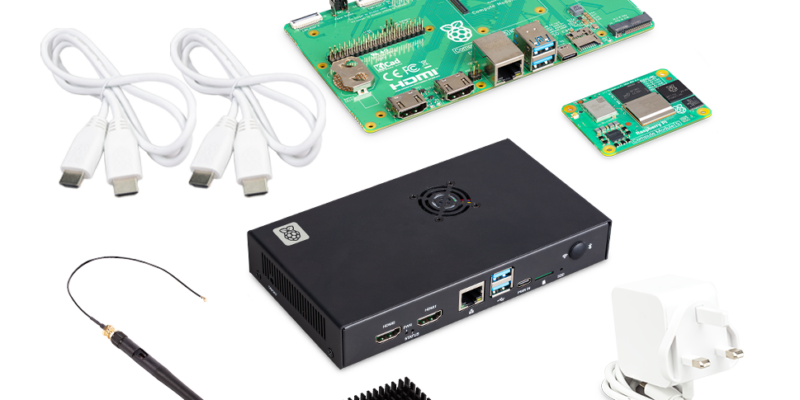
Win a Development Kit for Compute Module 5
Make CM5 development easier with our competition
Read more →
Raspberry Pi Official Annual 2027 is out now!
New name, same fantastic content
Read more →