Poor man’s Polaroid camera
By Andrew Gregory. Posted

The Polaroid camera was a brilliant invention. You pointed it at the subject, pressed click, and seconds later a wet rectangle of photographic paper emerged, blank at first, but eventually the image formed before your eyes, like magic. No negatives, no automatic upload to Facebook so that your employer can see how much fun you’re having while you’re having it, just a moment captured. Polaroid cameras are having a minor comeback (every photo we take on ours makes us look like we’re living in 1982) but even more so, they are inspiring makers to create their own versions.

Take this build by Stasys Urbonas, for example. He calls it a poor man’s Polaroid, even though it cost more to build than it would to buy a Polaroid camera off the shelf: “I almost bought a regular Polaroid, but realised photos aren’t cheap, so the idea to use a thermal printer just popped into my head at that time, because thermal paper is cheap.”

We found this project build while we were looking for something interesting to copy on our 3D printer. We quickly skimmed over it, as it looks like it’s made of MDF, or possibly sheet metal with a thick coat of paint. Turns out it actually is 3D printed – it’s just had a load of work done to it to make it look like something polished that’s come out of a factory, rather than peeled off a 3D printer bed.
The components include a Raspberry Pi Zero 2 W, a Raspberry Pi Camera Module, and a battery. Stasys designed the case himself, then printed, sanded, primed, and painted it in a colour scheme that reminds us of roadside speed cameras.

Features Editor Andrew trawls the internet for Cool Stuff while keeping the magazine running smoothly.
Subscribe to Raspberry Pi Official Magazine
Save up to 37% off the cover price and get a FREE Raspberry Pi Pico 2 W with a subscription to Raspberry Pi Official Magazine.
More articles
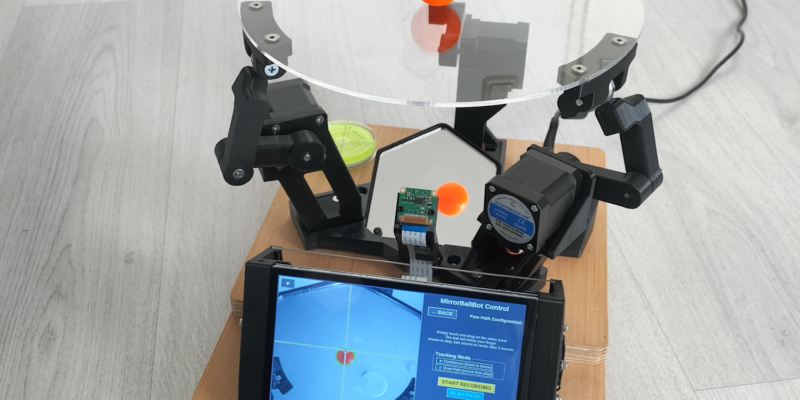
MirrorBallBot
This trick uses no smoke but it does use mirrors
Read more →

Digital Displays in Raspberry Pi Official Magazine 170
Some projects seem more like magic to us than anything else; here’s one of them. This robot by Italian engineer/magician Andrea Favero uses a mirror to widen the field of vision of a Raspberry Pi Camera Module 3, the input from which is processed by Raspberry Pi 4 and used to control three legs to […]
Read more →
Win a Development Kit for Compute Module 5
Make CM5 development easier with our competition
Read more →